Out of the (Telecaster) Loop

Canteloupe Island is a Herbie Hancock composition, if memory serves. As a piece of music, it’s little more than an excuse to solo. A groove. These fellows in the video take full advantage of its possibilities. I’ve never heard of any of those guys, but that’s OK. They might not have heard of me, either. I don’t care about any of that, exactly. Let’s talk about what’s important. What the hell are they doing playing Fender Telecasters? Jazz players don’t play Telecasters. Well, they didn’t.

If you’re only partially aware of guitar brands and models, I’ll try to explain it a little in my haphazard and simple-minded way. There are only two kinds of electric guitars: Fenders and Gibsons. They’re the Fords and Chevys of the musical world. Other brands can usually be slotted somewhere in the shade that one or the other of these two manufacturers throws. Musical guys generally become devotees of one or the other, and have a tendency to stick with them. (Fender) Stratocasters or (Gibson)Les Pauls was always the big bifurcation in rock music, for instance.

Before there were Stratocasters, there were Telecasters, the guitars you see in the video. In a way, before every kind of solid body electric guitar, there were Telecasters. Other people tried to make solid body guitars with pickups for amplification before Teles, but they were experiments, one-offs, or failures on the fiscal front. Leo Fender and his friends designed, built, and most importantly, sold Telecasters, and they became the Ur-guitar. Everything else was a riff off of them.

Before all this, guitars were made like violins and other similar stringed instruments. They were hollow, often with a carved (arch) top, with a neck that was permanently affixed to the body. They were acoustic. There was an arms race to make them louder for a long while, even though they were acoustic. If you’ve ever played the sort of guitar you see Django Reinhardt play, you’d know those things are comparatively loud, and the treble they produce cuts through the noise of a whole band. But no matter how big and boomy the box got, it couldn’t compete with amplified instruments.

So dudes started sticking electronic pickups in various configurations into arch top (Spanish) guitars, and plugging them into amplifiers. Gibson started making them like that right from the factory, and had a hit with the ES-150 and similar models. The first true electric guitar soloist, Charlie Christian, popularized them.

There is a problem with these guitars: feedback. Some of the noise you’re making bounces around inside them, and comes out a little later. That can lead to the various screeches and shrieks and whistles and hums you hear from public address systems used to make most bands louder and even less appealing. It also made the tone sort of fuzzy, sometimes in a nice, warm way. Other times it was just fuzzy. For example, my brother played a Gibson ES 330 back in the day.  It was popular with blues bands and jazz kids and Chuck Berry sorta dudes. The guitar’s tendency to feed back was legendary, though, and forced him to stuff hand towels in the F-holes to shut it up when gigging.

There had to be a better way. Guys wanted to play at bigger volumes in larger bands and needed something simpler and more robust to carry around. The Telecaster was it.

The Telecaster is a barbarous guitar, and I mean that in a good way. Compared to fussy arch top electrified jazz guitars, it’s a boat oar. Leo Fender basically changed everything about building a guitar with this design. Why not cut the body out of a solid block of wood instead of gluing up a bunch of fiddly bits? Why not just bolt (screw, really) the neck onto the body? Why can’t we just rout channels out of the front of the guitar and run all the wires the easy way, instead of fishing around through the F-holes or the back of the guitar to do it? Just cover the whole mess with a huge plastic pick guard and be done with it. Why glue a fancy expensive piece of wood on top of the neck and then cut fret slots in it when you can cut fret slots right in the one-piece neck? Why glue little wings on the neck head to spread the tuning pegs out when you can line them up in a row on the one-piece neck? Why not screw the pickup right to the tailpiece and make it an assembly that can be screwed to the guitar in one shot? Later on, we can add a second pickup just below the neck and get a less trebly tone, with a switch to go back and forth between pickups, or turn them both on.

All electric guitars are based on the Telecaster, when you get right down to it. It was eventually superseded by the Stratocaster in popularity (you can take a video tour of the factory making Strats in 1959 here), but they still make Telecasters, and they’re still quite popular. But not for jazz. Well, as far as I know. Er, knew.

The video above isn’t where I noticed the phenomenon of jazz players using Telecasters. I’m way down Mexico way, and I’ve already seen two jazz combos with the guitarists playing Telecasters. I was fuddled. Befuddled, even. The Telecaster was designed and marketed to be an improvement for steel guitar, Western Swing, Country, Rockabilly, and any sort of honky-tonk musician who needed a leg up on his loud bandmates. Jazz? Not so much. All of a sudden everyone is playing sus9 chords and soloing with diatonic triads and whatnot, using Teles. What gives?

Well, it is a good, solid (literally and figuratively) guitar. Durable, relatively inexpensive, and versatile. A few guys did use them for jazz way back when, although they usually pried out the neck pickup and routed out a bigger hole for a Les Paul style humbucking pickup. Like Ed Bickert did:

I’ve owned an old Telecaster, and if you select the neck pickup, roll the tone knob way over, and pick it right, the humbuckers are strictly optional for jazz. The folks I’ve seen lately are using their Teles straight out of the box that way.

I chalk the whole thing up to a contrarian mode. Young people want to make trends of their own, whether they make much sense or not. People get tattoos because they know their mothers will think they’re ugly. Well, they think their mothers will think that, but mom has ass antlers, so they have to tattoo their face to get a rise out of her. Everyone staples their house on the ass end of their garage, because otherwise they’d be just like Ozzie and Harriet, man.

The Telecaster is still fairly inexpensive for what you get, and it works fine, even for jazz. Like a snake eating its social media tail, maybe everyone’s playing jazz on a Telecaster because no one is, so everyone is doing it, man. Or maybe I’m in Mexico, and there’s a Fender factory in Mexico, so there’s no eyewatering tariff and import paperwork on one down here, like there is for a Les Paul or a Gibson L5, so they make a luxury out of necessity. Whatever it is, don’t blame me, I’m just the bass player.

And by the way, that bass player has 5 strings on his bass, so he’s forgotten what his job is.

Something Tells Me It’s All Happening at the Centenario Zoo

The Parque Zoológico del Centenario, that is.

The zoo is only a ten minute walk from our house, so we wander through from time to time to commiserate with the animals about the ambient temperature. The “centenario” sobriquet is because the park was founded in 1910, the 100-year anniversary of the Mexican Revolution. For about 50 years, the park was just a pleasant park, full of plants and benches.  Then in 1962, they made it into a zoo. It’s not huge, but its walls keep around 600 animals from wandering into traffic.

The park still retains enough of its original layout as a botanical garden to make it a pleasant place just to meander in shady allees, not simply as a collection of animals to gawk at.

It’s the second most popular tourist destination in the area, after the nearby Mayan ruins at Chichen Itza. I guess “tourist destination” is an inapt description for the zoo. The park is full of young families from the area. If anyone else in the park was speaking anything other than Spanish, we didn’t hear them.

Maybe a million people visit the park every year. That’s a lot, in a city with about a million people. They don’t have an exact count, because, get this, there’s no entrance fee. No one frisks you at the gate, either, to see if you’re packing weapons or your own lunch. You can buy booth food inside if you want, but many families brown bag it. It’s a decidedly peaceful and pleasant place.

There’s an interesting tradeoff that comes with a zoo built in the sixties. Unlike modern zoos, like the one in San Diego for instance, not a lot of the exhibits are vast naturalized pens with moats to keep the animals in instead of wire fences to keep you out. So here in Merida you’re mostly looking through a grid to see the critters, but on the flip side, you can walk right up to them. About eighty percent of the time in San Diego, the animals were slouching somewhere you couldn’t see them. They slouch here, of course, because it’s 95 degrees every day it’s not 100, but they slouch up close where you can get a look at them. And occasionally, a whiff. Zebras are horses with B.O., for instance.

The animals seem pretty contented. The mountain goats, for instance, were provided with a pile of rocks, which they stand on, because what else would they do? They wouldn’t do tricks or long division or anything if they had a more elaborate pen:

There’s always one animal at any zoo, anywhere, who’s always on duty. The lions lie on their backs and snooze, the hippos wallow, the monkeys lounge, but you can always find one of these beasts keeping constant watch:

Anybody with a house cat and a sliding glass door will recognize this behavior. That’s a melanistic, or melanic jaguar, depending on who you ask. That means it has the same spots as any other jaguar, but they’re hidden in its all black fur. I would have checked it for the sublimated spots, and I’d tell you if this jaguar was a male or a female, but I respect its privacy. Also, I got the impression that if I put as much as my pinkie through the chain link, it would suck me through the hole and eat me.

El tigre was much more mellow. He didn’t look like he wanted to eat you or anything. I assume he’d already eaten the guy that mucks out his cage, and was full. Unlike lions, who are clowns, tigers always seem pretty serious.

But all these animals are from the Holocene, I guess, and so am I, so I’m not that scared of them. It’s when the Cretaceous shows up that I get worried. Meet the final boss of the Centenario zoo:

So there’s no cover charge at the Centenario zoo, but the bouncers sure look ferocious. Behave yourself, and if you’re smart, avoid the bridge.

How To Celebrate Grito de Dolores Without Really Trying

If you know only a little Spanish, you might be excused for thinking Grito de Dolores means that raw oyster you ate had some sand in it, and you have a stomachache. After remedial classes, you might mistake it for I yelled until I had a headache. But after you live in Mexico for a while, you’ll discover that Dolores is a town, full name: Pueblo Nuevo de los Dolores. And a grito is a shout.

The Shout of Dolores is a civic reenactment of a call to revolutionary arms, spoken by a Catholic priest named Miguel Hidalgo, or Don Miguel Gregorio Antonio Ignacio Hidalgo y Costilla Gallaga Mandarte y Villaseñor if you’re not into the whole brevity thing. He opened his window and yelled something to an assembled throng outside. Don Miguel was the equivalent of the Indy Pace Car. He got the Mexican War of Independence rolling by ringing his church bell and yelling at everyone to hate the French.

Why hate the French, you ask? well, it was 1810, and Napoleon had installed his brother as the King of Spain. That made him the king of New Spain, too. Mexicans had only recently gotten used to bonafide Spaniards ordering them around and calling the place New Spain, and decided they’d rather fight than switch to the bonaparte varietal. So Mexicans chose sides between supporting the repulsive abdicated heir to the throne Ferdinand VII, and the toadies who supported Joe Bonaparte. Game on, said Don Miguel.

The politics of it are pretty murky, actually, and will spur you on to a grito de dolor de la cabeza of your own if you dive into it too far. It caused the Peninsular War in Iberia, too, so prepare to spend the whole day in the library figuring it out. Bring Excedrin.

In any event, September 16th is Independence Day in Mexico, similar to July 4th in the US. Of course Mexico had either one, two-hundred year revolution, or innumerable small ones strung out over the calendars, but you have to pick a day and stick to it, and Mexico picked the day of the Grito de Dolores for their founding fiesta.

Except they didn’t. The 16th is officially the holiday, but the whole country celebrates it at 11:00 PM on the 15th. The holiday itself is like New Year’s Day, just a day off to nurse your hangover. The president, assorted governors, and anyone else with a plaque on a government desk wants to read the Grito de Dolores at 11:00 at night on the eve of the holiday, and then shout, “Viva Mexico” three times while the crowd cheers, and throw a party.

Here’s the current president of Mexico giving it a whirl. She appears to be running for class president on the Girls, Girls, Girls! platform every day of her term:

There is a problem with reciting the Grito de Dolores that you might have noticed in the video. Mexicans, being a boisterous and happy-go-lucky people, didn’t write down, or even remember what Don Miguel actually said. Everyone agreed that it was a stirring call to arms, or a soul-searching appeal to patriotism, or an amazing rant, or maybe a grocery shopping list. Many scholars have tried to re-create the speech, which ends up sounding like what that particular scholar would have said. The politicians have given up on the speech part of the enterprise, and just read the names of a hearty handful of fallen heroes of the revolution, followed by yelling Viva Mexico! three times. It’s like saying Beetlejuice! three times, but Mexico appears instead of Michael Keaton.

Mexicans are pretty happy being Mexican, so there aren’t many grumblers holding People Against For placards at any given Grito. And they like a fiesta in any case, so they set up bleachers and food stalls and hire bands to blast away between the fireworks displays. In Merida, they had the awesome La Adictiva:

We could have walked down to the zocalo (the main square) to yell Viva Mexico! along with everyone else. It’s a stirring spectacle, and a charming slogan for a country. But I already had a dolor de cabeza, and while I could have withstood the fireworks, the bells, and shouting, I don’t think my head would have survived a band with an entire valved trombone section.

I used to play the trombone, and I can assure you that’s not music, that’s plumbing.

Park and Shop

Her room came to me in a dream last night. Just a door with a window straight across halfway down the hall in our pokey ranch. A room suitable for a penitent. One who had never committed a sin, and never would, except maybe to listen. There was barbarous cabinetry purpose built on two walls, the weird whorls of unsuitable fir plywood peeking out from the muddy Early American stain. A nightstand, nothing but a cube with a hatch, made from the same awful stuff, standing by the bed jammed up against the wall. Opposite was a closet with doors that slid back and forth if you stuck your finger in a little dish let into the wood. Inside the closet was a scuttle to get in the attic. We’d put a ladder up and I’d weasel up through the dresses made from tissue paper patterns bought at J.J. Newberry’s to get to the little hole to rescue the Christmas decorations every year until I got too big to fit, too.

Her wall had a bookshelf freighted with Nancy Drew mysteries and I don’t know what all. There was a little lacquered jewelry box from Japan, or maybe Korea, that her aunt the EVAC nurse gave her to hold all the jewelry she’d never own.

Her eye tooth and the one next to it was slightly misaligned. It was almost imperceptible, but it made her smile her own. They robbed her of even that with braces on her teeth. Her hair and eyes were the same color brown. She wore it ironed out straight with a part as straight as a ruler.

My mother took me to a dusty hall abandoned by odd fellows to sit on folding chairs along a wall with my legs swinging to watch her dance. She wore one of those glittering dancing bear costumes and tap shoes and a weird spangled dinner plate on her head with a strap to keep it on. When they all danced in unison they were anything but. They made a racket like a hundred typewriters bashing out a hundred different misspelled messages. But she could never possibly be more beautiful than that.

She was the only girl because a mother doesn’t count. My father had some special place in his heart where only she could enter. We wouldn’t bother knocking on that door, even if we knew where to find it. It was like the door to the only bathroom in a house when she was in it. Life was different for her.

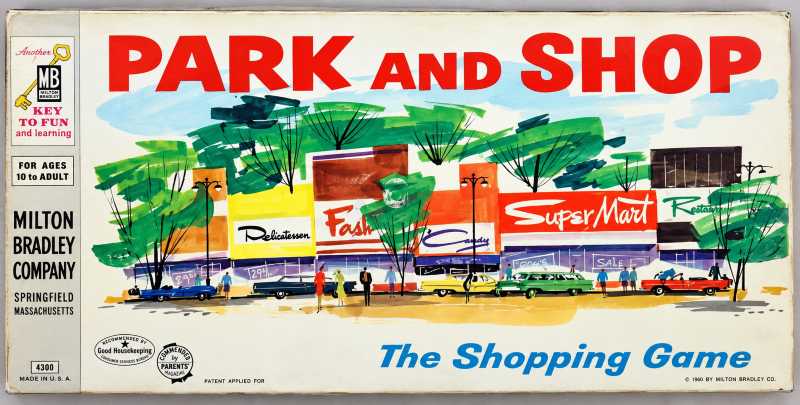
She’d enlist her little brothers in her schemes. We sat like imbeciles while she reeled off the rules and laid out the board for Park and Shop, and we’d wander the board aimlessly because she wanted us to. My little brother cried when he got a parking ticket because he couldn’t make up his mind which make of car to buy, and was commanded to stop at two car dealers on the way home. He told her he didn’t know two kinds of cars and she said it was OK and he could go home anytime anyway. But I was a little older and even then I knew there were rules and you can’t always go home anytime.

Mom put Our Bodies Our Selves on her shelf to be her new bible and sent her to some frozen college to fill her head with anything they could conjure that wasn’t Nancy Drew. She spent her life wandering the country looking for some life that was never on offer no matter how many rocks she turned over. Eventually she died alone in a trailer in Arizona of nothing in particular. She can’t be my big sister anymore because I passed her on my calendar while hers stands still.

One never knows when it’s the last opportunity to play Park and Shop with your sister.

Month: September 2026

Find Stuff:

Archives