¿Qué Onda, Doc?

I went to the doctor yesterday.

It’s useful to compare and contrast mundane things when you’re in a strange place, and your audience mostly isn’t. I’ve seen a metric boatload of videos about Merida, Mexico, where I’m currently living. I watched them, along with videos of all sorts of other places, to help make up my mind where to bivouac next. The most useful were the quotidian entries. People simply walking around, or driving around. The best of them had no narration or music. They were experiential, so they were useful for the task at hand, which is to figure out what it’s really like in a particular place.

These are hard to find, generally. Videos about far flung places are almost uniformly tedious chronicles of vacations. The current generation seems to worship Instagrammable vacations above all things. They aver that their lives won’t be satisfactory until they’re on vacation all the time.

They’re nuts. By necessity, I have been in consulates and airports and taxis and Ubers and hotels and restaurants recently. I don’t know what vacation is anymore, but it ain’t vacation. “There’s no place like home” once meant something it doesn’t in the parlance of our times. Ho hum.

When home is a vacuous gray-on-gray plastic and concrete dovecote in some megalopolis, you could end up thinking the way they do. The suburbs aren’t much better. I’ve often lamented the rise of the snouthouse. It’s a symptom of the same idea: Nothing matters about your home except leaving it. Remember to Live Laugh Love, of course, but do it elsewhere, not under the sign in your living room.

So instead of making a video of my wife and I stuffing food in our faces, declaiming that everything is amazing in Merida, I’ll treat you to a simple task here. A doctor’s visit. Not to worry. Nothing major. No splintered bones on display, or gunshot wounds or anything interesting.

I’m required by my health insurance to visit a doctor once a year in Maine, so I have recent experience with the same sort of low level appointment in both places. Let’s compare and contrast, shall we?

The Appointment:

Maine: A doctor in Maine is like Bigfoot, or the pope. Not often available for a sighting. A phalanx of grossly overweight women wearing pajamas and lanyards while drinking out of binkie bottles behind bullet proof glass fills out a little card with a date in the far flung future. No matter what the date, or the time, this appointment will not happen. They will contact you over and over to postpone it again and again. The last time, my appointment was rescheduled numerous times and moved in baby steps from March until it finally landed in October, even though I offered to come on any day of any week, at any time.

Merida: Appointments? Que? Just show up when we’re open. First come, first serve.

The Location:

Maine: A building appurtenant to a hospital. There are fourteen examination rooms, fourteen rotund tattooed nurse’s aides, and one obese doctor. They’re all full of health advice. You know, for you. The walls are covered with posters warning you not to contract diseases unavailable outside of San Francisco bathhouses and wet markets in Wuhan. They also urge you not to kill yourself, for obscure reasons.

Merida: They call them “Doc in the Box” here. These are consultorios attached to farmacias, which are all over the place. I can easily walk to a dozen farmacias. Not all of them have consultorios. There is a modest, clean, tiled waiting room with nothing in it for furnishings other than plastic chairs bolted to the floor.  The posters on the wall tell you how to behave in a flood, a fire, or an earthquake. There is, I shit you not, a posted list of all the common medical procedures they offer, with a firm price listed for each. The list is laminated, so I know they don’t change the prices very often. There’s a dentist office upstairs from the consultorio I went to. Same deal. Price list, first come, first serve.

The Process:

Maine: You show up for your five-time  postponed appointment ten minutes early. The waiting room is full of people who formerly could only find employment in carnival sideshows, but now represent the general population. I don’t know what they display at freak shows anymore. Maybe a clean-shaven guy wearing a business suit and a tie, with no tattoos on his face?

You wait in the waiting room (duh) for a good long while, because any doctor appointment is kept by sundial, not clock these days. Then you’re led to another waiting room to be pawed at by a noseringed dirigible girl with pink hair you’d forbid your grown male children to talk to, as if they needed that sort of advice. You sit there like a mook for another fifteen or twenty minutes and look at posters with the IKEA instructions for assembling a human on the wall. Then the young, flabby doctor, who you could beat up with both your hands in your pockets, comes in to give you health advice while ignoring any actual maladies you might have.

Merida: The place was open when I arrived at around 9:00 AM. Any doctors who are available are listed with placards on the wall, with their regular hours. I was alone in the waiting room, and had just enough time to figure out exactly what I should do if I was drowning while on fire and the ground was shaking. A mother and her son left the only consultation office and passed by me. There is no receptionist. I heard a voice from behind the door saying “Adelante!, so I went in. There was a trim, serious looking female doctor behind the desk. I’m informed that these are not Dr. Nick Rivieras. They are the same doctors you’d see in a public or private hospital. They just make extra money on their off hours by serving the public directly in consultorios.

She asked me my name, my age, my place of birth, and any allergies, and typed it into her desktop computer. Thus endeth the paperwork. I had written out a translated version of the reason for my visit, and included an acronymed reference to a condition that flummoxed my Maine doctor, but she never batted an eye. She inspected me a little for a few minutes, only interested in my problem, not inventing another one for me, typed some more, and her printer spat out una receta, an all purpose bill, summary of my diagnosis, and a list of four medicines I needed, with instructions, which she signed. She explained as best she could with our language barrier what the instructions meant.

The Bill:

Maine: Pricing is obscure in Maine. Since I was required to go to the doctor by the insurance company, I’m not supposed to pay. They did send me, probably erroneously, the paperwork for the visit, which listed a bill from the doctor’s office for something over $500. Then they haggled it down to $90, and paid that, if memory serves. If I was paying, I’m sure I wouldn’t have had the same luck.

Merida: I was confused a bit. I’d never been, so I asked in halting Spanish, “Where do I pay? In the farmacia?” The doctor smiled and said, “You pay me.” I counted $70 into her hand, and thanked her.

Of course I should point out that Mexico uses the dollar sign for Mexican pesos. At today’s exchange rate, 70 pesos is about four dollars.

The Pharmacy:

Maine: The doctor’s office promises to send your prescriptions to the pharmacy of your choice. They rarely do. You call them over and over, and eventually when you’ve run out, they treat it like an emergency, and forget to call it in even harder. Eventually they read the post-it note or something, and it goes to the pharmacy. They contact you and tell you it’s ready for pickup. You go, and they don’t have it ready, and tell you to come back in two hours. Then you go through a byzantine labyrinth of discount coupons they have on offer to have your wallet vacuumed.

Merida: The farmacia is attached. You just go in there. Although you don’t have to. Unless your prescription is for something very, very sketchy (I have never even met Hunter Biden, so it’s not a problem), any pharmacy will sell you anything they’ve got, whether you have a prescription or not. They’ll deliver it to you, too, usually by a Didi or Uber dude on a motorcycle.

It’s funny, but I mentioned the same problem I was having to the doctor in Maine. He looked in my ear and said there was nothing wrong with me. Then he asked me for the fortieth time to have a covid shot and a colonoscopy.

I also mentioned to the Maine doctor for the umpteenth time that I was still suffering from hypnic headaches. I told him that it was strange, but the only time I didn’t have them was while I was in Mexico. I wondered why that would be, since he and his predecessors had never been able to offer me any relief from them. He answered snidely, “Well maybe you should move to Mexico then.”

Yeah doc. Maybe I should.

I Scare Myself

There are certain levels of creativity that transcend technique.

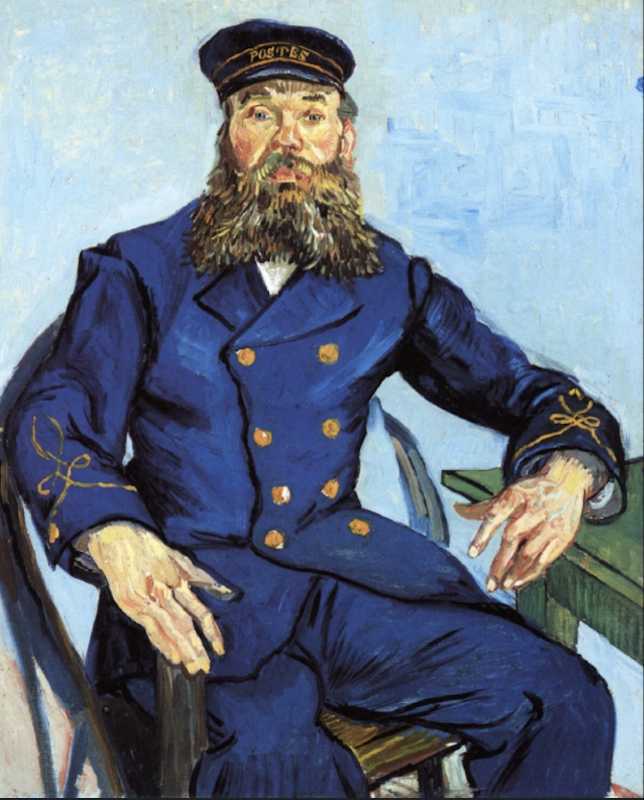
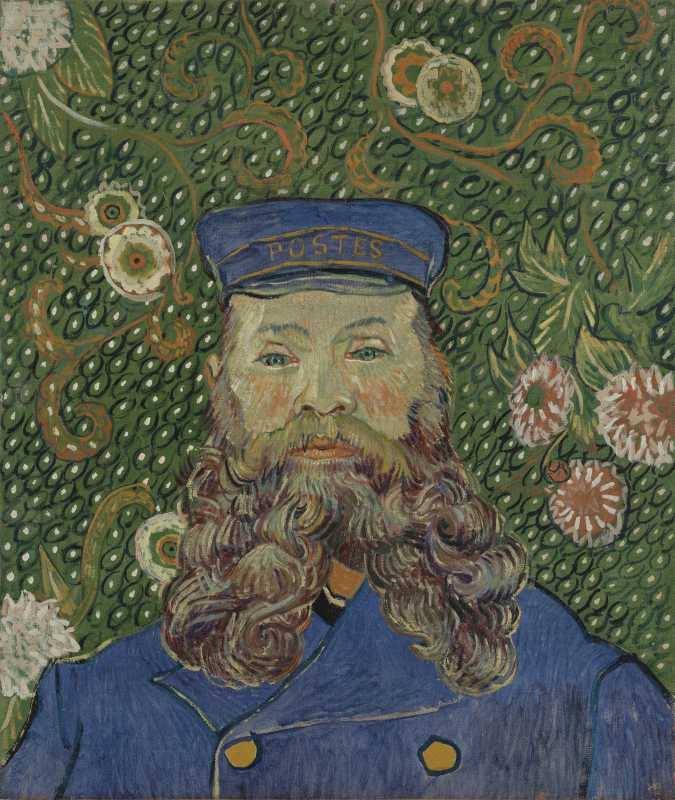
I don’t like nearly all modern painters. But have you ever stood in front of a Van Gogh? It’s terrifying stuff. There is technique in it. He did his thing, over and over, always pushing forward, getting faster, further out, until he was simply expressing himself directly. He was deranged. If art is a look into another man’s mind, he gave us a peek into a maniac’s thought process. For example, you don’t critique his painting of the postman. You deal with it.

I think it’s twice as ghastly because he liked the guy. This is my friend. his fingers are turning into snakes. 

Just when you’re reeling from that sort of thing, he announces he can take it up a notch, or ten if you’re interested. Lucy in the Sky With Diamonds got nothin’ on him:

Moving on, what, exactly, made titanic egoists like Hemingway, Joyce, and Eliot flop on the floor in front of Ezra Pound, and declare him “il miglior fabbro“? It’s from Dante, and means “the better craftsman,” or something close to that.

In a Station of the Metro

The apparition of these faces in the crowd:
Petals on a wet, black bough.

—  Poetry (April 1913)

There’s audacity figured into all this. Some people are good at eliciting gasps. Pound sure did. But audacity alone is just shamelessness. Madonna and a million other talentless people show you what 100 % audacity and a certain moral flexibility, bordering on contortion, can yield. It ain’t art.

The video is Dan Hicks, along with some agglomeration of his Hot Licks. I’m not sure what it takes to put  yourself out there like that. He had the chops to be normal, but not the desire. He’s one of those people who needed to sail over the horizon, to see what’s out there. The danger, of course, is that no matter how far you go, the horizon remains the horizon. Whatever. At least he had time to break off rock music’s femur and beat it over the head with it while he was sailing along.

I got up at 3:30 this morning because I had to write something, or die trying. It was about the 1970s. In the dark, alone, sweltering in the silence, I scared myself, just thinking about it. I stopped for a moment to salute il miglior fabbro.

The Irish Saved Civilization But I Couldn’t

When nothing in society deserves respect, we should fashion for ourselves in solitude new silent loyalties.

Nicólas Gómez Dávila

I was at a gathering. Certain kinds of people call a barroom a gathering. Certain kinds. Most everyone was familiar, although nearly no one is here. An extranjero to us, and everyone else, had appeared, friendly, gregarious. He’d been adopted into the brotherhood of the bar tab already. I tried to catch up.

He had been partially disassembled by his country, then put back together pretty well, thank God. But he was a ship of Theseus. He was the same person, but not the same. He was wandering the world in search of new silent loyalties, although he skipped right over the silent part.

A friend pointed to me and said that’s _________. He’s a writer.

No one had ever said that before. Never. I’ve been called every damn thing, but never that. It was way down the list of things to be called, on some second page of a resume that never gets printed.

Al was there. He wanted another copy of my book. He’s a philosopher, I guess. Or maybe a Buddha. A wandering ascetic. Whatever he might be, people sit next to him and feel better. I have. He had a copy once, and liked it, so he gave it to the library. He said he couldn’t do without it, even one step removed, so I gave him another one.

A young girl swam in our pool. When she comes she hugs us and says, “Mucho gusto,” instead of all the wan greetings we’ve learned from our lessons. She wanted a book, although she cannot read English. I signed it in Spanish, or maybe Italian, or both, the language is like that sometimes. She held it like a missal. I’ll never forget it.

No one speaks English here, but my book is in the library. It isn’t in the library where I pushed the rock of my life up its hill, over and over. I fashion for myself in solitude new silent loyalties.

It’s Hard To Become a Mexican Resident, Part 4

[We’re recounting the difficulties in receiving a Mexican residency permit. It’s continued from here, here, and here]

The ongoing pleasantness at the Boston Mexican consulate continued unabated. Officially, my wife and I had separate interviews. The consulate official asked if my wife was with me. Of course! Well, fetch her out and let’s have a look at her! We’ll take care of both of you at the same time.

I hadn’t disappeared into the inner sanctum for enough time, so when I returned to the waiting room, my wife spotted me and made her charming Oh-No-What’s-Wrong Face. Did you screw it up already? If they chase you up the street, I’m going to pretend I don’t know you.

Relax, honey. They just want to talk to both of us. They’re nice. I know it’s hard to believe, but a person behind a counter in a government office can be nice. Serious, efficient, and thorough, but pleasant. If I hadn’t seen it with my own eyes, I wouldn’t have believed it myself. We’ve all become so inured to martinets in ill-fitting polyester uniforms, badges askew, GED intellects on display, barking orders at us in the lines at the airport that we’ve forgotten that the slightest bit of authority doesn’t have to devolve immediately into imperiousness.

I’ll give us a little credit on that score. We understood that we were asking Mexico for a favor, and acted like it. Let us live there. We weren’t in a position to demand anything. You could be turned away for most any reason. It doesn’t even require a pretext. I don’t like your sweater, so beat it is always on the menu. I’m as charming as a cactus, of course, but they couldn’t wait to invite my wife over for an extended stay. She was going to bring a cat, and me, and some luggage with her, that’s all. In no particular order.

The clerk had already pored over the financial portion of our requirements for a married couple. We had plenty to spare, so the questions for my wife were scant compared to mine. The Mexican woman was too polite to ask, Did you really marry this guy? You’re not a hostage or anything? Seriously? He didn’t hold the deed on your family’s farm, and force the marriage? He didn’t threaten to tie you to railroad tracks unless you said “I do?” You’re not blind? You really stay married to him on purpose?

She just went over all the documents and made sure they all assembled her maiden and married names in a regular way. People make trouble for themselves with their elaborate married naming predilections these days. We find hyphenated Americans do it to keep one foot out the door at all times, starting with the bridal suite.The consulate just wants to figure out who you are. Our apostilled marriage and birth certificates with Spanish translations helped here.

American naming conventions differ from Mexican in other ways, too. They have very traditional customs with four names, generally. That’s how you end up with María Fernanda López García and similar. First name, middle name, dad’s last name, mom’s last name. Husband might be José Antonio Hernández López. Same naming order. His name doesn’t change if they marry, hers can. She might add “de Hernandez” at the end of her full name, but I guess that’s dying out except for in very formal settings. Most just keep their names, same as hombres. A very few go the hyphenated route. When you have kids, they generally drop the mother’s names off the end and smash the two grandads names on there. María Fernanda López García marries José Antonio Hernández López and their daughter might be Consuela Hernández López. So it is possible to end up being a Hernández Hernández, but fairly unlikely.

Back to the action. We were informed by the internet (teehee) that it might take up to two weeks to receive the canje visa stamp in our passports. I dreaded the idea of another trip into the belly of the Boston beast to pick them up, but it was not to be. We were directed to wait in the aptly named waiting room, and it would be done for us shortly. We spent a pleasant hour or two chatting in broken Spanish and fractured English to the other folks waiting around. They were all Mexicans getting other documents straightened out. A fellow from Guanajuato and I hit it off a bit. He’d been living in Rhode Island not too far from where I grew up. There was a charming, round-faced little girl with delightful cartoon pigtails and an adventurous spirit marching up and down the aisles. She really liked the pictures my wife showed her of our cat. A balam! (the Yucatec Maya word for jaguar).

Hey, leave me out of it. I’m not doing anything bad right now.

The “sarcastic” guard came out and gave us our spanking visas, and gave me another wink and a “You did good” one more time. We were instructed that the visa was only good if we entered Mexico within 180 days, and then once we landed, we had 30 days to finish the job at the INM, the Instituto Nacional de Migración.

Gulp. I guess now we have to move.

[to be continued]

It’s Hard To Become a Mexican Resident, Part 3

[continued from here and here]

Well, we’re going to play it as it lies, as they say in golf, or play it as it lays, if you’re Joan Didion. I’m a good writer, I’m not Joan Didion. Please note a certain ambiguity in that last sentence introduced by punctuation selection. At any rate, there are more holes in my narrative than any golf course, so we’ll just play through, and not argue about verb tenses.

So we’ve got all our paperwork in order (we think, who knows?), and an appointment at the Mexican consulate in Boston, Massachusetts. A while back I hinted at what I was doing in my essay I’m So Amtrak I Could Cry. Reader Jean sussed it out, for instance.

We were prepared to be disappointed, of course. Things being what they are, the disappointment buffet at any governmental restaurant is always well-stocked. You can’t always get what you want, as the poet Jagger once opined, but if you try sometimes, you get what you need. What we needed was a special stamp in our passports that had one more ugly picture of us and the word canje somewhere on it.

Canje is an interesting word. It was always explained to me to mean “change,” or maybe “exchange.” The official internet translated definition is: redemption. A good writer could get 10,000 words out of that comparison alone. I’ll just say it suits me just fine. I’m no Joan Didion, remember? In this context, canje is the process to change from tourist to legal resident.

My wife and I dressed for Boston winter, tried to paste down our cowlicks, and made our way to the consulate. It was on Franklin Street, a short walk from where we were staying.

If you’re in the mood for a laugh before we really get down to business, you can ponder on the tree of woe that the Boston Mexican Consulate has a Yelp! page. Talk about yelling at passing traffic from an overpass. It has seven reviews on there too. Five say the living is easy, fish are jumpin’, and the cotton is high. The other two were the kind of unhinged rants that Yelp! always provides for our amusement. An excerpt:

I went to this place to get a tourist visa, and the guy and the old lady behind the counter were completely unhelpful. They literally started making up documents that I should’ve brought with me and the guy was very sarcastic from the beginning. Funny how they don’t like it when Trump treats them this way, but they want to treat other people this way….. humanity is lost!!! Go to a different consulate if you can or travel to a country where a visa is not necessary.

I like this one a lot, because it’s dated just a few days from the date we visited, so I can verify or contradict it with some kind of authority. Lucas, my man, you sure are confused. Humanity is not lost, but you should maybe wear a bell so they can find you when you wander.

Firstly, what do you need a tourist visa for? If you fly into any major Mexican airport, they just stamp your passport with a 180 day limit, and you’re a tourist. Way back in the dark ages they used to give you a paper form to fill out on the plane, but that’s yesterday’s news, friend. It’s hard for people to be helpful when you don’t even know what you’re trying to do.

Secondly, I spent a long interlude with the people behind the counter, because I was being interviewed, and I brought more than a handful of gimme with me. And I can testify, your honor, that I thought the young lady behind the counter was the pleasantest, prettiest girl in Mexico, sent to the states to shame us. Well, I thought that until her co-worker walked by, and made me wonder how the Miss Universe pageant would get along without her. And they both spoke perfect ingles whenever they felt the circumstances called for it, which was nearly all the time with me.

“They literally started making up documents that I should’ve brought with me…” is a another hoot.  The word “literally” has become the English equivalent of saying ugh, or sneezing, or maybe farting. It has no meaning, just a sound, and a faint odor of mendacity.

They’re “making up” documents like birth certificates. You might not remember it, Lucas, but you and your mother were in the same room at the same time a while back, with a lot of people dressed in pajamas and wearing masks on their faces, surrounded by lots of machines that made various beeping noises. Originally, that description was reserved for the maternity ward at the hospital, but of course now if everyone is in pajamas, wearing face masks, surrounded by beeping machines, with a woman screaming expletives at everyone, you might just be in the checkout line in Walmart. But you were born, Lucas. They’d like you to prove where, and when. Kinda important.

“Sarcastic” is not le mot juste, either, if he’s referring to the guard at the door. He was ferociously armed with a clipboard, which might have frightened poor Lucas, but what he was, was funny, not sarcastic. He looked at my wife and me, and winked and said, “English or Spanish?” It went like this:

Me: I’ll try it in Spanish. Mi mujer y yo tenemos una cita para obtener residencia temporal.

Guard: [laughing] No, no, you did good!

So we took a seat and my name was called. That’s when I became a judge in the Miss Mexico pageant, without voting rights of course. The young lady took my binder, laden with documents, all copied into triplicate, each in a clear plastic sleeve with the corner clipped so they could be removed and re-inserted easily, in the order the consulate prefers. You know, you can use the internet for more than complaining about stuff on Yelp!

The consulate official flipped back in forth in the binder, scrutinized the bank statements with a gimlet eye, removed whatever copies she required to save, and then gave me the second-greatest compliment I’ve ever received about my behavior. The first was when my wife said, “I guess so,” when I asked her to marry me. But this was pretty good, too:

“Are you a lawyer?”

“No.”

“Are you an accountant?”

“No, I was a construction worker.”

“You must have been a very organized construction worker.”

[To be continued]

Tag: Bits of my life pulled out and flung on the Internet floor

Find Stuff:

Archives