Are You The Verb, Or An Adjective?

[I’m recycling this from a year ago. I am reminded recently that for a great deal of my life, I was pointed towards, and assumed to be, part of the Cadre of The Adjective. I know what it is to be a sort of human filing cabinet. But no man knows very much, generally. Knowledge is not wisdom. It’s great to be Shakespeare, but even he would tell you he’s not Hamlet.

Writing is, in a sense, Being the Adjective. Modifying a little perhaps, but only descriptive. I always bridled at it; I chafed in the intellectual harness. I longed to be the verb. It’s gotten me into all kinds of marvelous trouble over the years. I’ve decided that I’m now at least entitled to be an adverb.]

When I was a lad, and Johnson was president, most middle class basements were identical. The concrete was left exposed, the washer and dryer stood guard, one bare bulb illuminated the whole affair. Most men had a workshop of some sort down there. A venerable cast iron Craftsman table saw. Peg board, of course; pegboard was the ne plus ultra of the handy set. Kids, you’re officially old when you remember when pegboard was state of the art. A few dull hand planes, perhaps a drill press, a circular saw with the original blade, a jig saw about as sturdy looking as an electric carving knife. Screwdrivers, lots and lots of screwdrivers. And baby food jars filled with wood screws, all still there unused, because the drywall screw came like a horde out of the east and swept the landscape bare of flat headed screws.

And what was that basement shop for? Why, to build a boat of course.

The plans were everywhere in the fifties and sixties. Popular Mechanics, Outdoor Life, National Fisherman, Green Stamp Catalogs. You do remember Green Stamps, don’t you? You bought stuff, they gave you little stamps, you pasted them in their book, and redeemed them for worthless household stuff. It was the voluntary American version of the chit system that had its compulsory version in the USSR, with Russians standing in line for days to get a block of suet to eat.

The stories of the boat made in the basement, too big to get it out through the bulkhead, probably became cliche because because they were so true and so numerous. And many people succumbed to the siren song of the boatbuilding urge, only to founder on the Scylla of the lack of spare time and the Charybdis of lack of talent.

And why should I be any different? When I went to college for Architecture, on the first day of our design class, our teachers demanded: design your dream house. Right now. Before the end of the class. Now I thought I was there to learn how to design my dream house, with the help of these gentlemen, and then perhaps try my hand at it. But these fellows had other ideas. They seemed to have the same approach to teaching that modern singers have singing the National Anthem- I don’t know the words, the song is about me, and I’m starting on the last note and going up in volume and histrionics from there.

Anyway, I sketched what is essentially an accurate representation of the home I live in now, with a little handmade boat in the yard. The ocean in the drawing was a little closer then than it is in reality now, because each eighth of a mile towards the water adds another zero to the vapor trail of zeros houses cost anyway. But in all major respects, it was spot on, two decades in advance. And they said:

Philistine.

Only they weren’t that pleasant about it. My little dream was too, well, normal for the two men in clogs, and they told me so. With force.

As my classmates, who were wiser than me, scribbled furiously, designing concrete and steel and chain link and glass and stone monstrosities, with hot and cold running potato chips, I pondered my dilemma. What would make these guys happy? And then I hit upon it.

Thirty minutes later, I showed them my new castle. I was half a geodesic sphere, plopped down bizarrely in the mountains. It was the human equivalent of a fishbowl. There were no interior partitions. Anyone inside would be roasted like an ant with magnifying glass held over them.

They loved it. They showed it to everybody else in the class. How forward looking. How brave.

On the way out of the class, the light began to dawn on one of the teachers. He asked me, where’s the bathroom? It seemed to be the first time he had considered the second most fundamental human need.

I had my “A” in hand already. I could, and did, tell him: “There’s a hole in the middle of the floor,” and left.

From Nothing

People make nests of all sorts. It’s still possible to choose a wide array of living situations in the United States, and make yourself as happy as we imperfect beasts can be.

I don’t know exactly how to describe our place, and the place it’s in. Some would call our town a suburb. The word “exurb” came into favor while we were living here, and fits better, but not quite. Others would have called it rural a half century ago. It’s just a cottage in the woods to us.

Sprawl. McMansion. Development. These are epithets thrown at one another in permitting authority meetings nowadays. It’s getting harder to do what you want with your property. There is a very elaborate set of hoops that must be navigated if you want to build what we built here, on a miserable patch of poison ivy, ten years ago. Most of the hoops have been added recently, and essentially make what we did impossible now. If you managed to lawyer and engineer your way through the labrynth of government now, a fee would be charged, part of which would go towards helping keep housing “affordable” in the town.

Every thing offered for sale in this town sells in five minutes. By definition, that’s affordable — someone can afford it, and thinks enough of the town to pay it to live here. By “affordable,” they really mean there’s gotta be cheap housing. Well, my house was cheap, when I built it. All the restrictions put on what can be done buildingwise in the intervening decade have made the land it sits on fabulously expensive to the point of unavailability. And no one in their right mind is going to pay a third of a million dollars for a building lot and build a hundred thousand dollar house on it. And no bank will lend you money to develop a lot unless the finished product is worth three times the raw lot, minimum. It’s the law of unintended consequences– that which you’ve made impossible you try to subsidize. A town is not a zoo. People should not be kept as exhibits.

It’s not too long ago that most people were farmers. Subsistence farmers, at that. And a farm is not like what you see on Charlotte’s Web. Subsistence farms take up a lot of room, require Hiroshima style land clearing, and are famously bad for anything that lives near them that walks on four legs. An interesting conundrum for vegetarians to consider is that many more animals are killed when a farmer runs a harvester over a field than when a cow is slaughtered. Are not moles and voles and woodchucks and all their furry brethren a beating heart in a fur sack, just like that surly leather bag full of bones, the steer? Avert your eyes from the cats all farms have too; Chip and Dale appear in their mouths with astonishing regularity.

No one subsistence farms any more. Almost no one farms in any fashion in the Northeast anymore, compared to just fifty years ago. And the houses of the people that big time agriculture elsewhere can support, that dot the landscape and annoy the NIMBYs, take up far less land than the few farms that used to make a treeless brown corduroy patchwork quilt of the map. I live on what used to be a five acre pasture, once completely denuded of trees for grazing livestock, just 75 years ago. Three quarters of it is covered with dense forest now, and will remain so.

I look at that luminous black and white photo of a little homestead in Texas seventy years ago, with the baby in the pram, and the neat white cottage — nothing special, but an unbelievable luxury for the new occupants, no doubt — and see myself and my family. That little wisp of a tree that they’ve planted, probably with a little ceremony, likely shades that house now, and reminds its current occupants that some take the long view, and plant a tree; others pass laws against cutting them down. They work for the same ends, though they do not know it.

What Did You Know, and When Did You Know It?

An extraordinary, terrifying, and wonderful thing happened yesterday.

Sunday afternoon is generally pleasant. We tinker with projects around our house, in a desultory fashion generally. “I help! I help!” is welcome, of course, but it’s the harbinger of many attitudes, few of which look like efficiency. The trip can become all journey and no destination. Then again, the Sunday Drive of my youth was just the same. To wander with intent but not purpose — delightful.

My head was jammed inside a cabinet, trying to reconfigure the components to play more than Scooby Doo VCR tapes. Occasionally small feet would trod on my legs, and now and again the flashlight would be withdrawn, unwonted, and its gradually weakening beam would play wildly over the living room ceiling, herky jerky, and then be returned to me the way Jim Lonborg would “return” the baseball to Elston Howard. Like a Brobdinagian in Lillliput, pinned down and annoyed, I soldiered, and soldered, on.

My two sons are seven years apart in age, which elicits much conjecture about the compatibility of their interests. Let me assure you their interests are much the same; whacking on each other, stepping on their father here and there, and delighting and tiring out their mother. And the older looks out for the younger better than if they were more contemporary in age. We do not worry much, when they are together.

But a sound came from their room. My wife and I know all the sounds. Having children is like having a bowling alley installed in your head, said Martin Mull. He didn’t know the half of it. He spoke too soon, likely never dreaming that the older half of the bowling alley would take up the trombone to drive home the point.

But this sound fit in no slot in the catalogue of tintinnabulation we had stored in our heads — all the possible permutations of din available to two young boys. It sounded wrong, and desperate; we knew that immediately.

My wife sprinted up the stairs to the ten year old’s room. I couldn’t extricate myself; I struggled to get to my feet. I arrived maybe fifteen seconds behind her. We didn’t use ten stairs between us.

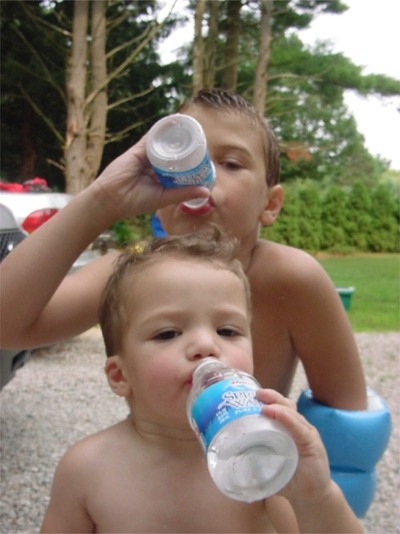
The little one, barely three, stood in the middle of the room, eyes glassy, hands at his neck, face darkening, and with his ten year old brother behind him, arms clasped around his brother’s chest from behind, trying to squeeze him — trying save his little brother’s life.

Your mind does not wander at such a time, exactly, but certain possibilities occur to you, so dark, so treacherous, so dreadful, that to picture them is to look into the abyss. Be careful of that, Nietzsche says; eventually the abyss looks back at you.

As I said, the mind does not wander. But your mind does become a sort of filing clerk — inefficient, disorganized, not lazy but hardly a help sometimes — and goes searching through everything in that dusty old heap of half remembered facts, prejudices, and habits we call our intellects.

Grab the boy. He’s limp now. Turn him around. Sweep your finger through his mouth. Far too late for that. Right hand, thumb cocked in at the knuckle. Place it beneath the breastbone, thumb knuckle in. Left hand grasps right wrist. Bend slightly forward. Then sharply pull up and in, hard enough to work, not hard enough to break him. One. Nothing. Two. Nothing. Three. Nothing. Four.

Hungry Hungry Hippos. The perfect white plastic sphere appears, covered in spit.

He’s upset, like a boy barely three often is, and wants a drink of water. His ten year old brother is upset in a different fashion, and is consoled by his mother. I — I’m grateful, I guess. The little one begins to eat crackers from his lunch plate, and watches Felix the Cat.

There have been times in my life when if I failed, I’d get a D on my report card, and a stern look from my father. Other times, if I failed, my leg would be broken or my tooth knocked out. Later, if I failed I could be booed and jeered in front of hundreds of people. Perhaps if I failed, people would have to look for new jobs, including me. I’ve failed ten times before breakfast, as the saying goes, but I’m not sure I’ve ever been faced with the life I pictured, just for an instant, in my mind’s darkling eye, with my boy in my arms — if I failed.

What do you know, and when did you know it?

We found the big brother in the bathroom late that night, weeping. I sent his mother away, and put him to bed. I asked him: how did you know how to help your brother?

I read it in a book in the library.

Who gave you that book?

I found it myself. But I couldn’t do it.

Your brother is OK. You helped him. You saved him. Just like you saved your father seven years ago, though you do not remember it. You found me, unconscious on the floor in my room, the stingers of the deadly bees still hot in my leg, found me gasping like a fish on the beach, and you got your mother and you saved me. You saved me, to help you to save your brother.

You are not a little boy any more. I can tell you now, that all any man wants is to be able to think, in a moment of repose, that his son is a better man than he. You are, and I am content. Go to sleep, and dream of your brother and you in the playground.

He slept soundly. I laid in bed for a long time, wondering: What do I need to know, and when will I need to know it?

Hardy Perennial

It’s my wife’s birthday again. I cannot explain it, but I will report it: I never get tired of my wife.

In many ways, I am a tiresome person. There’s something of the extrovert of biblical proportions to my makeup. As the saying goes, I want to be the corpse at every funeral, and the bride at every wedding. My wife is like the antidote to me. She is quiet, polite, and deferential, and is funny, but not music hall funny. Quiet funny.

We have children of course; the tie that binds. That idea — the tie that binds– is not as de rigeur as it once was. But the ties that bind my wife and I together are so strong, and so numerous, that I cannot picture them broken; and as time has passed, I’ve come to understand the elderly women who used to sit in the back of the Catholic church wearing black every day of their lives after their husbands had passed away. Would it be any different for me? There are holes that cannot be filled.

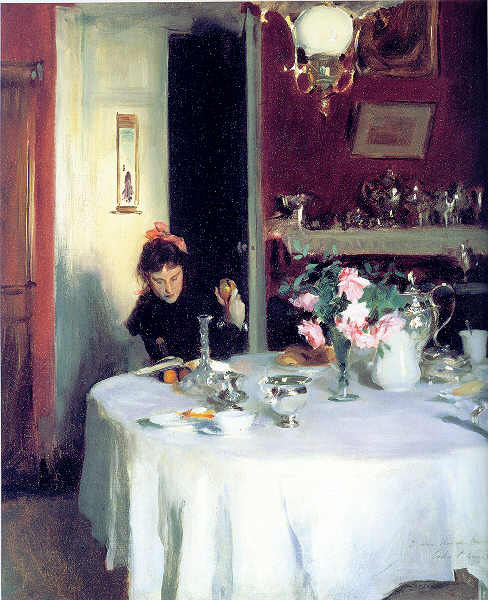
But no gloom today, please. She is radiant, and occasionally when we are all sated and content, she gets a moment at the table, alone with her thoughts. I see her and I know others settle for cut flowers, pretty, fresh, ephemeral. She is all that, but more too: she blooms daily, year after year, and will brighten the world long after she and I are gone, endlessly bestowing the solid good sense and grace she inculcates in her children, and through them who knows how many more.

I’m gratified she keeps me around. Like the cat, I do not understand why; I simply empty the bowls and purr.

The Prosecution Rests, Your Honor

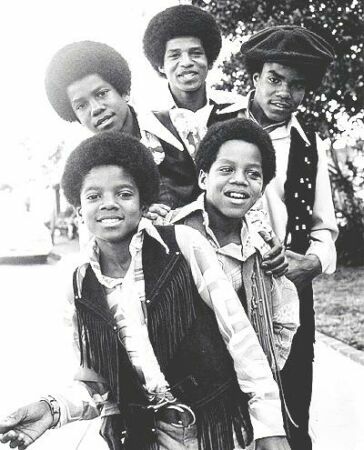
Well, we told you earlier this week, and last year too, that Michael Jackson could sing. When Nixon was President.

Well…

Poor Jermaine. That’s him singing call and response with his little brother and playing that crummy Gibson bass. Plaid pants with cuffs and big flares were all the rage then, so be try not to be too hard on him. Jermaine was the original lead singer, and if he’s not actually playing that song, he could be; his hands are fingering the correct notes we’re hearing. It does at least have a cord plugged into it.

Jermaine’s like the swimsuit model that has a child and shows up for her first postpartum photo shoot and notices the catalog has a scrawny teenager with a pneumatic rack on the payroll now. Days. Are. Numbered.

Jackie and Marlon look like they’re gonna get a beating after the show.

Month: April 2006

Find Stuff:

Archives