Things I Have In Common With Warren Buffett — Exhibit A

We’ve both been interviewed by Furniture Today. Buffett owns a furniture store, too. Sorry, Warren; they wanted my opinion five years ago.


Poor Warren. Wandering the earth for all those years, burdened with all that money, and it took him decades to work up the nerve to finally admit to himself that no man can be happy without his own furniture business.

Anyway, I have two terrible, dark secrets to reveal. You guys won’t tell anyone, will you? I sorta not-quite knew Eliot and Barry Tatelman, the brothers that inherited the business Buffett bought from them. Twenty-five years ago they were going through some sort of midlife crisis and were taking drum lessons from a friend of mine in Hopkinton, Mass. I was young and trying to make half my living playing music at the time. I was playing bass with anyone that had paying gigs. If you play the bass and sing a little, you can always work. There was an open mike night at Liam’s Irish Tavern in Framingham on Mondays, and I never could find work on Monday nights anyway, and the dissolute and mildly skeevy fellow that ran it needed a “house band” to play with all the flotsam and jetsam that came in. I’d been playing weddings in Connecticut with him for some reason or other, and he asked me to do it. For no money, just free drinks. I told him I knew the bartender and got free drinks already. He said all the other guys did it for free. I said to have fun with all the other guys. I knew he was getting paid.

We hit on a solution. He desperately needed someone to bring a drum set. If he allowed an amateur to bring a drum set, he’d have to let him play all night, and anyone that would haul an entire trap set up those stairs for no money would surely be awful and make for a long night for everybody else. So a friend who played drums gave me the remains of an old cheap red sparkle drum set he hadn’t used since the British Invasion, and I hauled it into Liam’s on Mondays, and later I bought a real drum set at Jack’s across from Berklee, and took a few drum lessons from that fellow I told you about that mostly took care of horses but taught drums on the side. 

I’ve been haunted by the specter of these two unholy secrets my whole life. I must come clean.

A. I’m sorry fellows, but Jay lied when he told you no one was getting paid; he paid me fifty bucks to bring those drums and play maybe two or three songs on them and then drink for free and play darts all night, and I’m not even a drummer. But I couldn’t tell anyone I was getting paid. I was just like Arianna Huffington, only I don’t think she even owns drums.

B. Hey, Eliot and Barry: that guy was charging you triple what he charged me.
Business 101: Don’t Forget The One

Welcome to Bootsy Business School, a wholly owned subsidiary of Famous Flames Academy. Professors John Starks and Bootsy recall Dean James Brown’s Unique Selling Proposition.


I’ve heard a hearty handful of terms in marketing literature for Unique Selling Proposition — why a product is unique and the benefits that will accrue to the user if they buy it. The terms are all pretty much the same, and you can trace them back past marketing to the term raison d’etre. Don’t forget your reason for being. If you can’t explain your reason for being, you’re not going to attract others to your vision — you don’t have one.

It’s very difficult to figure out your reason for being in the first place. Most businessmen never do. It’s the reason most businesses fail. Most people first look outside themselves for input. They get cacophony. Everyone is an idea person when they’re not in charge, or when they’re in charge but don’t suffer for their mistakes.Guys like James Brown attracted the best and brightest, and every one probably thought they were more talented and smarter than JB. They bristled under his ironhanded direction quite a bit. Look at what Bootsy became after he left Brown’s band. His talent didn’t diminish. It was diffused and diluted and became inchoate. He was lots of fun, and he made a living, but he never once had that one defiining thing that made him important. He substituted funny glasses and a wild getup for more substantial things. Maybe the circus pays better than being a sideman; I dunno.

The real trick to “The One,” that one big idea that carried James Brown, is that it’s all about serving the audience — the consumer. I’ll bet he had to tell his sidemen over and over to put a sock in it and get back to his one big idea. The person in charge has to be the champion of the consumer, not for the employees. The manager has to treat his employees well, in treasure or self-actualization, but he is not on their team. People who work in an organization tend to forget there’s anyone outside the building, or in tertiary stages of the disease, outside their own cubicle. The customers are an annoyance, their directors are nazis. If only everyone would allow them to amuse themselves, the world would be a better place. 

The world doesn’t work that way. Look at the people foaming at the mouth in Wisconsin, demanding that their managers ignore the customers and take their side against those customers. They can’t even remember who their customers are, never mind how they’re supposed to serve them. They have made the mistake common to people working in large organizations: The employees think they are the customers, and demand all sorts of things like a fussy purchaser might. They compound their mistake by thinking that the product is them, too, and point out that the product will be very bad indeed if they decide to throw their sabot into the gears because their managers won’t let them do whatever they feel like. On the other side of the coin, I doubt the new regime thinks they are reforming the school system, really; I imagine they figure that the product is so bad and the process for producing it is so byzantine that it might as well cost less, because gobs of money had no discernible salutary effect on it.

If management and labor collude against the customer, they better have a monopoly. But monopolies are by definition inflexible, so even a monopoly can’t last forever, and fails spectacularly when it does go.(Hello Blockbuster!) In a flurry of recrimination and chanting, sometimes; in soaped-over windows in an empty strip mall in the dreaded private sector.

Get your own “The One,” and once you find it, beat that drum, brothers and sisters. It’s a funky good time to be successful. At least I think it would be. How would I know?

2001, Fixed

Stanley Kubrick; the most overrated movie director until Tarantino came along. Of course there was an interlude between the two when George Lucas was writing dialog for Cigar Store Indians to recite like they were reading a phone book. But has anyone pissed away more money producing pointless screen time aimed at advancing a storyline nowhere using worse actors than Kubrick? I don’t think so. No one in his industry can match him; only politicians have done less with more.

Hey, It’s Maddrey Grass!

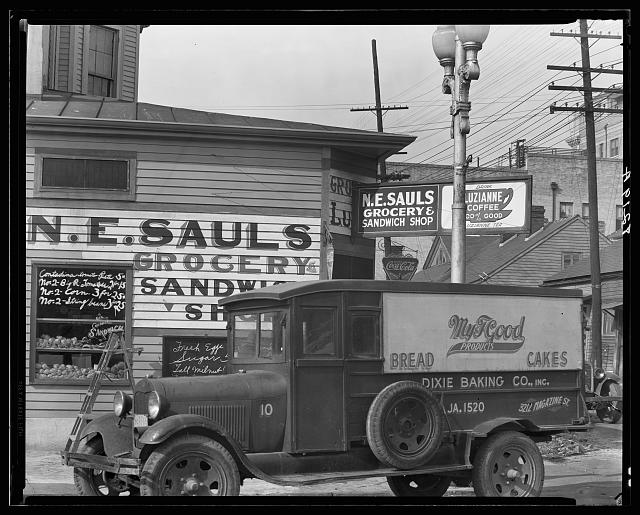
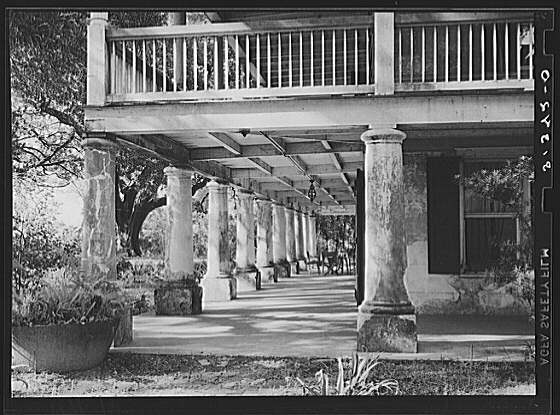
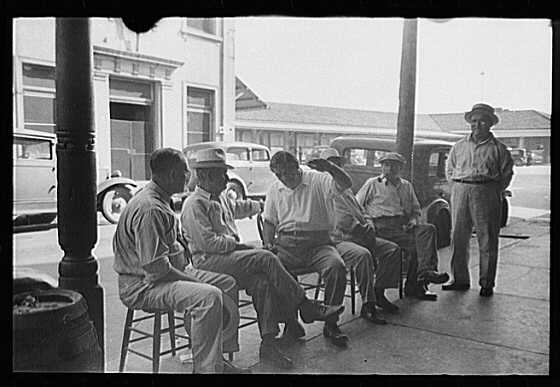
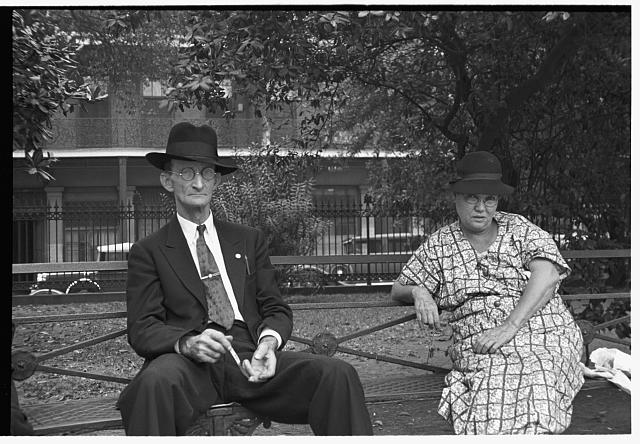
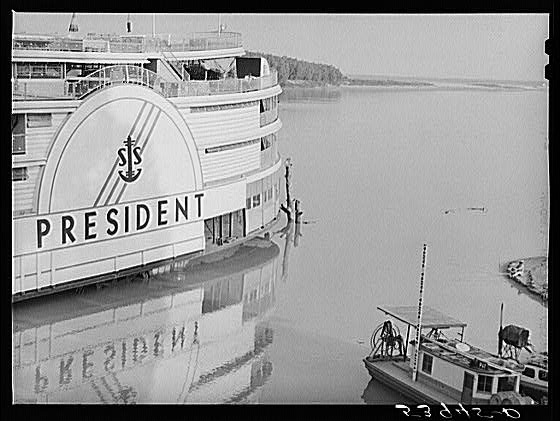
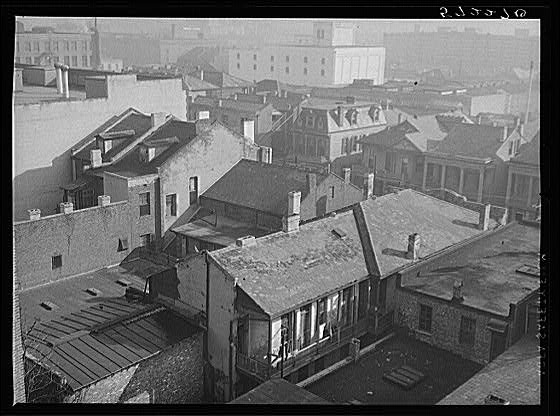
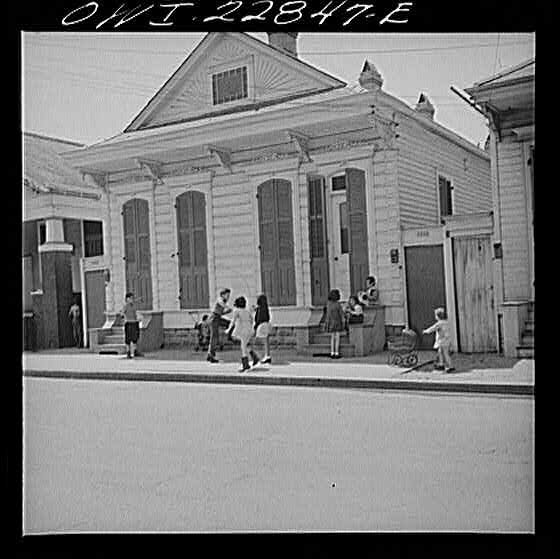
Well, that’s how Bugs Bunny taught me to pronounce it, anyway. Happy Fat Tuesday! Let’s hit it in the El Rayo-X style:

What the fuss is all about:


Riding on the City of New Orleans,
Illinois Central Monday morning rail
Fifteen cars and fifteen restless riders,
Three conductors and twenty-five sacks of mail.

All along the southbound odyssey
The train pulls out at Kankakee
Rolls along past houses, farms and fields.
Passin’ trains that have no names,
Freight yards full of old black men
And the graveyards of the rusted automobiles.

Good morning America how are you?
Don’t you know me I’m your native son,
I’m the train they call The City of New Orleans,
I’ll be gone five hundred miles when the day is done.

Dealin’ card games with the old men in the club car.
Penny a point ain’t no one keepin’ score.
Pass the paper bag that holds the bottle
Feel the wheels rumblin’ ‘neath the floor.
And the sons of pullman porters
And the sons of engineers
Ride their father’s magic carpets made of steel.
Mothers with their babes asleep,
Are rockin’ to the gentle beat
And the rhythm of the rails is all they feel.

Nighttime on The City of New Orleans,
Changing cars in Memphis, Tennessee.
Half way home, we’ll be there by morning
Through the Mississippi darkness Rolling down to the sea.

And all the towns and people seem To fade into a bad dream
And the steel rails still ain’t heard the news.
The conductor sings his song again,
The passengers will please refrain
This train’s got the disappearing railroad blues.

Good night, America, how are you?
Don’t you know me I’m your native son,
I’m the train they call The City of New Orleans,
I’ll be gone five hundred miles when the day is done.

lyrics: The City of New Orleans by Steve Goodman ©1970, 1971 EMI U Catalogue, Inc and Turnpike Tom Music (ASCAP)

Ballad Of A Thin Man

You have many contacts
Among the lumberjacks…

We went this week and sat in the audience. He’s only fifteen years old.

Month: March 2011

Find Stuff:

Archives