It's Hard To Become a Mexican Resident

If you’d like to become a Mexican Resident, instead of just a tourist in Mexico, you’re in luck. I can tell you how my wife and I and our cat managed it. Unfortunately, your luck runs out pretty quick after I start typing. Buckle up for 20,000 words that should have been a bulleted list. ¡Disfruta!

It’s Hard To Become a Mexican Resident, Part 1
Please note I said “resident.” I’m not talking about becoming a Mexican citizen, because that’s right up there with alien abduction and chupacabra ranching for practicality and likelihood. A married couple like us could, in theory, get divorced, go to Mexico, find two deranged myopic hard-of-hearing Mexicans and marry them, and thereby technically both become Mexican citizens. But unlike the US, if Mexico thinks you’re doing it for a dodge, they’ll probably tell you to pound sand anyway. It’s easier to explain this process if you just accept that you can live in Mexico like a Mexican, but you can’t live in Mexico as a Mexican. This is not ‘nam. There are rules. Boy howdy there are rules.

You can’t start this procedure in Mexico. If you’re a USian, you have to visit the Mexican consulate nearest you in the states. In our case, that was Boston, Massachusetts. That’s two states and a four hour drive away, but rules is rules. You need an appointment. Actually, if you’re a married couple, you need two appointments. The internet (teehee) and the consulate itself will tell you that you either can, or must, make your appointments using their online portal. It doesn’t work, and you can’t.

Hell, you’ll find out after trying to log in to their portal, over and over, that Boston doesn’t even have online scheduling. You can try calling if you don’t mind “Press 1 for Spanish.” Or more to the point, press whatever you like, you’re getting Spanish. They’d prefer (demand) you ask by email. We did, in English and Spanish. The consulate does not even acknowledge that they received it. You’re just supposed to wait, and wonder. After a few weeks, you can email them again. It feels strangely like pushing the elevator button even though it’s already lit, and you and four other people have pushed it already. You are strongly cautioned (by the internet again, teehee) not to get uppity with your followup requests. Just plead a bit. You won’t get an answer to that email, either. You’re instructed it might take up to six weeks to get any sort of reply to anything. And the answer might be two appointments days or weeks apart, months after the reply.

You can try consulate shopping. Wild tales of Vegas consulates passing anyone with a pulse and a few shekels in their pocket are rife on the internet (teehee), for instance. Others have reported luck, good or bad, all over the US map. We looked into going to the Philadelphia consulate, and a couple in Florida, and Houston, because we read that they might be faster than Boston, but we could never schedule an appointment online anywhere. It’s all broken, or we are. And being stranded in a strange city on an open-ended commitment to waiting around wasn’t appetizing. When we begged for appointments in Boston the second time, we lied only a little and told them if they had any cancellations, we’d show up on short notice. American dependability being what it is, they emailed us back with two cancellation slots on the same day a month in the future. God knows what we would have said if they said, “We have one later today.” I can talk faster than a car salesman, but I can’t drive faster than one.

So you’ve got an appointment, What’s required? for openers, you best be a good boy. Been arrested much? Forget moving to Mexico. They’ve got problems of their own, and they’re not interested in importing any more, unless you count me.

You’re going to need money, and I don’t mean toll change. The fee to apply for a residency visa is only $56 per person (in cash, not refundable if you flunk). That’s just the cover charge. There are several ways to demonstrate that you’re not (ever) going to be a burden to the Mexican state, and they all involve various sums you might not have. You might think you’re a rich American, so no sweat, but Mexico doesn’t care about your theoretical money. Equity in your house is theoretical money, for instance, or imaginary if we’re talking about 2009. They’ll also require documentos out the ying yang to prove said sums. For example:

The most common way to get permission to live in Mexico for 1 year is through solvencia económica. The sum required is based on a certain number of days of Mexican minimum wage, which is very minimum indeed, but they want to account for a lot of them in a row. It varies by consulate, and they change it every year, but you’re going to need about $80,000 in the bank to qualify. If you’re married, you’ll have to pay for your spouse, too, but it’s not double. You need somewhere between $2000 and $5000 more.

After you’re done puffing out your chest and sniggering about a paltry sum like eighty large, let me clue you in. Your net worth don’t mean jack shit. It better be in cash, or something close to it, or it doesn’t count. And you don’t get to “explain” anything. It’s “show, don’t tell” south of the border. You have to present 12 straight months of at least that much money on original bank statements. Dip one peso below the required amount for one hour six months in, and your clock starts again. If you’re one of those sexy people who does everything on your phone, including your banking, waving the balances on your Nokia phone at the consulate staff is going to get you precisely nowhere.

We had original bank statements, because we’re the last people on earth that get them mailed to us. We still had to get a credit union officer to personally stamp and sign every month, every page, and then write a cover letter on bank stationery that averred that both my wife and I had unrestricted access to all the funds for the entire 12 months. The look on the bank manager’s face gave me the impression she would have preferred that we rob the bank. It would have been less trouble. And if another month ticks over while you’re waiting for an appointment at the Mexican consulate near you (it will, and it did), you have to go back and get the latest ones stamped and signed, too. And by the way, the consulate wants several copies of every page in addition to the originals, and you better not have a staple in them, or any doodles or highlighting on the originals. When we got our interview, it wasn’t a formality. They looked at every page, and scrutinized every deposit. Got a windfall in there? Best be able to explain it.

[To be continued]
It’s Hard To Become a Mexican Resident, Part 2

[Note: continued from yesterday’s post]

Showing you’ve already got enough money to keep you in tacos and cervezas forevermore is called the Savings and Investments route. It’s the one we took. You can also show them that you make enough money every month to qualify instead of a single pile in the bank. It varies from consulate to consulate, supposedly, but it’s $4,400 a month, net, after taxes where we went. Got a spouse, or child to cart along? Add another $1,400/month per person. You have to prove you’ve made that much for the last six months, unless you go to a fussy consulate, and then it’s twelve month’s worth of proof. If you miss on the low side for ten minutes, the calendar goes back to zero and you start again. Even though it’s ostensibly any kind of income, it’s still aimed at retired people. Mexico hates anyone who will move there and take any Mexican’s job. They’d really prefer that you make that almost $70,000 a year completely passively. And, you know, spend it all in Mexico.

If you’re a digital nomad, you can find any number of places on the internet (teehee) that say that Mexico loves you. Hell, the current Mexican president ran an ad campaign inviting digital nomads to Mexico City when she was the mayor there. Later, she expressed solidarity with protesters chanting gringo go home, stop taking all the good apartments. So I’d keep the “nomad” part of digital nomad in the back of your mind at all times.

In any case, good luck proving to the authorities that you make that kind of dinero every month. If you’re a freelancer, the paperwork is nearly impossible to produce to their satisfaction. They understand W-2s, but your digital bank statements with weird money coming in fits and starts from all over will get you an adios muchacho as often as not. Most digital nomads simply enter the country on a regular tourist visa, which usually allows you to stay for six months. Then they bugger off somewhere else, and then re-enter Mexico later to get another six months. That’s true, unless the immigration officer at the airport doesn’t like the fact that you have no return trip on your plane ticket, and stamps a few weeks on your passport instead of six months. That’s happened to people we know.

Remember, these are all numbers to allow you to stay legally in Mexico for a single year. You’ll have to renew it every year for three or four years, keep your nose clean the whole time, maybe pay Mexican taxes if you’re still working some, including tax on your Social Security as if it was regular income, and pay a substantial fee each time (about $650 per person, per year), until they relent and make you a permanent resident. If you want to become a legal permanent resident right away, you have to have approximately $300,000.00 parked in your accounts for a year, or earn $7,400 a month, net, after taxes, and prove it for the last six or twelve months to their satisfaction. You’ll have to pay more for your spouse, too.

This is just the warm up for proving things, by the way. You’re going to need your birth certificates, and marriage certificates if you’re currently manacled to anyone ’til death or a divorce lawyer do you part. But you’re also going to have to prove that the documents are legit to their satisfaction. To forestall problems, you should send away to the secretary of state of the state you were born in, and married in, enclose your documents, pay a fee, and have them apostilled. If you’re unfamiliar with the Hague Convention of 1961 as it applies to your birth certificate, join the “I’ve never heard of an apostille club.” We meet every other Thursday, and liquor is served. An apostille is a way to certify who is who no matter where you’re from, or where you’re going. The apostille punches two holes through the cover sheet and your document, and certifies it’s real by putting a blue ribbon through the holes, and then affixes it with a giant gold seal. It ends up looking like the kind of document used to legally cut off Anne Boleyn’s head.

Whoah, there, big fellah. You’re not done yet. The Mexican consulate can’t be expected to read the underlying document, because it’s all in English and tied to the back of your apostille. So you have to hire a certified translator, who has to read all the info on the apostilled documents, and translate everything into Spanish. But you can’t separate the cover apostille from the document, so you have to take a bunch of pictures of it by rolling up the cover page every which way, peeking at various angles, and blend it into a kind of mosaic picture of the underlying certificate. Then they translate it into Spanish for you, with an official CERTIFIED TRANSLATION stamp and signature on the document. They generally spell your father’s name wrong, and the town clerk’s name wrong, and about a dozen other mistakes, which you correct for them so they can charge you money for this exact translation.

You’ll need passport pictures. Don’t smile or they don’t like them. I haven’t smiled in thirty years or so, but my wife’s face almost broke trying to look serious. Bring at least two copies. The internet (teehee) says you don’t need them, because they take your picture for your visa anyway. Whatever the internet might think, the consulate took the photos we brought and pasted them on our file, and would have sent us away if we didn’t have them. Oh, and by the way, you need extremely sharp photocopies of everything I’ve listed, including color copies for your passports, usually in triplicate. I compiled a binder for each of us, both over an inch thick. I used clear sleeves to hold the documents, which can’t have any staples, and if you three hole punch anything, go back to square one and start over.

[To be continued]

It’s Hard To Become a Mexican Resident, Part 3

[continued from here and here]

Well, we’re going to play it as it lies, as they say in golf, or play it as it lays, if you’re Joan Didion. I’m a good writer, I’m not Joan Didion. Please note a certain ambiguity in that last sentence introduced by punctuation selection. At any rate, there are more holes in my narrative than any golf course, so we’ll just play through, and not argue about verb tenses.

So we’ve got all our paperwork in order (we think, who knows?), and an appointment at the Mexican consulate in Boston, Massachusetts. A while back I hinted at what I was doing in my essay I’m So Amtrak I Could Cry. Reader Jean sussed it out, for instance.

We were prepared to be disappointed, of course. Things being what they are, the disappointment buffet at any governmental restaurant is always well-stocked. You can’t always get what you want, as the poet Jagger once opined, but if you try sometimes, you get what you need. What we needed was a special stamp in our passports that had one more ugly picture of us and the word canje somewhere on it.

Canje is an interesting word. It was always explained to me to mean “change,” or maybe “exchange.” The official internet translated definition is: redemption. A good writer could get 10,000 words out of that comparison alone. I’ll just say it suits me just fine. I’m no Joan Didion, remember? In this context, canje is the process to change from tourist to legal resident.

My wife and I dressed for Boston winter, tried to paste down our cowlicks, and made our way to the consulate. It was on Franklin Street, a short walk from where we were staying.

If you’re in the mood for a laugh before we really get down to business, you can ponder on the tree of woe that the Boston Mexican Consulate has a Yelp! page. Talk about yelling at passing traffic from an overpass. It has seven reviews on there too. Five say the living is easy, fish are jumpin’, and the cotton is high. The other two were the kind of unhinged rants that Yelp! always provides for our amusement. An excerpt:

I went to this place to get a tourist visa, and the guy and the old lady behind the counter were completely unhelpful. They literally started making up documents that I should’ve brought with me and the guy was very sarcastic from the beginning. Funny how they don’t like it when Trump treats them this way, but they want to treat other people this way….. humanity is lost!!! Go to a different consulate if you can or travel to a country where a visa is not necessary.

I like this one a lot, because it’s dated just a few days from the date we visited, so I can verify or contradict it with some kind of authority. Lucas, my man, you sure are confused. Humanity is not lost, but you should maybe wear a bell so they can find you when you wander.

Firstly, what do you need a tourist visa for? If you fly into any major Mexican airport, they just stamp your passport with a 180 day limit, and you’re a tourist. Way back in the dark ages they used to give you a paper form to fill out on the plane, but that’s yesterday’s news, friend. It’s hard for people to be helpful when you don’t even know what you’re trying to do.

Secondly, I spent a long interlude with the people behind the counter, because I was being interviewed, and I brought more than a handful of gimme with me. And I can testify, your honor, that I thought the young lady behind the counter was the pleasantest, prettiest girl in Mexico, sent to the states to shame us. Well, I thought that until her co-worker walked by, and made me wonder how the Miss Universe pageant would get along without her. And they both spoke perfect ingles whenever they felt the circumstances called for it, which was nearly all the time with me.

“They literally started making up documents that I should’ve brought with me…” is a another hoot.  The word “literally” has become the English equivalent of saying ugh, or sneezing, or maybe farting. It has no meaning, just a sound, and a faint odor of mendacity.

They’re “making up” documents like birth certificates. You might not remember it, Lucas, but you and your mother were in the same room at the same time a while back, with a lot of people dressed in pajamas and wearing masks on their faces, surrounded by lots of machines that made various beeping noises. Originally, that description was reserved for the maternity ward at the hospital, but of course now if everyone is in pajamas, wearing face masks, surrounded by beeping machines, with a woman screaming expletives at everyone, you might just be in the checkout line in Walmart. But you were born, Lucas. They’d like you to prove where, and when. Kinda important.

“Sarcastic” is not le mot juste, either, if he’s referring to the guard at the door. He was ferociously armed with a clipboard, which might have frightened poor Lucas, but what he was, was funny, not sarcastic. He looked at my wife and me, and winked and said, “English or Spanish?” It went like this:

Me: I’ll try it in Spanish. Mi mujer y yo tenemos una cita para obtener residencia temporal.

Guard: [laughing] No, no, you did good!

So we took a seat and my name was called. That’s when I became a judge in the Miss Mexico pageant, without voting rights of course. The young lady took my binder, laden with documents, all copied into triplicate, each in a clear plastic sleeve with the corner clipped so they could be removed and re-inserted easily, in the order the consulate prefers. You know, you can use the internet for more than complaining about stuff on Yelp!

The consulate official flipped back in forth in the binder, scrutinized the bank statements with a gimlet eye, removed whatever copies she required to save, and then gave me the second-greatest compliment I’ve ever received about my behavior. The first was when my wife said, “I guess so,” when I asked her to marry me. But this was pretty good, too:

“Are you a lawyer?”

“No.”

“Are you an accountant?”

“No, I was a construction worker.”

“You must have been a very organized construction worker.”

[To be continued]

It’s Hard To Become a Mexican Resident, Part 4

[We’re recounting the difficulties in receiving a Mexican residency permit. It’s continued from here, here, and here]

The ongoing pleasantness at the Boston Mexican consulate continued unabated. Officially, my wife and I had separate interviews. The consulate official asked if my wife was with me. Of course! Well, fetch her out and let’s have a look at her! We’ll take care of both of you at the same time.

I hadn’t disappeared into the inner sanctum for enough time, so when I returned to the waiting room, my wife spotted me and made her charming Oh-No-What’s-Wrong Face. Did you screw it up already? If they chase you up the street, I’m going to pretend I don’t know you.

Relax, honey. They just want to talk to both of us. They’re nice. I know it’s hard to believe, but a person behind a counter in a government office can be nice. Serious, efficient, and thorough, but pleasant. If I hadn’t seen it with my own eyes, I wouldn’t have believed it myself. We’ve all become so inured to martinets in ill-fitting polyester uniforms, badges askew, GED intellects on display, barking orders at us in the lines at the airport that we’ve forgotten that the slightest bit of authority doesn’t have to devolve immediately into imperiousness.

I’ll give us a little credit on that score. We understood that we were asking Mexico for a favor, and acted like it. Let us live there. We weren’t in a position to demand anything. You could be turned away for most any reason. It doesn’t even require a pretext. I don’t like your sweater, so beat it is always on the menu. I’m as charming as a cactus, of course, but they couldn’t wait to invite my wife over for an extended stay. She was going to bring a cat, and me, and some luggage with her, that’s all. In no particular order.

The clerk had already pored over the financial portion of our requirements for a married couple. We had plenty to spare, so the questions for my wife were scant compared to mine. The Mexican woman was too polite to ask, Did you really marry this guy? You’re not a hostage or anything? Seriously? He didn’t hold the deed on your family’s farm, and force the marriage? He didn’t threaten to tie you to railroad tracks unless you said “I do?” You’re not blind? You really stay married to him on purpose?

She just went over all the documents and made sure they all assembled her maiden and married names in a regular way. People make trouble for themselves with their elaborate married naming predilections these days. We find hyphenated Americans do it to keep one foot out the door at all times, starting with the bridal suite.The consulate just wants to figure out who you are. Our apostilled marriage and birth certificates with Spanish translations helped here.

American naming conventions differ from Mexican in other ways, too. They have very traditional customs with four names, generally. That’s how you end up with María Fernanda López García and similar. First name, middle name, dad’s last name, mom’s last name. Husband might be José Antonio Hernández López. Same naming order. His name doesn’t change if they marry, hers can. She might add “de Hernandez” at the end of her full name, but I guess that’s dying out except for in very formal settings. Most just keep their names, same as hombres. A very few go the hyphenated route. When you have kids, they generally drop the mother’s names off the end and smash the two grandads names on there. María Fernanda López García marries José Antonio Hernández López and their daughter might be Consuela Hernández López. So it is possible to end up being a Hernández Hernández, but fairly unlikely.

Back to the action. We were informed by the internet (teehee) that it might take up to two weeks to receive the canje visa stamp in our passports. I dreaded the idea of another trip into the belly of the Boston beast to pick them up, but it was not to be. We were directed to wait in the aptly named waiting room, and it would be done for us shortly. We spent a pleasant hour or two chatting in broken Spanish and fractured English to the other folks waiting around. They were all Mexicans getting other documents straightened out. A fellow from Guanajuato and I hit it off a bit. He’d been living in Rhode Island not too far from where I grew up. There was a charming, round-faced little girl with delightful cartoon pigtails and an adventurous spirit marching up and down the aisles. She really liked the pictures my wife showed her of our cat. A balam! (the Yucatec Maya word for jaguar).

Hey, leave me out of it. I’m not doing anything bad right now.

The “sarcastic” guard came out and gave us our spanking visas, and gave me another wink and a “You did good” one more time. We were instructed that the visa was only good if we entered Mexico within 180 days, and then once we landed, we had 30 days to finish the job at the INM, the Instituto Nacional de Migración.

Gulp. I guess now we have to move.

[to be continued]

Your New Life Will Cost You Your Old One

[We’re recounting the procedure for becoming a temporary Mexican resident. The entire series is here, in reverse order]

We’d made a terrible mistake. That’s our stock in trade: mistakes. We were in Mexico last October, and we entered into a rental contract starting in March 2026. If there is a better definition of “your ass in the breeze,” I have not seen it. We can’t afford one set of rents. Two gets comical, and we’d have to start elbowing the cat out of the way and eating out of her bowl. But we were tired of the AirBnB life, and weary, after one try, of renting a pig in a poke of an apartment, like we did in Augusta.

While we were there, we got a tour of our prospective Mexican casa, and more importantly, we got to hang around the neighborhood all day. We could see they weren’t testing missiles next door. There was no rendering plant across the street. No halfway houses for murderers who won’t go all the way nearby. We were especially interested in avoiding another gay disco over the back wall. We enjoyed that once, at an AirBnB in Santa Lucia. The nightly throom, throom, throom still rings in my ears a bit. There is no cure, only palliative care.

The casa on offer suited us fine, and the neighbors were regular folks for the most part. We had avoided “Gringo Gulch,” the locals half-joking sobriquet for the AirBnB rental ghetto for expats.  But we were still in the heart of things. So we took a wild guess, and thought October to March would be enough time to get our affairs in order. We were nearly right. We’ve found that nearly right is right enough for horseshoes, hand grenades, and international travel.

But I ask you. Could you pare down your possessions to fit in four large suitcases, a carryon, and a cat in a sack to stuff under the plane seat? That’s what we were attempting. We ended up with only thirty days to accomplish it. Oh, and by the way, each suitcase can only weigh fifty pounds, max. That’s what we were up against.

And oh, that cat. If we gave up our apartment in Maine, we’d have to walk out the door with the cat under our arm and board a plane the same day. Not bloody likely. A cat is worse than a toddler. We couldn’t camp out, literally or figuratively, for a short interregnum between households. Not literally camp out, because actual camping in Maine in February is considered brisk even by esquimau standards. Only the cat would survive, now that I think of it, and she can’t fly alone. And camping out in the short term rental world ain’t easy if you bring a cat. We came up with a solution.

Hey, what’s all this talk about a sack?

We built a Time Masheen and took a short jog back through the calendars to our younger days and had two sons instead of purse dogs, iPhones, and eight dollar lattes every day. By the time our predicament rolled around in the present, these children were huge adult people with opinions and shaving gear and driver’s licenses. They offered to move our furniture out of our apartment after we left.

One is suspicious of instructions to leave the country ASAP when you get them from your children. It is possible that my wife raised two pleasant and helpful humans. The alternative explanations are too grim to contemplate.

We had already flensed the whale of our belongings when moving from a giant Victorian house to a pokey pied-a-terre in the metrop of Augusta. We pulled a tremendous dodge to get rid of a lot of our furniture. There was an antique marketplace in the next town. It rented booths by the month, and then manned the checkout line to collect the tariffs on whatever junque some unsuspecting stranger might buy. Since our belongings were either flea market finds, or phony antiques I had made, we fit right in. We priced everything lower than market rates, so the stuff more or less ran out the door. The people who ran it would occasionally scratch their heads when we sold something like an antique bench, and I’d show up the next day with another one just like it. They never did catch on the the true reason we were renting the booth was the square footage of the booth was cheaper by the month than the square footage of a self-storage locker. Getting any money for the stuff was gravy. We ended up selling almost everything, and we gave the few remaining things to the lady across the antique store aisle.

I spent two solid weeks taking digital scans of every document and photo we’d accumulated over the years. If anyone wants a copy of a photo of me grimacing at my high school graduation, taken by my mother, I’ve got one. I put all my important tax documents into a hard drive, which I hoped would fall out of the cargo hold at 12,000 feet. If the plane went down in flames, everyone else would have screamed and rent their garments all the way as we spiraled into the ocean. I’d be sitting there with a beatific look on my face, secure in the knowledge that the hard drive was going to be smashed or drowned along with me. Cheaper than travel insurance, too. The hard part was the books.

Jayzuz, the books. We might have 1,000 of them, I don’t know. Maybe more. Maybe a lot more. I don’t buy bad books very often, so I never have a big box of Dan Brown books out on the curb for the trash man, to free up shelf space. My wife doesn’t read trivial stuff either. You don’t give 100-year-old hardcover Henry James novels the heave-ho when you’re done with them. The usual route of lending them to friends and relatives doesn’t work for us, either. Everyone my wife knows reads ghostwritten autobiographies of second-string Red Sox shortstops. I’d give them a pass if it was Rico Petrocelli, but it’s always some imbecile from ten years ago with cogent advice on how to step out of the batter’s box seventeen times to adjust their batting gloves. We can’t give our books to the library, either.  They’d  burn our books in pyre outside the coven of perversion they’re running, and dream of doing the same to us. They hate Shakespeare now. What chance does my Kipling have?

It was easy to pack away the yards of shelves of books about furniture and building stuff. Where I’m going, everything is Fred Flintstone in the architecture department. There isn’t enough wood in the whole of Yucatan to build a picnic table, never mind a house. After that, it got harder. We set up a biblio-triage, holding up a second edition Life on the Mississippi and a 1946 translation of Don Quixote. Cervantes won, but mostly because Twain himself thought it was one of the greatest books ever written, and I had already earmarked ten Twain books for the Go pile, and my wife said enough, basta, and demasiado at the same time.

[to be continued]

Not a Swinger’s Party for Realtors, or: How To Move to Mexico

[We’re outlining the perils, pitfalls, and benefits of obtaining Mexican residency. A catalog of entries is here, in reverse order]

Reader and commenter Jed sniffed out a void in our info about moving to Mexico yesterday. I’d mentioned that we were limited to four suitcases, 50 pounds each, a couple of carry-ons, and a sack full of cat. He’s seeking sense and sensibility in our actions, and not always finding it:

Four suitcases sounds too extreme. Makes me wonder what options are available, and how tenable they are, for retaining a larger set of possessions, and shipping them to you once you’ve gotten settled into a suitably large place.

Well, Jed’s right to wonder. We looked into this deeply, and settled on the course of action I’ve outlined. There are others. For the most part, they’re reserved for people with more money than we have.

The internet often mistakes our lack of squalor as access to scads of money. We don’t look like trailer park folks, so they figure we have enough dough to avoid that kind of life. But even the US Senate is at least half-filled with People of Walmart now. More money just buys more squalor with Gucci bags thrown in. I have often opined that nearly everyone was like us once. Now almost no one is. More money doesn’t enter into it much, except to allow people to graduate from meth to coke, and better lawyers to bail them out of jail.

So Jed’s right. You can have more, and larger, and heavier bags than we did. This is an international flight, though, for at least one leg, and they charge like crazy for extra baggage. The sliding scale for bag weight gets eye-watering quickly, so we bought one of those suitcase scales and made sure we were under the limits. We had to pay something like $40 for the first bag, $50 for the second, and $200 if we wanted a third. No checked bags were free on our flight, and we weren’t flying steerage, either, although not first class.

It’s funny, and I don’t know when it morphed, but I’ve noticed that first class on a plane is always filled with the sketchiest-looking people on the plane. It used to be freighted with guys in business suits getting comped by their companies. Now it’s the bar scene from Star Wars. And we’re not flying Southspirillegianontierwest Low Bidder Airlines, either.

So we decided on two large (38″) checked bags each. Larger suitcases, volume-wise, were available, and able to be checked, but they were useless to us because of the weight. Fifty pounds isn’t a hard limit, but go even one pound over, and it’s an extra hundred bucks. And no bag over 70 pounds, no matter how many martinis you qualify for in first class.

Jed is still further correct: There must be another way. There is: menaje de casa. It sounds like a swingers party for real estate agents. In reality it’s just a one-time gimme from the Mexican government to let you bring in your household belongings without being classified as an importer.

Pretty much everything you bring into Mexico except the clothes on your back, and what you can stuff in four suitcases, makes you an importer. That includes driving a car in. There are tariffs and taxes and rules and regulations and problems out the wazoo if you’re classified as an importer. But Mexico understands that if you’re going to become a legal resident, you might want to bring a household’s worth of stuff in to the country, so they give you a shot at it. The nature of this opportunity isn’t a gravy train on biscuit wheels, however:

You can only do it once. You can only do it within three months before arriving, or six months after. Everything you bring must be used. If any item is still new in a package, you’re back to being an importer. Better not bring more than one of anything, either, or you’re back to being a wholesaler in addition to being an importer, which is a whole ‘nother kind of trouble.

So it’s possible to use the menaje to bring your stuff. Clothes, furniture, dishes, books, knick-knacks, hobby stuff (but probably not much in the tool department), belongings like that. No food, booze, guns, or other fun stuff. We’ve talked to several couples who have done the manaje. They reminded me of talking to Vietnam vets in 1974, muttering the horror over and over.

First, there is the cost. Only certain moving companies can do the deed. One couple we know paid $9,000. Another $7,000. The last people we talked to didn’t mention the price, but they did mention how the moving company packed up their stuff, transported it just over the border, then unceremoniously dumped everything in a pile in a parking lot, waiting for the Mexican leg of the moving daisy chain to pick it up. A lot of their stuff arrived busted. Some didn’t arrive at all. Other people said their stuff was left out in the rain, to boot.

To qualify for the menaje, you also have to compose a bill of lading, in Spanish, of every item in the load, and I mean every item. You can pay someone to do that for you too, I guess.

There is yet another way forward, and we took it. It’s quite common in the Yucatan to rent places by the year completely furnished, with most everything you might bring with you in a menaje. Many, if not most houses are sold completely furnished, too. The place we rented has everything from shot glasses to percale sheets.

So four suitcases it is. The realtors will have to tie each other up without our help.

[to be continued]

Don’t Know When I’ll Be Back Again: Moving to Mexico

[We’re recounting the difficulty of obtaining legal long term residency in Mexico. You can see the whole saga here, in reverse order]

John Denver, just like Jimmy Buffett, had one good song in him. Unfortunately, their entire careers happened after that one good song. It’s the way of the (music) world.

At any rate, our bags were packed, and we were ready to go. A hard deadline concentrates the mind. Plane takes off on a certain date at a certain time. No backsies. No refunds, no exchanges. Be there or be square.

We stuffed each of our four suitcases with 49.5 pounds of our old life, and set off on for a new one. We’d been up since 2 AM the night before the night before, and we never did go to sleep on Hejira Eve. We left for the airport at around midnight, to catch a 7:00 AM flight. Yeah, traveling is like that now.

Go ahead laugh at me. Of course, we were driving to Logan Airport in Boston. I had no idea exactly what would befall us there, but in my experience, Boston is the epicenter of befalling shit, including the occasional tunnel ceiling slab. My friends here in Mexico chide me for looking both ways before I cross a one-way street. They’ve never been to Boston. I don’t mention that I also look up after looking left and right.

Go ahead, laugh at us. There was a bomb scare at the airport that overnight. The Gropers weren’t on strike exactly, but they were still unpaid at that point, and none too happy. The lines were prodigious, even at 4 AM. It wasn’t debilitating enough, so they made us take the cat out of the bag.

I can’t believe we actually let the cat out of the bag. I’ve heard that expression umpteen zillion times. I’ve uttered it septillion more times. But until then, I was never asked in earnest to let the cat out of the bag. In an airport TSA line, with a thousand onlookers, a bunch of dogs present, machines beeping, lights flashing, a cover version of Leaving on a Jet Plane by the Fifth Dimension playing on the muzak, between microphonic excoriations to stop leaving our pistols in our carry-on bags.

The cat was freaked out already, of course. She’s quietly crouched in 1/10th the total volume of the tiny bag she’s in, shuddering, drinking nerve tonic and chain smoking. But they want us to double down, and let the cat out of the bag.

My wife, who is shy  and polite, but quite brave, volunteered to take one for our team. I was busy explaining all the various tech equipment in my carry-on to an agent who didn’t know what a computer was. So my wife let the cat out of the bag, and held onto it for dear life. It went spastic, but somehow she held on to it.

They weren’t interested in the cat all that much. They just looked around the bag to see if it was stuffed with Claymore mines or cocaine or something worth stealing. Then they let my wife put the cat back in the bag. They proceeded to wipe down my wife with cloths to make sure she didn’t have an explosive residue on her. You know, from our cat, Patty Osama bin FARC Red Brigade Hearst. My wife asked if all the blood on her hands, arms, and chest would interfere with their ministrations. They said no, so we were passed on to the plane, in search of peanuts, Sprite, and band-aids.

Go ahead, laugh at us. We got to Miami, the only stop before heading over to the Yucatan, and got on the next plane. A woman’s voice came over the intercom. This the captain speaking…

Please insert hidebound, bigoted comments here, about wishing you heard some form of Top Gun voice from the cockpit. I don’t have the strength. But I will admit my wife and I rolled our eyes reflexively at the same time. And we weren’t disappointed. By that, I mean we were disappointed. The plane backed up ten feet, and shuddered to a halt. Then we were treated to two solid hours of staring out the window at the same patch of pavement, while the pilotess chimed in every few minutes with announcements like: it’ll just be a few minutes, minor technical problem, teams are on the way to diagnose, just a few more minutes…

Many of the passengers grew restive. I was sanguine, mostly because I was getting a lower back massage for two hours from the little girls sitting behind me, kicking the seat non-stop. Very invigorating. They perhaps sensed that I hadn’t slept in 36 hours, and wanted to help me stay awake.

After two hours of this, another voice came over the intercom. Unlike the last 22 announcements, It was pitched in the Barry White register, and sounded like Clint Eastwood. This is the captain speaking…

So they’d found someone who knew where reverse was on a 737, and plugged him in. Hallelujah. Five minutes later, the plane took off, and nothing could stop us but antiaircraft fire, and I hear Cuba is fresh out of that, among other things. When we landed in Merida, we filed out of the plane, took that familiar left turn at the cockpit door, and almost felt sorry for the female pilot, now sitting in the right-hand seat, looking sheepish.

Almost.

[To be continued. Many thanks for reading, commenting and hitting our Ko-Fi tip jar. It is greatly appreciated]

The End of Rompecabeza: How To Move to Mexico

[We’re recounting the travails of becoming a legal Mexican temporary resident. You can find the whole thing in reverse order here]

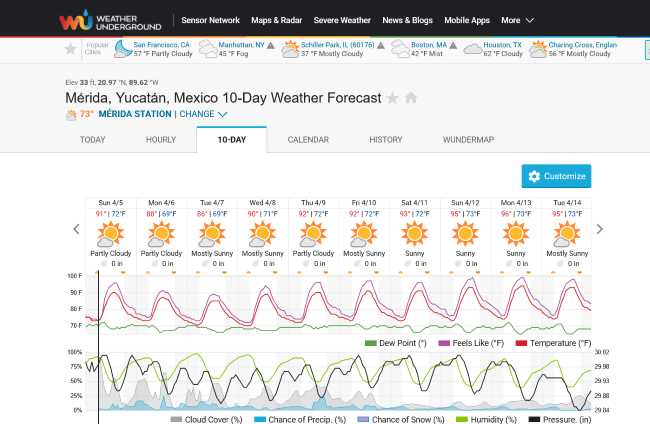
We’d finally arrived in Mérida, Yucatan. The weather was nice. Ninety-ish. That’s not unusual. To wit:

It does get hotter, and when it rains, the rain falls down, but the temperature never falls below 60 degrees F here. To give you some idea of what it was like in Maine when we left, here’s a picture of the Kennebec River behind our apartment building:

I’ve shown that picture to Mérida residents. They ask me why Maine paves their rivers with concrete, and why they do such a bad job of it. However, I am at a loss to explain Maine to anyone, never mind Mexicans. I have several million words on this website to prove it.

I am also at a loss to explain the Mérida airport (Manuel Crescencio Rejón International) to anyone under the age of about 50. It’s what airports used to be like, but never are anymore. It’s pleasant, and I don’t mind going there.

The airport bustles, but it’s not crowded, It’s clean and orderly. Every poster on the wall is not some form of threat. The staff of all sorts are efficient, but never brusque. Most of the interactions you have are with pretty, tiny girls (the Maya are not tall), wearing dad’s blazer and mom’s makeup. Then again, I get the feeling if someone pitched a fit, or worse, there’d be a serious force present to restore order in a hurry.

But then again, Mérida airport is already orderly, so there’s no need to restore it. American airports are mosh pits lorded over by prison guards by comparison.

Now things were going our way. When you get into the terminal proper, you’ve got to go through immigration, then customs. There are two lines for immigration, cordoned off with those “waiting in line at the bank” ribbon/stanchion mazes that make you think, “Serpentine, Shelly” forevermore after you watch The In-Laws. If you’re under 50, you can also ask your parents what waiting in line at a bank is like.

On the left is the line for tourists, i.e.: everyone on the plane. Except us, I mean, and a few other people. We had the magic passports with the consulate special visa in them. We got to wait behind one person in the right-hand lane, the one for Mexican residents, instead of the 150 people glaring at us from the tourist line. I’ve been hated by Americans for being American before, but it was a new and refreshing sensation to be disliked for being kinda Mexican, just by dint of qualifying for the shorter line.

We’d been coached by the internet (teehee) to make sure we were processed properly for our canje status, not as a regular visitor. We had learned a series of Spanish phrases to explain this to the official, but it wasn’t necessary. He took one look at our passports with the special visa inside, said, “Canje, verdad?” and then stamped the passports and signed them with a date. That got our 30 day clock running to finish the process. His only question for us was in perfect English: “Have you ever been to Mérida before?

I realized immediately that he wasn’t interrogating me. He was wondering if we were two lost lambs, and might need some advice on getting a taxi or something. We answered in the affirmative, he said welcome, and we went on our way. If the 150 people waiting in the other line threw anything at us, we were already out of range, so I didn’t notice.

More surprises at the baggage carousel. For the first time ever, we had more bags than we could handle by carrying them ourselves. We solved this problem at the Boston airport by paying $7 (!) to rent a crummy trolley with a bockety wheel. While waiting for the luggage-go-round to load up, we espied a gaggle of fellows with those big hand trucks that made you think of getting off of a 1930s transatlantic ship and getting your steamer trunks collected by a porter.

My wife went over to find out how much it would cost to hire one of the guys, and the astonish-a-rama continued. It’s free. The airport pays their salaries, so they’re happy to help. The fellow we got was endlessly patient, and we butchered Spanish and he demolished English in return, and we passed the time splendidly.

Off to customs. Everything but us and the cat got X-rayed again. I guess our suitcases looked weird. My wife and I parted ways a bit here. She went to “Livestock and Agriculture,” if my Spanish is correct (it’s not), while I had a customs official direct me to open my suitcases.

My wife had more fun than I did. The internet instructed us (har har) that it’s no longer a requirement to take your cat to the veterinarian and get an official-looking stamped form that testifies that it’s perfectly healthy, and has all its shots up to date, within ten days of travel. We ignored that advice and brought one anyway. The young lady at the Livestock and Agriculture card table grabbed it, and that was that was that. Oh, except our cat is a Russian Blue (a bit mutt), and identified as such on the form.  This confused the official. Why do they say it’s blue? It’s gray!. Then she asked if she could pat the cat, because she was “so cute.” Sure, why not? She’s catatonic by now, after being stuffed under a seat for fourteen hours.

My inspection interlude took a little longer. I was asked what was in my suitcases. I said, “Las ropas, y los libros” (clothes, and books). “Libros?” “Si, libros.” All four suitcases were the same. When you opened them and laid them flat, one side had nothing but clothes in it, and the other side had nothing but old hardcover books in it. He picked one up, flipped through the pages, even sniffed one, and shrugged, “Libros!“. The only exception was one suitcase that had two jigsaw puzzles in it. They come in a cardboard tube, and are somewhat fancy. We included them because they didn’t weigh much, and the suitcase was already freighted with books like O. Henry’s entire output, and other assorted doorstop tomes. My teeth almost broke trying to say puzzles in Spanish, “rompecabezas.” It’s a wonderful Spanish word, that means something like headbusters.

He waved us through, and just like that, the rompecabeza part of our travels was done (almost). We got a cab, gave the porter a big fat tip, and drove off into the sunshine.

[To be continued]

Getting the Witch’s Broomstick at the INM

[We’re nearing the end of my interminable saga of moving our frostbitten bones to Merida, Yucatan. The whole megillah is available, in reverse order, here]

There’s only one step left. The witch’s broomstick of the whole affair. We had thirty days after touching down to score the touchdown of legal residency, or get sent to the United States showers without a trophy. We had to pester the INM now.

The INM is the Instituto Nacional de Migración. Their portfolio includes issuing visas and residency permits. One shudders a bit to notice that further down the list of things they’re in charge of is overseeing detention and deportation processes.

This represented an entirely new set of problems. My giant binder bloated with triplicate forms was yesterday’s newspapers. We’d qualified for residency at the consulate in Boston. The INM wasn’t going to go through our bank statements again. I guess they figure even an Irish housepainter like me couldn’t spend $80,000 in an airport lounge before the flight to Merida. They don’t know me like you guys do. We were simply going to be asked to identify ourselves to a fare-the-well, to make sure we were the people who applied in Boston, and to answer a few questions about why we wanted to move to Mexico. In Spanish. Yikes.

I know two phrases in Spanish by heart. One is, “Mas despacio, por favor.”(more slowly, please). The other is, “Estoy aprendiendo espanol poco a poco.” (I’m learning Spanish little by little). These come in handy for cab drivers and similar social situations. They’d be of doubtful utility at the INM, where you’re not supposed to tell them your Spanish qualifies you to attend kindergarten. Might as well tell them you’re wearing pull-ups, too. We needed to answer questions, important questions, put to us in Spanish, by INM agents who are in a hurry, because the INM office is very busy.

We were instructed to get an appointment at their website first. It was, as usual, impossible. The online form would not work for me, in any browser on a laptop, on my phone, standing on my head, holding my breath, nothing. We tried whistling dixie and squinting. Nada. I would have ridden a unicycle while smoking a cigar if I thought it would help. We gave up, and decided to present ourselves at the office and throw ourselves on the mercy of the court.

Place opens at nine. We were there at seven. There were 30 people in line ahead of us already. It’s that kind of place. Everyone just lines up calmly against a masonry wall that stretches down the boulevard. In my mind’s eye I added a blindfold and a cigarette to the scene. At eight, a security guard went down the line and asked questions in rat-a-tat Spanish I couldn’t understand. I held up the last form we’d received at the last immigration depot we’d cleared. He was unimpressed. “Espera.” That means wait, and also hope, so it suited our circumstances ably. Eventually, everyone but us was ushered inside.

Then Omar showed up. Omar is that kind of guy. You know the type. He was young, only twenty-nine he told us. But somehow everyone in that building finds Omar when they don’t know what to do. Some people just lead from behind like that. Go get Omar, he’ll fix it.

Omar looked vaguely like Oscar Isaac, and spoke flawless English. We told him our tale of website woe, and he brought us inside the building, which seemed like progress. Then he decided we were probably unskilled in the ways of internet forms, and tried to talk us through making the precious appointment. First he explained it to me, and then he took my phone and tried it himself. He couldn’t do it either. He laughed and said it happens all the time, it’s no big deal. Then he, get this, got a pen and paper, wrote down our names, and our email addresses, and said, “Go home and don’t worry. I’ll make your appointments for you, and email you when they’re ready.”

What is it about people like Omar? I went home and didn’t worry. I’d been worried about every damn thing, all the way through. I worried the ribbon on my apostilles might be the wrong color. I worried that pen would run out of ink before I finished signing my name. I worried our bank would have a Keating Five interlude and five senators would spend our $80,000 in an airport lounge. But I knew in my heart of hearts that Omar would do what he said he would do. Why else would everyone rely on him reflexively? He exuded competence.

Sure enough, the next day, we got our appointments by email, and were able to print them out at the local papeleria to show to the disinterested guard this time around. We were also able to fill out the questionnaire that the INM clerk would want. It was all in Spanish, but Chat GPT made short work of that. It asked many sensible questions, including what religion we ascribed to. Unlike the United States, it didn’t have devil worship on the dropdown list. I wouldn’t have chosen it anyway. I’m just an admirer.

[to be continued]

Avoiding the Rio Grande Button

[It’s a long road that has no turning. Here’s the end of our quest for temporary residency permits in Mexico]

We went to our appointments the next day, and I shook Omar’s hand like a pump handle until he made me stop. I went first while my wife cooled her heels in the waiting room. Literally. They have air conditioning.

I got a “Tale of Two Cities” moment. To Have and Have Not. Your interview is held in one of those rows of glass cattle chutes that gummint offices love. The glass is not between you and the agent, though, like in the US. It just separates all the interviewees from each other. On my left, there was an American woman, dressed like a common streetwalker, with yarn hair, giant fake eyelashes, and an attitude that would make Joe Isuzu seem taciturn and forthright in comparison.

Me? I just nodded and smiled at Aida, the pleasant clerk who was helping me.  I had my giant binder filled with written proof of everything that has ever happened in my life, from conception to the hope of resurrection. Next door, she had nothing, just kept telling the clerk to give her a resident card, and hurry up, because she used to have one, but she lost it. Over. And over. And over again. She also stood up, six different times, without any explanation, and went in the ladies’ room, leaving the clerk sitting there mystified.

Aida arrived at a hole in my paperwork. It was some form I was supposed to download from their website that summed up my (electronic) interactions at the immigration desk at the airport. I think her finger was lingering over a button that opened up a chute under my chair that ended up in the Rio Grande somewhere while she asked for it.

I mumbled and made puppy eyes, and she took pity on me. She called up the form on her screen, and filled it out for me. She later did the same for my wife. Aida, if you’re reading this (I know you’re not), we love you.

There was less love on display in the next chute over. After the sixth trip to the john, the clerk called over a very stout looking gent. He spoke pretty good English to the candidate next door, so I don’t have to guess what was being said. Get out. Not out of the office. Not out of the city. Out of the country. Now. Get out and start over. I was mildly disappointed. I’d hoped to see the Rio Grande button in action, but she left in a huff before they could press it.

We’d read on the internet (har har) that there was an elaborate dance to pay the fee for your residency card. It’s not cheap, about $650 per person, depending on the exchange rate. You were supposed to get a ticket, and then go to a nearby bank, belly up to the ready teller outside and take out close to 12,000 pesos, run to the human teller inside with your bushel of banknotes, pay the fee, show the ticket, and then go back to the INM office with your receipt. As is often the case, the internet rides the information shortbus. They have a credit card reader right at each clerk’s counter now. Easy.

Then you’re told to go home and wait. I suppose they still could still have changed their minds and told us to: Get out. Not out of the office. Not out of the city. Out of the country. Now. Get out and start over. But they told us by email to come back the next day, to get fingerprinted, photographed, and write our signatures. They issue the cards right then and there, which look like a driver’s license, but aren’t.

The clerk making my license had to ask me a few questions, and unlike everyone else in the line, she told me to stay seated for my picture, perhaps because she didn’t want a picture of my belt buckle. She asked me if I spoke Spanish. I hit her with the usual, “Estoy aprendiendo espanol poco a poco.”

She didn’t miss a beat, and said, in Spanish, “Good. Then learn Yucatecan.”

I said, “Yo entiendo una palabra en yucatecan ya” ( I understand  one word in Yucatecan already).

“Que?”

“Xix,” I said and wiped my face comically (sounds like sheesh, and means crumbs).

Both clerks within earshot belly laughed. It wasn’t a good joke, of course, but the gringo had made a joke in a foreign language, in a foreign language, and that was enough for them. They gave us our permits.

The card might turn yellow in my wallet, and eventually expire, but the laughs will stay evergreen.

Tag: Mexican Residency

Find Stuff:

Archives