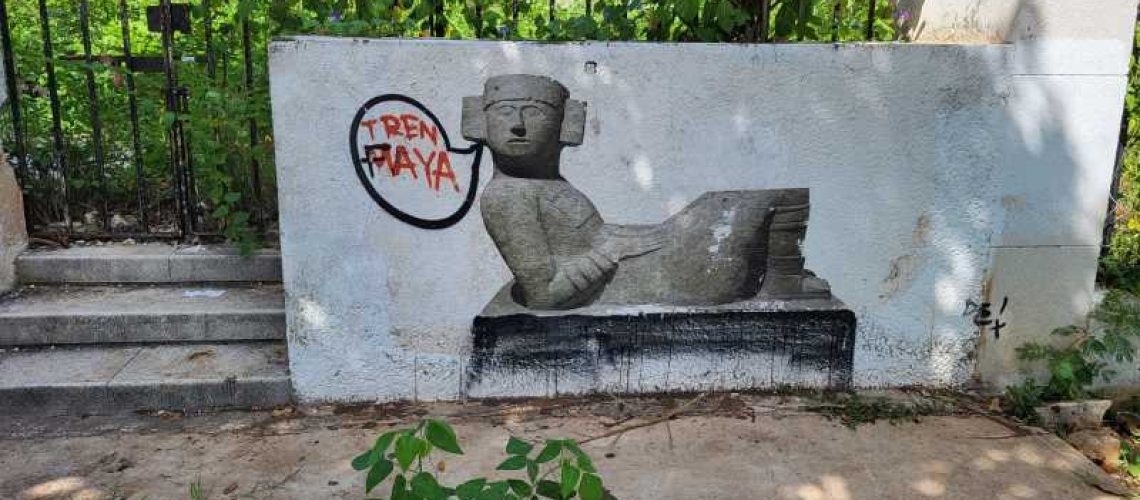


Please note I said “resident.” I’m not talking about becoming a Mexican citizen, because that’s right up there with alien abduction and chupacabra ranching for practicality and likelihood. A married couple like us could, in theory, get divorced, go to Mexico, find two deranged myopic hard-of-hearing Mexicans and marry them, and thereby technically both become Mexican citizens. But unlike the US, if Mexico thinks you’re doing it for a dodge, they’ll probably tell you to pound sand anyway. It’s easier to explain this process if you just accept that you can live in Mexico like a Mexican, but you can’t live in Mexico as a Mexican. This is not ‘nam. There are rules. Boy howdy there are rules.
You can’t start this procedure in Mexico. If you’re a USian, you have to visit the Mexican consulate nearest you in the states. In our case, that was Boston, Massachusetts. That’s two states and a four hour drive away, but rules is rules. You need an appointment. Actually, if you’re a married couple, you need two appointments. The internet (teehee) and the consulate itself will tell you that you either can, or must, make your appointments using their online portal. It doesn’t work, and you can’t.
Hell, you’ll find out after trying to log in to their portal, over and over, that Boston doesn’t even have online scheduling. You can try calling if you don’t mind “Press 1 for Spanish.” Or more to the point, press whatever you like, you’re getting Spanish. They’d prefer (demand) you ask by email. We did, in English and Spanish. The consulate does not even acknowledge that they received it. You’re just supposed to wait, and wonder. After a few weeks, you can email them again. It feels strangely like pushing the elevator button even though it’s already lit, and you and four other people have pushed it already. You are strongly cautioned (by the internet again, teehee) not to get uppity with your followup requests. Just plead a bit. You won’t get an answer to that email, either. You’re instructed it might take up to six weeks to get any sort of reply to anything. And the answer might be two appointments days or weeks apart, months after the reply.
You can try consulate shopping. Wild tales of Vegas consulates passing anyone with a pulse and a few shekels in their pocket are rife on the internet (teehee), for instance. Others have reported luck, good or bad, all over the US map. We looked into going to the Philadelphia consulate, and a couple in Florida, and Houston, because we read that they might be faster than Boston, but we could never schedule an appointment online anywhere. It’s all broken, or we are. And being stranded in a strange city on an open-ended commitment to waiting around wasn’t appetizing. When we begged for appointments in Boston the second time, we lied only a little and told them if they had any cancellations, we’d show up on short notice. American dependability being what it is, they emailed us back with two cancellation slots on the same day a month in the future. God knows what we would have said if they said, “We have one later today.” I can talk faster than a car salesman, but I can’t drive faster than one.
So you’ve got an appointment, What’s required? for openers, you best be a good boy. Been arrested much? Forget moving to Mexico. They’ve got problems of their own, and they’re not interested in importing any more, unless you count me.
You’re going to need money, and I don’t mean toll change. The fee to apply for a residency visa is only $56 per person (in cash, not refundable if you flunk). That’s just the cover charge. There are several ways to demonstrate that you’re not (ever) going to be a burden to the Mexican state, and they all involve various sums you might not have. You might think you’re a rich American, so no sweat, but Mexico doesn’t care about your theoretical money. Equity in your house is theoretical money, for instance, or imaginary if we’re talking about 2009. They’ll also require documentos out the ying yang to prove said sums. For example:
The most common way to get permission to live in Mexico for 1 year is through solvencia económica. The sum required is based on a certain number of days of Mexican minimum wage, which is very minimum indeed, but they want to account for a lot of them in a row. It varies by consulate, and they change it every year, but you’re going to need about $80,000 in the bank to qualify. If you’re married, you’ll have to pay for your spouse, too, but it’s not double. You need somewhere between $2000 and $5000 more.
After you’re done puffing out your chest and sniggering about a paltry sum like eighty large, let me clue you in. Your net worth don’t mean jack shit. It better be in cash, or something close to it, or it doesn’t count. And you don’t get to “explain” anything. It’s “show, don’t tell” south of the border. You have to present 12 straight months of at least that much money on original bank statements. Dip one peso below the required amount for one hour six months in, and your clock starts again. If you’re one of those sexy people who does everything on your phone, including your banking, waving the balances on your Nokia phone at the consulate staff is going to get you precisely nowhere.
We had original bank statements, because we’re the last people on earth that get them mailed to us. We still had to get a credit union officer to personally stamp and sign every month, every page, and then write a cover letter on bank stationery that averred that both my wife and I had unrestricted access to all the funds for the entire 12 months. The look on the bank manager’s face gave me the impression she would have preferred that we rob the bank. It would have been less trouble. And if another month ticks over while you’re waiting for an appointment at the Mexican consulate near you (it will, and it did), you have to go back and get the latest ones stamped and signed, too. And by the way, the consulate wants several copies of every page in addition to the originals, and you better not have a staple in them, or any doodles or highlighting on the originals. When we got our interview, it wasn’t a formality. They looked at every page, and scrutinized every deposit. Got a windfall in there? Best be able to explain it.
[To be continued]
10 Responses
You are moving!! How exciting!
Hiya Ralph- We endeavor to bring excitement into our lives at all opportunities. My readers have to settle for run-on sentences.
Typical Latin American government. Americans who complain about bureaucracies don’t know how lucky we are.
When I was working in Argentina, I applied for a residency card–actually a booklet–within a month of entering the county (the first time I had a week off), at the town where my company had its office. I supplied all the necessary documents, visa included. I periodically inquired about the residency card, and was invariably informed that it would arrive soon.
A year later, I traveled to Buenos Aires to renew my US passport. Those days, it was a 15 minute process. Nowadays, it takes longer. Since I was in the capital, I went to the National Office of Bureaucratic SNAFUs to inquire about my residency card. I was informed I needed to supply a different-sized photograph, so I did. After four days, my residency card was still not ready. I informed the office that as I needed to return to Salta province a thousand miles north, could the office please mail me the residency card. The instant reply was, “But it will get lost (in the mail).” Ten minutes later, I finally had my national residency card.
I knew a couple in Argentina, a former Peace Corps volunteer from New Hampshire and a Peruvian. The Peruvian husband worked as a Psychology Professor at the National University of Tucuman. They told me that when they applied for residency visas, invariably the government lost their applications. Mind you the husband was a government employee whom the government employed even though he didn’t have–through no fault of his own- residency card. I don’t know if he had a work visa–I doubt it.
They stayed in Argentina for 5 decades until they died.
While the Argentine mail system may be inefficient, the boxes of books I sent to the English teacher former Peace Corps volunteer always arrived. Though decades later she told me to stop sending them as they were now charging customs duty–on used books I paid $1 for. By contrast, some goods I mailed to Guatemala got stolen.
Back in the day, it was not unknown for Mexican border officials to charge unsuspecting Gringo tourists a fee which was actually a “tip.”
Some 30 years ago a Mexican living in the US told me that when he drove his car to Mexico, he got charged some outrageous amount for car insurance for two weeks in Mexico. I don’t remember how many multiples it was of the per week charge in the US,
When I arrived in Venezuela, one of the first things the manager told me was how to finesse police bribes/extortions on the weekly expenses report. Put it down as dinner with a PDVSA professional. It was necessary advice. You will get stopped for anything . I suspect that the police academy had a class on how to get bribes, as the cops gave the same spiel: “this is voluntary…”
An Argentine working in Venezuela–who ended up in the US—told me that he preferred the Venezuelan system of government bribes. Venezuelan officials were very upfront: you need to pay me this if you want me to do that. He told me that in Argentina, officials would never ask for a bribe, but often would expect one. But if you guessed wrong and offered a bribe when the official would not accept one….
On good story about Venezuelan cops. I arrived in colectivo taxi in Anaco at 3AM, after a flight from Bolivia. Couldn’t find a hotel with a room. Didn’t even have a phone number for the Anaco office–thanks Bolivia office. I went to the police station, explained the situation. They let me sleep in the police dorm, and drove me to the office in the morning. As my manager told me, such treatment merited a bottle of whiskey.
And a good story about bribes. Back then excess baggage from the US was charged $50 a bag. Flying from Asuncion, I was expecting to pay that for excess baggage. I found out that excess was charged by the kilo, which would be a $500 charge for me. I didn’t have that in cash–had only about $100. The clerk had me step aside, pay him $100, and let my baggage on. But as he said, if I created problems on the flight, it would not go well for me.
Gringo! I’m still laughing about the “National Office of Bureaucratic SNAFUs.” In Massachusetts, they call that the Registry of Motor Vehicles. I once saw a guy from a car dealership with a sheaf of paperwork get turned away because he used dark blue ink on the forms, and they expressly specified black ink. The rule is kept in a filing cabinet in a disused lavatory, guarded by a leopard.
You can’t move out of Maine! I already did, and I need someone to stick around there to tell me what’s going on!
Last one out, turn out the lights!
So, you’re done with snow, then?
Hi Ed- I have to describe it to people here. They’ve never seen it. The temperature never goes below 60F.
There are a few newsletters about moving to sunny Mexico.
I get monthly emails from https://www.mexperience.com/
I just came back from a month in Sonora. Cheap food, medical care, nice weather… what’s not to like?
Hi Earl- Mexperience is a handy website. We’ve never been to Sonora. Sounds nice. We’re in the Yucatan.