My Little Pony Kristallnacht

We were abroad in Merida during International Women’s Day [this pun is random and the management refuses to endorse it]. We didn’t mean to be, exactly. We were veterans of the downstream effects of the hysterical gymnastics a year ago here in Merida. All the public buildings and churches downtown were defaced with pointless graffiti. The defacement of the Catholic churches was particularly jarring.

We’d gone to the mall all afternoon, of all places. We’re not mall people in the US. The local malls in Maine are slightly less populated with ambulatory zombies than in Dawn of the Dead, but the zombie businesses more than make up for the deficit. Apparently, an “anchor store” now refers to the item your business is lashed to before being consigned to Davy Jones (Foot) Locker. We visited the Merida malls to see how the upscale Meridians live. There are several in the northern reaches of the city, where the wealthier people live in new high rises and jam the mall on the weekends. It was instructive, but not our cup of tea. We prefer the older parts of the city, the barrios east, west, and slightly north or south of the zocalo, the large park smack dab in the city center.

International Women’s Day is an important day in the lives of the distaff set. It’s the one day when women are free to demand that everything go their way, as opposed to the other 364 days of the year, where everything goes their way without a parade. It puts one in mind of the North Pole. Santa only makes his rounds once a year, but it’s not a part time gig.

Some sort of protest parade on this date is becoming a kind of Cinco de Mayo holiday for young ladies in this town. We are accustomed to simply avoid such exertions, no matter what the subject matter, and their location north or south of the border. So a trip to the northern barrios seemed wise. Wending our way up the Paseo Montejo was an eye-opener. It’s the main boulevard in the town. Almost all the monuments on the calle had very official barricades looped around them. They’re weren’t ad hoc, either. They were obviously purpose-built after last year’s defacement foofaraw. They looked like they could withstand a mortar round, never mind a gaggle of Mexican Gen Z bosses in a mini with spray bombs.

We thought by staying away all day, we’d miss the mess. We thought wrong. We forgot that when it’s 100 degrees out, although it’s still sorta the cool season, everything happens well after dark. We gave our Uber driver the address of our go-to restaurant in town, and the downtown turned out to be strangled with cars, mobs, legions of policia of all stripes, and bomberas, the wonderful name that firemen have here. Many streets were closed, so as not to inconvenience the marchers. When we saw how many police were out, we assumed in our ignorance that they were platooned to keep the girls from defacing everything in sight this year. Not hardly. I think they’d been stationed everywhere to make sure that no one interfered in the marcher’s misbehavior in any way. It’s a fool’s errand, because there is no opposition.

The mayor of Merida is a woman. The only announcement I espied from her locally is that no one would silence the women! The president of Mexico is a woman, and although parachuted into Mexico from the Levant, is exhibit A in Mexican grrrl power shenanigans. She seems to be running for class president daily and is quite popular. At any rate, I’m not sure who exactly was going to attempt to silence a Mexican woman. I’ve not met the man who would attempt it here, never mind achieve it.

The Uber driver who ferried us back into the city was moderately incensed by the demonstrations. His ingles was spotty, and my espanol spottier, but for most of the ride, I understood him. When we got to the barricades surrounding the Monumento de la Patria, a paean in stone the entire history of the country, rendered in a Neo-Mayan style, he lost his shit a bit. His Spanish became too rat a tat to follow, but I got the gist of it. The little mujeres were wrecking the city to amuse themselves, and he didn’t approve. Strongly.

So we ate our dinner leisurely, attempting to wait it out. We’d eaten there many times. It was the first time the place was out of sorts in any respect. The waiters were sheepish and clumsy, and delivered my wife’s dinner to the next table, occupied by an old man with a rat dog, who ate the meal, and then refused to pay for it because he didn’t order it. He wasn’t Mexican, or American, either, and may his monument be shaped like a fire hydrant wherever in Europe they finally plant him.

The staff were afraid we’d be mad [no chance of that, really], and simply scrambled back wordlessly to the kitchen to hustle another meal as quickly as possible. The whole city seemed like that. When we left the place, and started walking home, all the shopkeepers stood in their doorways with a resigned, mystified, and downcast expression. Mexicans are a jolly people, and it was jarring to see them like that.

We ran smack dab into the protest parade, or quiet riot, or whatever you want to call it. There were a lot of young women in it. They all held signs they’d made themselves. The signs were hard to read for us anglos. Girls being girls, a lot of the signs used glitter inks and illegible fonts and had little flourishes that made them even less legible. It didn’t help that a substantial minority wandered past us with their signs held upside down. This seemed a byproduct of reading their own sign in front of them, over and over, and then lifting it over their heads without a background in spatial analysis.

The placards were all over the place for a feminist march. There was more than a smattering of pro-palestinian sentiments, which I thought were appropriate, the man in the moon not being available. Most were concerned with femicide. Apparently the killing of a female human is much more important than the killing of a male human, because reasons, and needs its own sobriquet. Some longed for abortions, although they’re already legal here.

We are from Maine. Other than neighboring New Hampshire and Vermont, Maine has the lowest murder rate in the nation, at something like 1.7 per 100,000 chill-blain sufferers. Of course you might wonder if femicide is a real problem here in Merida, on the Yucatan, enough to promote a yearly quiet riot over it. Hmm. The murder rate in Merida is 1.5 per 100,000. All of Mexico isn’t that safe, of course, the murder rate hovering around 25 per 100,000 nationally, which isn’t a fun fact, but not really more dangerous than living in Mississippi or Louisiana. According to the Wikiup, New Orleans has a murder rate of 75 per 100,000. People we know who have gone to Mardi Gras in New Orleans tried to warn us off visiting Merida, because, you know, Chicken Noodle News told them Mexico was dangerous.

Dive a little deeper into the demographics of murder here, and you find out that over 90 percent of all victims are male, which is about the same proportion throughout the country.

So the women’s march yelled, over and over, that they would not be silenced, although no one offered to even try. They’re protesting murders that don’t occur to genders that don’t suffer them much. It’s a totally TikTok protest, worshipping the only gods that feminists approve of these days, Nurse Ratched and Medea.

But we got the sadz over it eventually. The last president of Mexico, AMLO, was a cagey guy and got a lot of stuff done that less able politicians wouldn’t have tried. He worried that the Yucatan was poorer and less developed than most of Mexico, and that the Mayan residents were treated like second class citizens compared to the big cities up north. He spent real coin trying to improve things in the Yucatan peninsula. He built the Tren Maya, a big looping train line that runs from Cancun to Campeche and back again, stopping at archaeological sites and other points of interest. Merida itself was spruced up aggressively. A huge public park, La Plancha, was fashioned out of an abandoned railyard and empty warehouses. We stroll in it almost every night. It was connected to the city proper by a new Corredor Gastronomico. It’s a long, beautiful walkable strip of stores, restaurants, nightspots, and renovated houses.
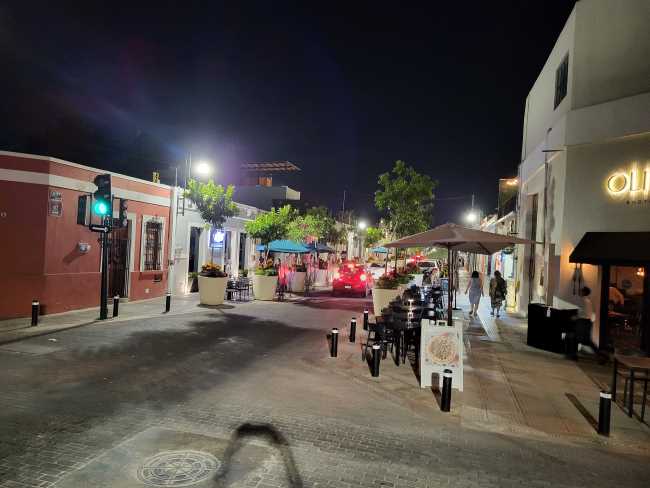
It cost a lot of money, and it’s a main attraction in the city now. We love it, and walk it every night on the way to La Plancha. Well, we loved it.
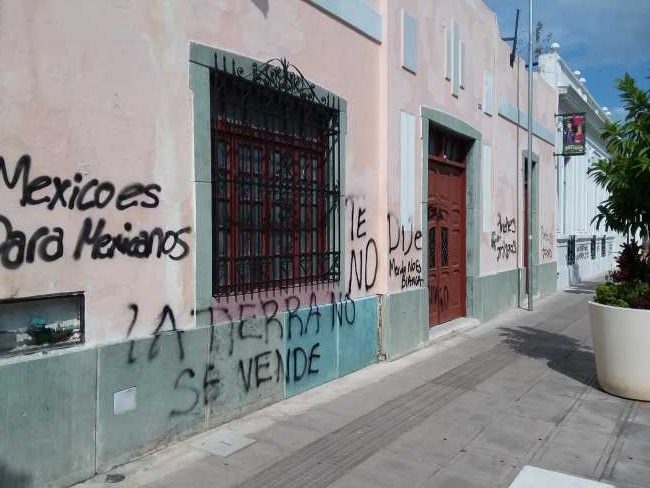
We discovered the next day that they had treated the gastronomic street to its own My Little Pony Kristallnacht last night. Every building, signpost, bench, planter, and horizontal or vertical surface was defaced with spray paint, with a mishmash of petulant slogans. They don’t like gentrification. How this is a feminist problem escapes me. They don’t like gringos (who does? we’re here to escape them}. Segura (security) isn’t just for gringos! they intoned, in a city where there is little crime for anyone, and when you get right down to it, not many gringos. I know the swears, and they swore at me and my inoffensive wife in spray paint, and told me to go home. We would anyway, of course, whether they wrecked a poor shopkeeper’s wall with the sentiment. My money generally accompanies me, but I doubt they thought that far ahead.

After the big sweep of the mob passed by, we walked home in the dark down abandoned streets, closed by the police to amuse the protesters. It’s perfectly safe to walk at night here, but walking down the middle of a big street with almost no one around is disorienting. Like a zombie movie. As we passed along the abandoned parade route, we noticed a mendicant sitting on a doorstep. An old, gaunt, very Mayan looking woman with no legs. My wife rifled her purse, and poured every coin she could find into her little cup, which was completely empty, although several thousand well-off women, desperately worried about the welfare of other women, had passed by her. My wife shames me with her good nature every day, but I’ve never seen her shame an entire city before, but she managed it.

To close out the festivities, on the way back from shitting where they eat, as the Italians say, they rang our doorbell at 2 AM, and ran away. You know, to demand respect.
Footsteps Echo on the Stone

Grace Jones was so overwhelmingly strange and exotic that I think she ceased being characterized as human. She became kinda interstellar. She made Sade look like Annette Funicello by comparison. Way back in the ’80s, she was mildly obscure, but ubiquitous, if that’s possible. I guess her exposure reached a high water mark with Libertango (I’ve Seen This Face Before). I’ll bet it sound plenty familiar to you:

Like many songs, the vampiric movie industry used that ditty for atmospherics in several notable films. When Scorsese, who is unexcelled at picking pop music to adorn his films, needed a weird, otherworldly vibe for Griffin Dunne’s descent into the madness that is nighttime New York City in After Hours, he cued Grace up.

Speaking of vampires, I think the song is prominent in that weird David Bowie Lugosi movie, The Hunger, too. If you were into Catherine Deneuve and Susan Sarandon, or at least their stunt doubles, rolling around in their undies on a four poster, Tony Scott had you covered. The internet informs me that it was on the Miami Vice teevee show as well. I can’t say. I never planned on living to be four thousand years old, so I never had the time to watch that show.

But hey, I’ve actually seen the actual originator of that actual song, Astor Piazzolla, perform that actual song right in front of me. In Boston, actually. It’s a humdinger.

I’ve never understood how button accordions function. I’ve played things (badly) with keys and frets and soundholes and slides, and stuff that you beat with sticks. But that squeeze box thing is a dark and bloody mystery.

[Update: Many thanks to Gerry for his ongoing, generous support of this site through the Ko-Fi button. It’s greatly appreciated]

The Fundamental Difference Between Mexico and the United States

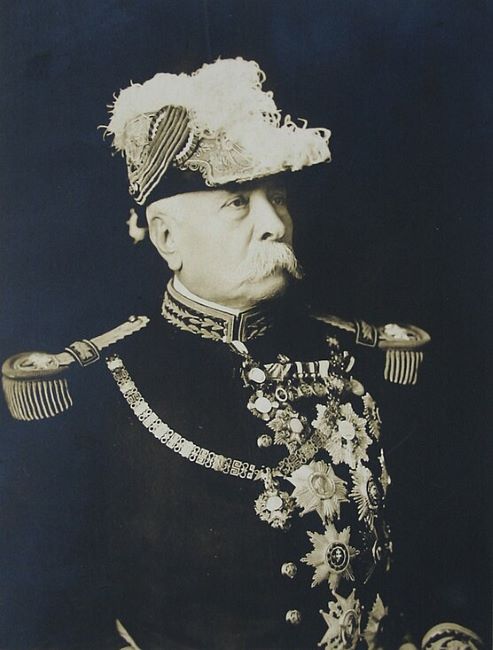
There’s lots of news stories lately about friction between the United States and Mexico. It’s overblown, of course, but it’s always been thus. As the seven-term presidente of Mexico, José de la Cruz Porfirio Díaz Mori once drily observed, “Poor Mexico, so far from God and so close to the United States!” With a gatling gun of a name like that, and his Sgt. Pepper uniform, you know his opinion carries weight.

So we’re wandering around Merida, Mexico. It’s not really an appropriate template for the whole country when you’re making comparisons, but it will have to do. It’s a long walk to Mexico City and I’m not really interested in places like that. It’s nice here in the Yucatan, and we like it.

But my readers need me to shed some light on relations between Mexico and the US. To do so, you’ll have to cast your mind back, and remember those dreaded words the teacher would intone, like the crack of doomsday, as she handed out those blue test booklet thingies for your longhand essays : Compare and contrast…

Shudder. It’s nearly 100 degrees out today, and that gave me a chill. Anyway, I’m lazy and ill-informed, so I’ll have to eschew bulleted lists and the kind of in-depth reporting that allows New York Times readers to know everything there is to know about a topic, except the truth. I’ll stake my claim on comparing and contrasting a single thing. The one, fundamental difference between the United States and Mexico, that explains a lot more.

In the United States, the ice cream machine in the McDonald’s is always broken. This is not my own personal experience. I haven’t been in a McDonald’s in twenty years, and I only went in them back then because the company I was working for built them. I wouldn’t eat in one on a bet. However, stories about the ice cream machine being broken are legion on the internet, and the memes must flow:

Now before you get out the pitchforks and torches and start looking for me, please understand that we built the restaurants, but McDonald’s installs their own equipment. On the voluminous plans to build one of those den of gustatory irresponsibility, there’s just a hole in the counter that says: ice cream machine goes here. Don’t blame me. And I didn’t hire anybody to look after the place after the grout in the tile floor firmed up and the checks cleared. McDonald’s does that:

Of course the intertunnel, combined with the snarky meme generation, can’t be relied on for balance, never mind accuracy. But it’s not just an urban legend. When someone can start a website devoted to cataloging broken Mickey D’s ice cream machines, there’s got to be some truth buried under the frivolity. Check out the McBroken website. It’s a hoot.

According to their internet sleuths, 13.36% of all McD’s ice cream machines are busted. That’s nationwide. The numbers in places like NYC, 48% out of order, approach the comical.

So there’s gotta be truth to the rumors. You want a McDonald’s ice cream for reasons that escape me. And the ice cream is escaping you, anyway. So what’s it like in Merida, Mexico?

Postres is Spanish for desserts. That spot is in a covered stone plaza outside the Walmart on the Paseo Montejo in the heart of the city. We saw wonderful gaggles of teens lining up in the heat to grab McFlurries, and then sit on the steps in the shade and socialize. There is no McDonald’s restaurant. It’s just an ice cream machine, and it always works.

Quod erat demonstrandum, I’d say.

Holy Shit. Canadians

We’re in Mexico, but we’re from Maine, of course. We lived in western Maine for many years, near the place where northern New Hampshire and Canada butt geographic heads. Although we weren’t that far from Canada to the northwest, there was a lot more Maine northeast of us. Maine is huge, and as empty as a politician’s promise. There’s 1.4 million people in a state the same size as Ireland, and about 1.39 million of them live in the same apartment building in Portland, I think. If you look on those official USGS maps of the US, about a mile or two north of where we lived is marked uninhabited. There aren’t many places like that left in the US.

So trees, fleas, and disease up there, and snow like a test of wills, and temps so low that it doesn’t matter if it’s marked in Celsius or Fahrenheit. Or maybe borderline Kelvin.

Maine is the only state in the contiguous US with only a single state on its borders. Well, they call New Hampshire a state, but as far as I know, it’s just a toll booth or two, and a state-run liquor store, with a theatre backdrop of trees behind them. I’ve heard tell that our far northern border has an entire country lurking there. Snow Mexico, or Canada if you’re politer than I am.

Canada had a ring of the mystical to me. Is it really there? Is it full of Dudley Dorights and sasquatches? I’m informed that the Quebec version of Canadians routinely visit Maine, but they go where I don’t, so I can’t testify under oath or anything. They like to put on speedos and go swimming at Old Orchard Beach, which they’ve mistaken for the Riviera. If it’s the Riviera, it’s a Buick Riviera with rusted quarter panels and splits in the naugahyde seats.

So I don’t know what to make of Canadians. They are shadowy figures in my imagination, something like wild and crazy accountants, or polite hockey goons. Luckily, I didn’t have to make anything of Canadians, because they made something of me first. I have now officially been drunk in Mexico with les habitantes.

We met some American expats the other day, and they took pity on us and pretended to like both me and my wife, instead of just my wife, and told us to go to the Tropico 56 cantina on Thursday night. It sounded exactly like the kind of fun I hate, and sorta love at the same time. Karaoke was mentioned. To a former musician, mentioning that karaoke is available is like mentioning that dengue and leprosy is on the menu. But the joint sounded lively, and our new friends promised additional new friends.

Holy shit. Canadians. There are plenty of expats on the prowl in Merida. A wide selection. We were in the Walmart (Mexican Walmart is a trip, man), and a young lady sneezed in the next aisle. I reflexively uttered “Bless you,” and she said, “You’re American.” I said, “Yes, it was refreshing to hear someone sneeze in English.” That’s the limit of my dazzling, witty conversation with young women these days. She said, in perfect, unaccented English, “Not English; German.” I asked her how she was, in German, which mystified her, because the last thing in the world she expected was to be asked was how she was doing in German in a Mexican Walmart by an American.

We’re all sort of lost and adrift here. Merida is a tourist destination, but mostly for other Mexicans. Americans routinely go to Cancun and similar tourist pestholes to annoy the locals. English speakers in the general population in Merida are fairly rare. We’ve rubbed elbows with Cubans, Germans, Italians, Americans, and as I was saying, holy shit, Canadians.

The Tropico is several bivouacs joined together into a complex of alcoholism, gustatory excess, jolly, blaring music, and general conviviality. We wended our way through the back door near the kitchen like Henry and Karen Hill, through a cavernous dining area, and back outside through the front door into a big grotto of picnic tables and other seating arrangements. The place erases the line between inside and out, street and sidewalk, and earth and sky. At 9 PM, the temps were in the 70s, with a breeze, and a moon facing the wrong way surrounded by stars in the wrong places.

Oh, yes, almost forgot. Holy shit, Canadians. We were immediately adopted by a legion of expat Canadians from all over their country, which apparently really does exist. Quebecois, Cape Breton, Saskatchewan, Alberta, and who know what else. They’d all moved to Merida to stop shoveling snow, and start shoveling cervezas into themselves like stevedores filling a cargo hold. They ordered beer by the bucket, literally. Things are inexpensive, relatively, in Merida. The peso has lost about 20% of its value since we were here a year ago, so stuff like booze served in bars seems really cheap to us.  The waiters plopped ice-filled buckets of local beers on the tables, and as near as I could work out with my hazy math, each bottle of beer was a buck.

Our new Canadian friends told us their life stories (we asked), and decimated bucket after bucket, and introduced us to a dizzying array of people passing in and out of the place like a school of fish. There was Diego, a bartender from down the street. He was very friendly, and his English was passable, and he pretended my Spanish was, too, because people are desperately polite here. The crowd wanted to buy him several hundred beers, because he had served them several thousand at one time or another, but he couldn’t linger too long. He was a family man, with two children, and needed to go home. I rose when he got up to leave, and was flummoxed when he embraced me like a brother.

Carlos and Gabby invited us to their home, to eat barbacoa steaks and play Jenga with big blocks. Carlos was from Houston, and wore a glorious garish Astros jersey. He’s a mechanical engineer, and retired to Merida before his first gray hair. His parents were originally from there, and he lives here now and buys up chunks of it. He loves fishing and life in his privada. He wondered if I had any lobsters in my luggage, because he’d take them off my hands if they were a bother. Gabby was about the most charming human you can find outside of my wife’s mirror. She spoke no English, but her Spanish was clear and direct and I could understand her better than the rat a tat singsong run-on version of the average person. She was curious about where we were from, and what it was like. She’d never seen a snowflake, or a temperature below 50 for that matter. She said there were iguanas in her yard. I said there were bears in our yard. She exclaimed, “Osos! Ay yay ya!”

My decks were awash with beer, and I can barely remember Mario, who I think was Puerto Rican, and his beautiful companion Melissa. A very tall, stout, blond fellow was friends with Carlos, and I spoke to him for five minutes before I realized he was from Dusseldorf, not the midwest. What is it with German schools? Why do they all speak with perfect, unaccented English? I speak like a guttersnipe compared to them.

So the Canadians sniffed at the Boston Bruins, and extolled the virtues of the Leafs and the Canadiens. They drank like they didn’t want to live. But of course, it was just the opposite. They were living their best life in Merida, friendly, loud, coarse if they could cadge a laugh with it, and perhaps finally finding out that yes, someone did live just below that dotted line on the Canadian map, and maybe we weren’t half bad.

And I hate to admit it, but the karaoke looked fun.

A Hot Tale of Two Cities

So there’s a city founded by the Spanish. It’s at the foothills of some mountains with a familiar name. The climate is dry, and lashed with dusty hot winds a lot. There’s a shortage of water. A couple of years ago, the reservoirs went dry, and water got rationed a bit. Once in a while, it rains way too much, and that causes flooding because the ground can’t take it all at once. And because of the peculiarities of the local rules about what you can do with your property, and the incendiary nature of the ground cover all around, the place is subjected to roaring wildfires that threaten whole neighborhoods.

Los Angeles? Nope. Monterrey, Mexico.

The similarity is quite striking, though, and recently, the news from Monterrey about their wildfires, and their response to them, is very instructive.

Firstly, if you’re a typical American, you probably figure Monterrey is just another John Wayne movie set, a hardscrabble pigpen of mud brick Alamos and cantinas in slumping shacks. I’ve never been to Monterrey, and probably never will go, but I was interested to learn that it’s more or less the richest city in Mexico. It looks it.

I’ve lived in Los Angeles. Monterrey is somewhat smaller than LA, but it ain’t small. There are over 5 million people in its metropolitan area. And to my eye, it makes LA look like a dump:

That’s another of our fave Mexican travel annoyers. You have to put up with the usual interludes of shoving eleventy kinds of food directly into the maw with a camera six inches away. We forgive everything because he flies his drone, and pokes all around. If you want to feel like a Bowery Boy urchin with your dirty nose pressed against the plate glass while the rich folks cavort inside, check out the malls in the video at around 8:30 mark.

While I’m in Mexico, I read the local paper online, and Mexico News Daily. Reading a newspaper in a foreign country is less annoying than at home, because you can’t immediately spot how they’re lying about their favorite political hobbyhorses. There’s a kind of chaste, spartan, just the facts style in many of the articles. These remind me of newspapers in the United States. You know, the ones you used to find back in the 1970s inside the houses of hoarders who had just died, but still had the papers from 1943 handy.

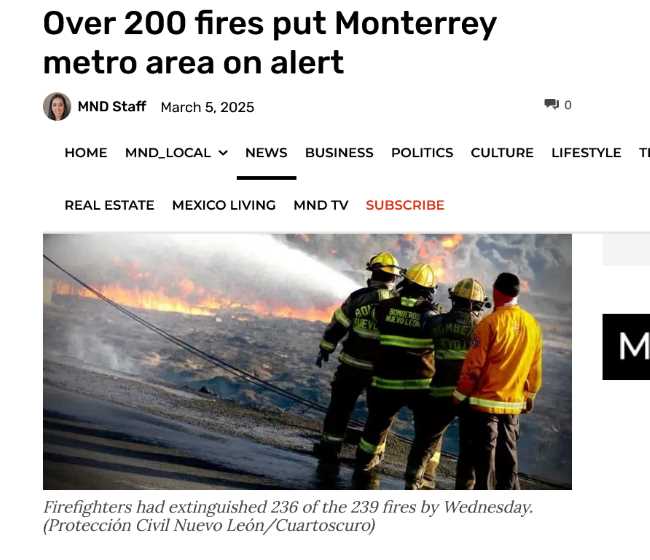
So today’s news from Monterrey was:

Of course I’m a proud, stubborn, and ill-educated Imperialist when it comes to weights and measures, so all their references to hectares sent me to the aspirin bottle instead of a reference website. IIRC, a hectare is about 2.5 acres. I don’t know how many hogsheads or hands on a horse that works out to. Anyway, many hectares are mentioned in the articulo, and there are over 200 fires going at once.

Why? Once again, this is going to ring a bell for Angelenos. It’s unusually dry, windy, and dusty right now, and some of the locals are irresponsible. Monterrey is smarter than LA, don’t get me wrong. The city requires that landowners clear their vacant areas from debris and vegetation that could make fires like these possible. Contrast that with the California version of land management, which is: touch one weed anywhere, you’re going to jail, even if those weeds are essentially gasoline masquerading as vegetation.

So how did Monterrey deal with the fires? They don’t say so, but I get the impression that the fire department and the local government didn’t tell everyone to stay home until they determined an exquisite ratio of wedding vegetables in the fire department’s pants, and ensured that enough lopsided blue hairdos were in attendance. They just sent out burly firemen in big fire trucks and put all the fires out by spraying water on them. I know, weird, huh?

I could also contrast their effectiveness to the fire departments in Maine. In Maine, people set their houses, and themselves occasionally, on fire with leaden regularity. They all report that they were just “freshening up the stove,” a euphemism for tossing a dixie cup of gasoline on their smoldering unseasoned firewood. The fire departments arrive, and stand on the snowy lawn until their “Save the Basement” strategy bears fruit.

Back to Monterrey. The local constabulary noticed that some landowners were trying to be cute, and instead of paying for their property to be cleaned up to forestall fire risk, they were practicing midnight oops dropped my cigar in this puddle of kerosene raids to take the cheap, burn my way to prosperity way out.

Once again, the contrast to approaches between LA and Monterey is noteworthy.

So far, 10 people have been arrested as suspects in some of the incidents. While authorities have not elaborated on what role these suspects might have played in the fires, Nuevo León does have a law — as do many municipalities and states in Mexico — requiring vacant lots to be cleared by certain legal deadlines. Noncompliant landowners can find their lots summarily cleared by the city and face a fine. As a result, it’s a commonly known practice across Mexico for landowners to cheaply comply with such laws by setting their lots on fire.

Hmm. Put out the fires. Arrest the miscreants. Get back to regular life. What a concept. If civilization ever catches on in California, they should try it.

Month: March 2025

Find Stuff:

Archives