¿Qué Onda, Doc?
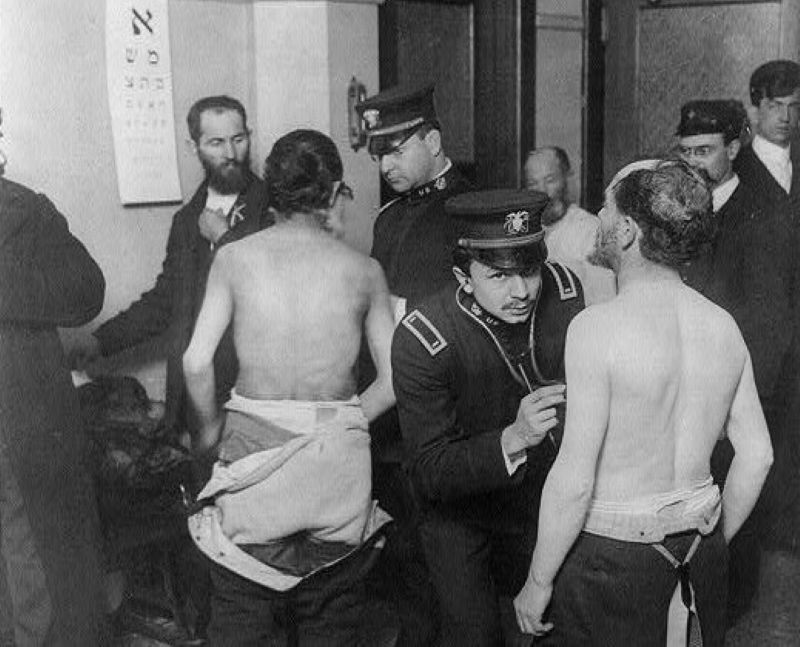
I went to the doctor yesterday.
It’s useful to compare and contrast mundane things when you’re in a strange place, and your audience mostly isn’t. I’ve seen a metric boatload of videos about Merida, Mexico, where I’m currently living. I watched them, along with videos of all sorts of other places, to help make up my mind where to bivouac next. The most useful were the quotidian entries. People simply walking around, or driving around. The best of them had no narration or music. They were experiential, so they were useful for the task at hand, which is to figure out what it’s really like in a particular place.
These are hard to find, generally. Videos about far flung places are almost uniformly tedious chronicles of vacations. The current generation seems to worship Instagrammable vacations above all things. They aver that their lives won’t be satisfactory until they’re on vacation all the time.
They’re nuts. By necessity, I have been in consulates and airports and taxis and Ubers and hotels and restaurants recently. I don’t know what vacation is anymore, but it ain’t vacation. “There’s no place like home” once meant something it doesn’t in the parlance of our times. Ho hum.
When home is a vacuous gray-on-gray plastic and concrete dovecote in some megalopolis, you could end up thinking the way they do. The suburbs aren’t much better. I’ve often lamented the rise of the snouthouse. It’s a symptom of the same idea: Nothing matters about your home except leaving it. Remember to Live Laugh Love, of course, but do it elsewhere, not under the sign in your living room.
So instead of making a video of my wife and I stuffing food in our faces, declaiming that everything is amazing in Merida, I’ll treat you to a simple task here. A doctor’s visit. Not to worry. Nothing major. No splintered bones on display, or gunshot wounds or anything interesting.
I’m required by my health insurance to visit a doctor once a year in Maine, so I have recent experience with the same sort of low level appointment in both places. Let’s compare and contrast, shall we?
The Appointment:
Maine: A doctor in Maine is like Bigfoot, or the pope. Not often available for a sighting. A phalanx of grossly overweight women wearing pajamas and lanyards while drinking out of binkie bottles behind bullet proof glass fills out a little card with a date in the far flung future. No matter what the date, or the time, this appointment will not happen. They will contact you over and over to postpone it again and again. The last time, my appointment was rescheduled numerous times and moved in baby steps from March until it finally landed in October, even though I offered to come on any day of any week, at any time.
Merida: Appointments? Que? Just show up when we’re open. First come, first serve.
The Location:
Maine: A building appurtenant to a hospital. There are fourteen examination rooms, fourteen rotund tattooed nurse’s aides, and one obese doctor. They’re all full of health advice. You know, for you. The walls are covered with posters warning you not to contract diseases unavailable outside of San Francisco bathhouses and wet markets in Wuhan. They also urge you not to kill yourself, for obscure reasons.
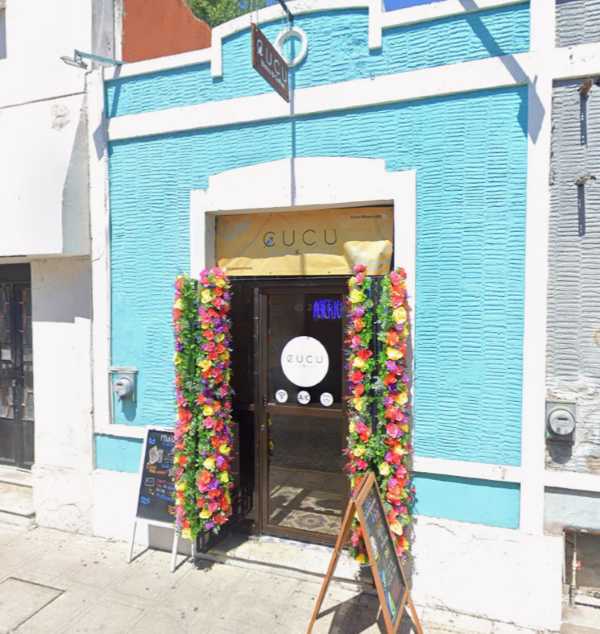
Merida: They call them “Doc in the Box” here. These are consultorios attached to farmacias, which are all over the place. I can easily walk to a dozen farmacias. Not all of them have consultorios. There is a modest, clean, tiled waiting room with nothing in it for furnishings other than plastic chairs bolted to the floor. The posters on the wall tell you how to behave in a flood, a fire, or an earthquake. There is, I shit you not, a posted list of all the common medical procedures they offer, with a firm price listed for each. The list is laminated, so I know they don’t change the prices very often. There’s a dentist office upstairs from the consultorio I went to. Same deal. Price list, first come, first serve.
The Process:
Maine: You show up for your five-time postponed appointment ten minutes early. The waiting room is full of people who formerly could only find employment in carnival sideshows, but now represent the general population. I don’t know what they display at freak shows anymore. Maybe a clean-shaven guy wearing a business suit and a tie, with no tattoos on his face?
You wait in the waiting room (duh) for a good long while, because any doctor appointment is kept by sundial, not clock these days. Then you’re led to another waiting room to be pawed at by a noseringed dirigible girl with pink hair you’d forbid your grown male children to talk to, as if they needed that sort of advice. You sit there like a mook for another fifteen or twenty minutes and look at posters with the IKEA instructions for assembling a human on the wall. Then the young, flabby doctor, who you could beat up with both your hands in your pockets, comes in to give you health advice while ignoring any actual maladies you might have.
Merida: The place was open when I arrived at around 9:00 AM. Any doctors who are available are listed with placards on the wall, with their regular hours. I was alone in the waiting room, and had just enough time to figure out exactly what I should do if I was drowning while on fire and the ground was shaking. A mother and her son left the only consultation office and passed by me. There is no receptionist. I heard a voice from behind the door saying “Adelante!, so I went in. There was a trim, serious looking female doctor behind the desk. I’m informed that these are not Dr. Nick Rivieras. They are the same doctors you’d see in a public or private hospital. They just make extra money on their off hours by serving the public directly in consultorios.
She asked me my name, my age, my place of birth, and any allergies, and typed it into her desktop computer. Thus endeth the paperwork. I had written out a translated version of the reason for my visit, and included an acronymed reference to a condition that flummoxed my Maine doctor, but she never batted an eye. She inspected me a little for a few minutes, only interested in my problem, not inventing another one for me, typed some more, and her printer spat out una receta, an all purpose bill, summary of my diagnosis, and a list of four medicines I needed, with instructions, which she signed. She explained as best she could with our language barrier what the instructions meant.
The Bill:
Maine: Pricing is obscure in Maine. Since I was required to go to the doctor by the insurance company, I’m not supposed to pay. They did send me, probably erroneously, the paperwork for the visit, which listed a bill from the doctor’s office for something over $500. Then they haggled it down to $90, and paid that, if memory serves. If I was paying, I’m sure I wouldn’t have had the same luck.
Merida: I was confused a bit. I’d never been, so I asked in halting Spanish, “Where do I pay? In the farmacia?” The doctor smiled and said, “You pay me.” I counted $70 into her hand, and thanked her.
Of course I should point out that Mexico uses the dollar sign for Mexican pesos. At today’s exchange rate, 70 pesos is about four dollars.
The Pharmacy:
Maine: The doctor’s office promises to send your prescriptions to the pharmacy of your choice. They rarely do. You call them over and over, and eventually when you’ve run out, they treat it like an emergency, and forget to call it in even harder. Eventually they read the post-it note or something, and it goes to the pharmacy. They contact you and tell you it’s ready for pickup. You go, and they don’t have it ready, and tell you to come back in two hours. Then you go through a byzantine labyrinth of discount coupons they have on offer to have your wallet vacuumed.
Merida: The farmacia is attached. You just go in there. Although you don’t have to. Unless your prescription is for something very, very sketchy (I have never even met Hunter Biden, so it’s not a problem), any pharmacy will sell you anything they’ve got, whether you have a prescription or not. They’ll deliver it to you, too, usually by a Didi or Uber dude on a motorcycle.
It’s funny, but I mentioned the same problem I was having to the doctor in Maine. He looked in my ear and said there was nothing wrong with me. Then he asked me for the fortieth time to have a covid shot and a colonoscopy.
I also mentioned to the Maine doctor for the umpteenth time that I was still suffering from hypnic headaches. I told him that it was strange, but the only time I didn’t have them was while I was in Mexico. I wondered why that would be, since he and his predecessors had never been able to offer me any relief from them. He answered snidely, “Well maybe you should move to Mexico then.”
Yeah doc. Maybe I should.



Recent Comments