A Word About Mexican Infrastructure
To the average American, Mexico is simply the part of the North American map that reads: Here Be Monsters. According to the TV news, narcoterrorists have information booths and retirement plans down there. The whole joint is as hot as a griddle and desolate as a banker’s heart.
Well, Mexico is a big place, and I’m not going to pretend that where I live is indicative of the whole country. Merida, Yucatan, is almost as far south and east as you can get in the country, and the people, traditions, and culture are unique to the locale. But no matter what you’ve heard about Mexico, Merida is as safe and friendly as first grade (used to be). It is indeed hot as a griddle, but there are no chupacabras sunning themselves on the rocks, or gun battles in the streets.
Explaining our circumstances to our folks back home is nearly impossible. They have a betting pool on when we’ll be murdered, and don’t want to hear that it might not pay off anytime soon. My wife told her sister that she went to the dermatologist here in town and had some moles removed. Her sister, incredulous, said, “They have dermatologists down there?”
Yes, yes they do. And unlike the last few doctors my wife visited back in Maine, they speak pretty good English. They also give you an appointment the next day without any fuss. They also look at you quizzically when you ask about freezing off the moles, like they do back in the states. “They still do it that way, senora? We have more advanced techniques with lasers.” It would be useless to relay that information to our relatives. “They have electricity down there?” would no doubt be the next question.
But beware when you hear me extolling the pleasures of life in the Yucatan. Many extranjeros move down here and become estadounidenses desagradables because they expect Mexico to be the United States, only with better tacos and cheaper rent. Well, since no American has ever eaten Taco Bell while sober, it’s hard to make an accurate comparison, but the tacos are miles better here, drunk or sober, although the rent is about the same as we paid in Augusta, Maine. Our internet is faster (and free), the electric bill is three times cheaper, and the gas bill is microscopic. Every civic celebration and performance we’ve attended, from going to the zoo to live jazz to Mozart played by an orchestra has been free to get in. But you must discount all that, if it makes you think Mexico is just the United States with somewhat fewer Mexicans living in it. The infrastructure can be quite an adventure.
I’ve boiled down its essence to this:
Mexican infrastructure is no better than it has to be. If that.
In the US, everything to do with infrastructure is overdesigned, overbuilt, safe — lavish even. There are plenty of posh places in Merida, but the pavement is usually crumbling one door down. If something still works, it’s never replaced, and for many things, not even if it isn’t. For example:
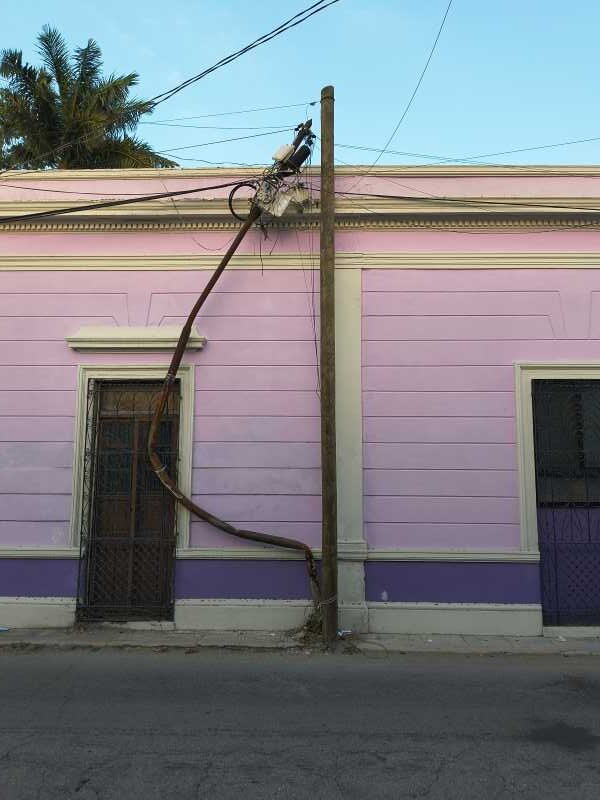
Somebody thinks that power pole still has a lot of life left in it, and they’re determined to wring it out of it before they replace it. This is Mexico in a nutshell. Good enough is good enough, I guess. Who am I to pass judgment? My internet is faster and more reliable here than back in Augusta, Maine. So what if the wire is lying on the sidewalk for part of the trip to my house?
Another example: everyone here loves to watch YouTube videos of Americans getting tased and arrested after freaking out in airports, and they especially enjoy watching PIT maneuvers on Arkansas highways.
You might think Mexico is 100% outtakes from Sicario. Yucatecans think it’s strictly Mad Max north of the border, so it kind of evens out.
We watch these videos along with our Mexican friends, but we have a different reaction. We see some methhead with six warrants chugging down the highway at 2 AM with their lights off and four cruisers in pursuit going 130 MPH, and my wife and I just nod at one another and murmur, “That’s nice pavement. Wow, all the streetlights work. Great drainage there.”
The shoplifting arrests are great for comparisons, too. In the US, people dressed like Keith Richards stunt doubles wander pristine aisles in department stores while stuffing designer handbags into their undershorts, while we intone, “Look at that terrazzo floor. It’s waxed! None of the overhead lights is blinking!” In Merida, it’s like bizarro world, where the women get dressed up in ball gowns to shop in the Walmart, but the concrete floor is sketchy. And no one shoplifts, or drives eighty miles an hour while escaping from the cops. It’s much harder to do when you don’t have a car, and the potholes would apprehend you long before the police would, so why bother.
They do drive eighty miles an hour here, or seem to, anyway, just not while fleeing anything, so pedestrian beware! The car/pedestrian rules are the opposite of the US. Cars have the right of way, and pedestrians are expected to pay attention at intersections now, or pay for an undertaker later if you figure already being in the crosswalk is your shield.
They don’t have billboards for ambulance-chasing lawyers down here, and if you slip and fall, you’re expected to get back up and keep going, sorta like the internet wiring I mentioned earlier. No one is coddled. If you had thirty ankles, you could turn twenty-nine of them walking the half mile to the big park downtown on the sidewalks around here. You’re expected to take care of yourself for the most part.
Your honor, let’s have a look at infrastructure Exhibit B. I give you, Calle 59:
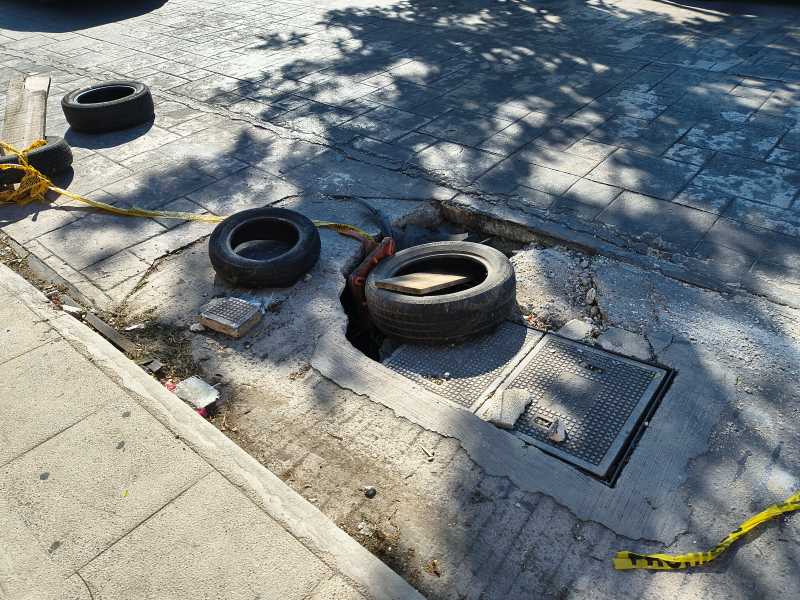
My wife and I walk down Calle 59 pretty regularly. It’s a very heavily traveled main East/West street that allows a car to drive right through the center of the city, almost from the west side of the periferico (the ring road round around the city) all the way to pick it up again on the east side. The road closely adheres to the “piglets at the tit” lane demarcations, i.e.: none. It’s approximately three lanes wide, or four when someone’s on a motorbike or in a particular hurry.
The road surface is typical in the city. It looks like stone blocks, but it’s concrete with the pattern pressed into it. Without freeze-thaw cycles, concrete lasts much longer than bituminous asphalt. However, the Mexican who understands how to properly make any form of manhole, or any other opening in a road surface, has yet to be born. I assume a star will appear in the sky when it happens. I’m hoarding myrrh just in case. Even the little utility boxes in the sidewalks are mostly staved in from foot traffic alone.
It’s nearly impossible to cross that street during busy hours without lingering for five minutes waiting for your chance, while your carcass gets rotisserie chickened by the relentless sunshine. The cars are all trying to get all the way across the city, and they’re zooming. We stood on the sidewalk near this little gem of a concrete steeplechase trap and watched a car drive right into it at 45 miles an hour, and lose its front end in the bargain.
You’d think a hazard like this would get nearly immediate attention. You’d think wrong. We took this picture three weeks after watching the first car become a unicycle in it. Let’s try a close up to illustrate how the city deals with it.
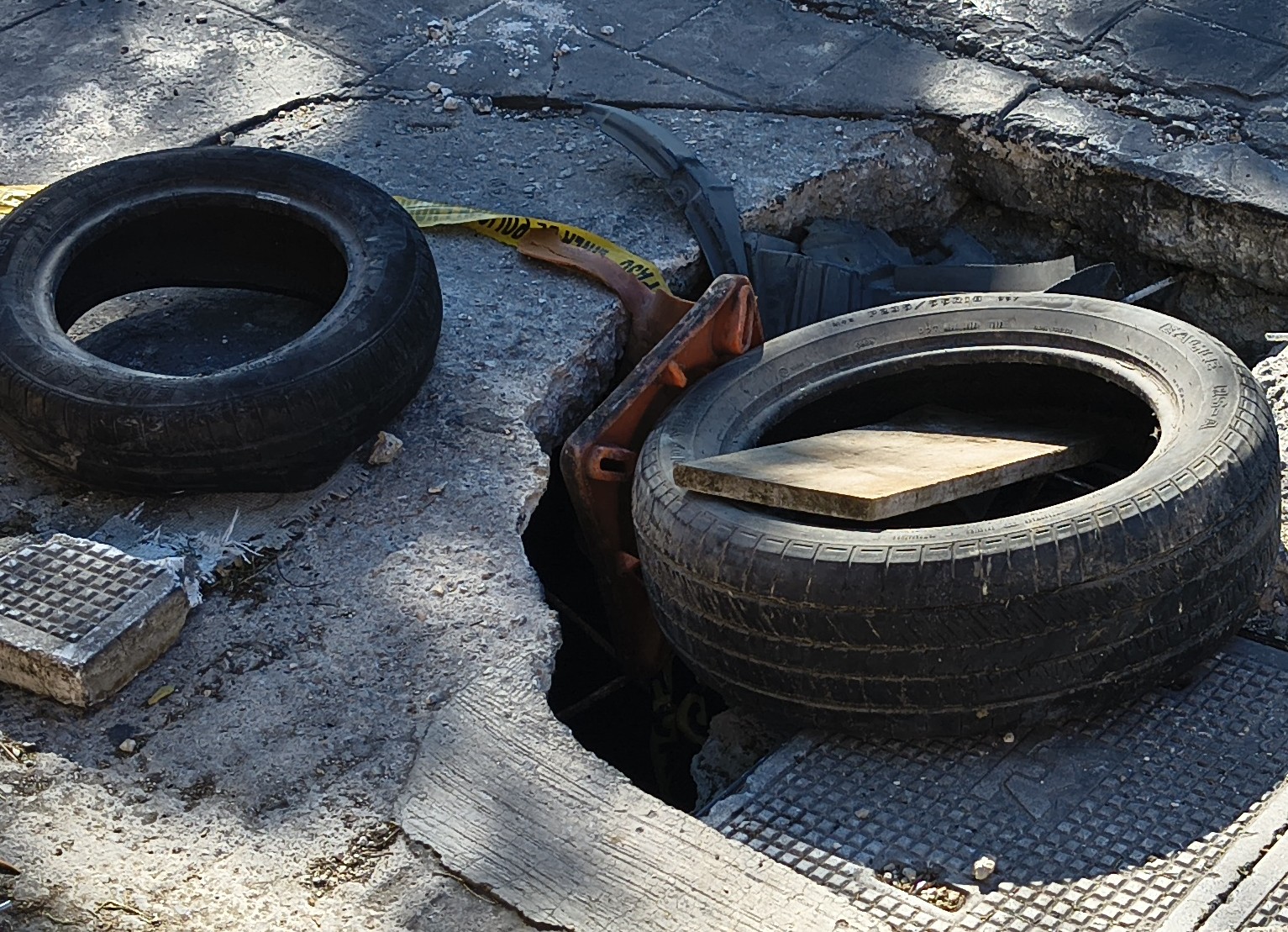
They put a cone in it, which was akin to throwing aspirin in the Grand Canyon. Then they stretched caution tape around it, wrapped around some bald tires they had handy. After a while, someone started throwing all the fender liners lost on impact into the hole to sort of fill it up.
Last week, we saw a motorcyclist hit it. When he finally lands, we’ll be sure to update you on his condition.

Recent Comments