No Clouds. No Rollers. No Worries
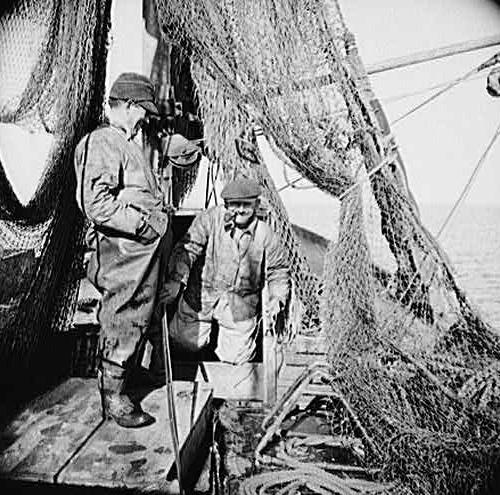
(From 2007)

“Jaysus. No clouds. No rollers. No worries.”

“No fish…”

“That’s your worry. Your good lady wife’s name’s on the boat, neh mine.”

“I’ll make you oar back in the peapod if we don’t put the gunnels down by the foam soon.”

” You’re prayin’ in the wrong church or sittin’ in the wrong pew, Davey.”

“The fish will come if you sing. They always come. ”

“OK then.”

As I roved by the dockside an evening so fair
To see the salt water and take in the sea air
I heard an old fisherman singin’ a song
Hey, take me away boys me time is not long


“Depressin’ the fish now, are we?

” It gets worse.”

Wrap me up in me oilskins and blankets
No more on the docks I’ll be seen
Just tell me old shipmates I’m takin’ a trip mates
And I’ll see you some day on Fiddlers Green


“The fish are dumb beasts, but they’re not likely to answer a call to your wake.”

Now, Fiddlers Green is a place I heard tell
There fishermen go if they don’t go to hell


“I fold. But please, continue as if I was all in…”

There the weather is fair and the dolphins do play
And the cold coast of Greenland is far, far away


“We bring the ice with us, you codger.”

Wrap me up in me oilskin and blankets
No more on the docks I’ll be seen
Just tell me old shipmates I’m takin’ a trip mates
I’ll see you some day on Fiddlers Green


“Oh jeez, he’s back to claimin’ he’s bait now. There’s no hope.”

Now, when you’re in dock and the the long trip is through
There’s pubs and there’s clubs and there’s lassies there too
The girls is all pretty and the beer is for free
And there’s bottles of rum growing on every tree


“Standin’ the fish to a pint is unlikely to help here either. I hear tell they’re all Presbyterians. Neither Presbyterians nor fish have pockets, so they stay out of the grog shops, generally”

Where the skies are all clear and there’s niver a gale
And the fish jump on board with one swish of their scales
You lie at your leisure, there’s no work to do
And the skipper’s below making tea for the crew


“Now we’re getting somewhere. Look at the gulls over there. They stoop.”

“You get the kettle goin’. I’ll have the fish here shortly.”

Fire Escape

Escape the fire. That’s what it’s for, papa said.

The fire is in the sky, all day long. It slides below the buildings cross the street real early like, but it has fingers and pulls the line of houses down like a man looking out a blind and cooks us from out of sight. Our house is the sun’s bank, ma says, and he keeps his fire here all night long. Ma puts our head under the tap and keeps a pitcher on the table but the ice don’t last.

Tony got the hydrant open for a while ’til the bulls came. They point the nightstick at the end of his nose but they’re holding back a smile and you can see it. He says he won’t do it no more and waits for them to take the turn of the block and then gets the wrench again from his dad’s toolbox. The bulls take the long way back on the hot days and we all knows it.

The little ones cry  a little at first but then they’re gone for the duration into their night pictures. I like it best when they stop squirming and you can lie still and see the moon creep up the block like a burglar. He steals the heat and goes home again. I’ll sleep when I feel his cool blue hand on my face.

Das Is Culch


“What? What did you say?”

I felt like someone a few minutes after a punch in the face. The sting’s gone out of it, but you’re dizzy, like, or something. Everything’s blurry around the periphery; you’re looking through a kind of tunnel at one thing or another, but each standing in a line, a sequence. It doesn’t knit itself into a whole for you. Was this fellow speaking German to me? I speak German. That doesn’t mean anything.

Dad’s dead, in some strange place among strange men. He wasn’t even here when he died. The timber and the blueberries and every other damn thing they did to keep body and soul together around here played out and dad breathed his last on a rusty boat dragging what-all to god-knows-where. They sewed him in his canvas bag and slipped him in the ocean like a card trick.

I never understood that whole wake thing until now. Your loved one made up by some insane hairdresser and laid out like a buffet of sorrows in the parlor. People who hated the stiff, dropping by to make sure he’s dead and to say what a lovely specimen he always was, the words turning to ashes in their mouths to save your ears the trouble. You just stand there bewildered. A month later you’d take your own life or join the circus or weep while watching What’s My Line. You’re just numb when it’s fresh in your memory. Human nature comes with its own novocaine, but those teeth are coming out. Hard. It’s an odd and disturbing tug at the point of attack; the ache comes later. But at least now I see why you want to see the husk a last time. I’m not sure if you pinch the corpse or yourself to gauge who’s alive and who’s not.

Well I was at the point where you can’t help yourself; you probe the hole over and over with your tongue where the molar came out, each time only half-believing it’s gone, wondering if you’d have taken better care of it maybe it’d still be there. It doesn’t hurt, really; it’s tender and offers a sort of mute reproach when you touch it. So here I am, up from Boston, the closest civilization, but not close at all, and I have questions no man alive can answer for me.

“I say dat’s ‘is culch.”

I could hear the French in it now. Not like France French. I’ve met Algerians and Vietnamese and people from the Caribbean and when they speak French it sounds like Paris. This fellow is Canadian French. His accent sounds like a wild animal passing a poorly-digested hiker out in the woods. He is, like everything here in Northern Maine, barbarous.

“He says that’s his culch. Your father’s culch.”

The French fellow slunk back into the rude sort-of dormitory we were in, and this other voice presented himself. He was tall and rangy and a little dirty; compared to the little bearded homonculus prone to the German-sounding French grunting, he looked and spoke like a Roman senator. He was as self-possessed as the other fellow was chary. No one introduces themselves here, I notice. They seem to know what everyone’s about, without asking, and speak to you as necessary and no more. If they don’t know you, you don’t belong here, and it’s but a moment’s work for them to figure out what your story is. Who else would hover at a dead man’s empty bed in a lumber camp?

“What language is that? What does that mean?”

There was that languid pose all these men have around here. There’s a blank look you can’t make out any emotion in. You start to imagine all sorts of thoughts that it might signify, because it’s so blank, and lasts for so much longer than polite society would allow, it might mean anything. He might think you a fool or a king. Or maybe’s he’s not thinking about you at all. Dad was like that, what little I knew of him. Impenetrable.

“It’s not any sort of language a man would know unless he needed to know it. It’s his stuff. Stuff a man keeps ’cause he can’t bear to part with it, but knowing in his heart it’s worthless. He can’t leave it out and about or it would be thrown away in the trash by anybody else. So he puts it in a little spot near the midden he sleeps in, and no one touches it, and pretends not to notice it, neither.”

And there was a fly tied for a fish that would never see it; a compass without a needle; a few dog-eared books too tired for the library; not much really — a few bits of broken this with a missing that. And a wedding ring with no finger in it and a picture of me.

Caleb’s Coins


From Wethersfield we went out, about half an hour before sunrising, for Quabaug. We lost our way in the snow, which hindered us some hours. Having neither house nor wigwam at hand, we lay in the woods all night. Through mercy, we arrived in health to the proceedings. JosephBradford, appraiser, had begun calling out the Probate Inventory of our beloved departed Obadiah Dickinson, father of my bride, recently deceased of apoplexy in the yeare of our Lord 1750.

My bride was in distress, and Mr Bradford, spake quickly, and the words tumbled out and gathered and split asunder again without warning, and we were content to let them go past without signifying. Mr Bradford paused, with force, and called my name most clearly, and approached to take my hand. He placed in my hand six coins, of no value, worn and dirty with much handling.

“It was the earnest desire of Mr Dickinson that these be returned to you, sir. “

I was adrift.

“I know not of these coins, sir. That cannot be returned which was never given. “
My wife pressed my arm, and looked at me with with such emotion, I did not spake further, hoping until such time as she could explain this mystery.

For my wife’s father, who was a good man, and true, did not care for such as myself. He tolerated me only, and watched over his girl as a bear watches his cub. I felt always his look over my shoulder, even betimes he was not present.

We hired a team to bring such belongings as were meet over the frozen Connecticut River to our lodgings, Methinks the villein charged more than the lot was worth to transport them, but he avowed he would not hear the frozen river cracking under each footfall for less than a treasure. My wife could not do without what little was left of her father, and I grudgingly gave way.

“Why should your Pater, who knew no rest in minding me, make me this present? He did not care for me.”

“You are harsh, Caleb, and wrong in the bargain.”

“I speak the truth woman, Bless his soul, but he did not care for me. He has given me this trifle to shame me afore the appraiser.”

“Nay, Caleb, they are your coins, and it is his love which it displays, not scorn.”

“How can this be?”

“You are older now Caleb, and forget the things of your youth. But my father, and I, did not forget.”

“What do I forget?”

“You would call on me Caleb, with your hair in place and your clothes brushed. “

“Yes?”

“And my father would let us sit alone in the room, while he smoked outside; do you remember?”

“Just so, I had forgotten.”

“Father would say he would come back inside when the candle flame could not be seen on the candle shelf anymore.”

“Through mercy! I would put the coins under the candle to raise it up and prolong the time. “

“Yes Caleb. He knew. And now it is time you knew- Father did not smoke.”

The Fish (Still) Don’t Come

It no coom.

Life passes by on the way to somewheres else now, but it no coom.

The fish no coom anymore. They’d coom and leap into the seine they would, without a care for themselves, and us without a care for them. All gone now.

We’d dig in the muck for the shells of St. James, and the excursionists would ooh and ahh over the beastly things. All gone now, and the all the brahmins don’t venture here no more. We’d eat kale from the back acre and spend the money. But the money don’t coom now.

She says I am a good man as I don’ t strike her, and I don’t drink my wages. But there are no wages and the fish don’t coom and I’m not any sort of man at all if I don’t drink nothing ’cause I have nothing.

The ocean took my digit in the bight of the rope in a gale once. It was nothing, really. Just a pinch.

After a while the pinches add up, don’t they, though?

The clock ticks and I wait. The fish don’t coom, but she will when her day is done.

(First offered in 2008)

Tag: flash fiction

Find Stuff:

Archives