A Mugging in Mérida

We got mugged in Mérida. Kinda. Sorta. I guess I better explain.

Mérida is the capital of Yucatan state, in the southeastern portion of Mexico. Mérida is more or less the whole state when you get right down to it. There are outlying towns, but nearly everyone in the state lives in or just outside the capital. There’s a couple of million people in the state, and half of them live in Mérida.

There is, for all intents and purposes (or all intensive purposes if you went to public school), no crime in Mérida. I have a lot of trouble explaining that to our friends and family. I live in Maine, where there is essentially no crime compared to the rest of the US, unless you count red hot dogs. There’s even less crime in Mérida than in Maine. We walked everywhere after dark, and never even saw anyone hinky looking. Hell, in a month, I was only panhandled twice, both times by the same guy outside the church in Santa Ana. I can’t walk down the street in Augusta Maine and say the same thing. He told me in sign language (curl fingers, point thumb towards mouth) that he just wanted to get drunk, so I gave him some pesos. One has to encourage transparency wherever you find it.

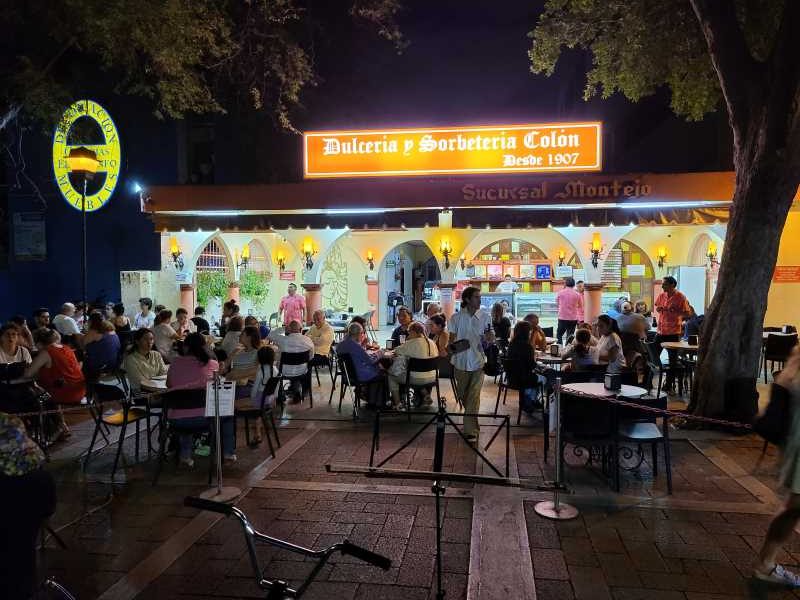
However, you can get importuned in Mérida, that’s for sure. Many (most) businesses have a tout out front. Sometimes they’re just waiters suffering from empty tables, so they go fishing on the sidewalk. Other times, they’re selected solely for their importuning skills. There’s a liquor store (a rarity) on a busy corner on the Corredor Gastronomico, that hires one Miss America (Mexico is in America, people) after another to stand outside their door and treat male passersby to a sharp elbow in their ribs from their dates as you pass by. They also offer two free shots of mezcal to the unwary, to get your liver throbbing from the inside, too.

The kind of tout you get depends on where you wander. Around the main central square (zocalo), poaching tourists is handled by the big game hunters. If you look like you’re from out of town, there’s no bag limit. They buttonhole you to get you to buy a Jipijapa (Panama Hat) if you’re not careful. Until you learn how to feign total ignorance of the English language, you’re going to be treated to tales of children making these hats in caves with their nimble fingers. I think you’re supposed to be consumed with pity and overpay for a straw hat instead of asking where the cave is, so you could go rescue them.

The rest of the stores around the square are a charming but occasionally exhausting gauntlet of amiable come-ons for street food, guayabera shirts, and various Mayan tchotchkes. Everyone is friendly about it, so you don’t wish they’d go shovel brimstone or anything. No necesito, gracias, no tenemos hambre, and Ich spreche kein Englisch are the only defense you need. No one scowls at you if they fail to land you on their boat of commerce, they just move on to the next pedestrian. With the right frame of mind (three cervezas), you can convince yourself that all that attention is tantamount to being popular.

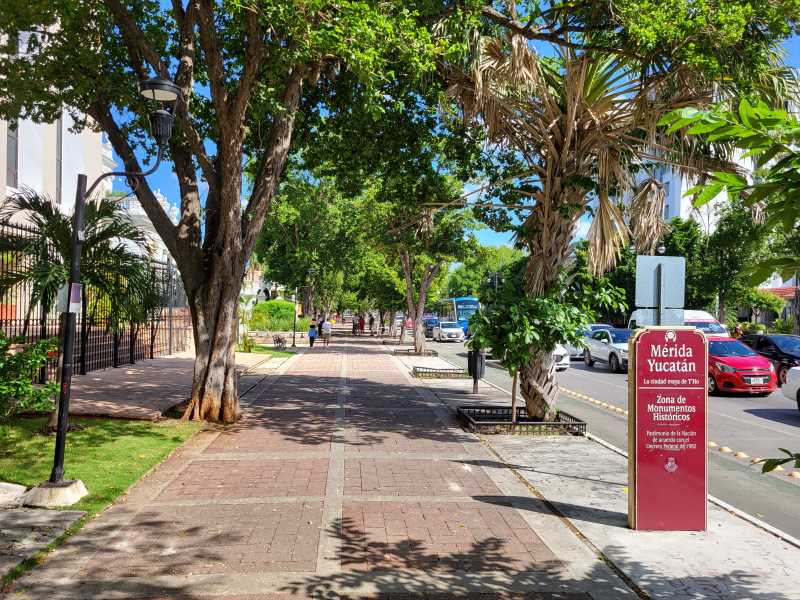
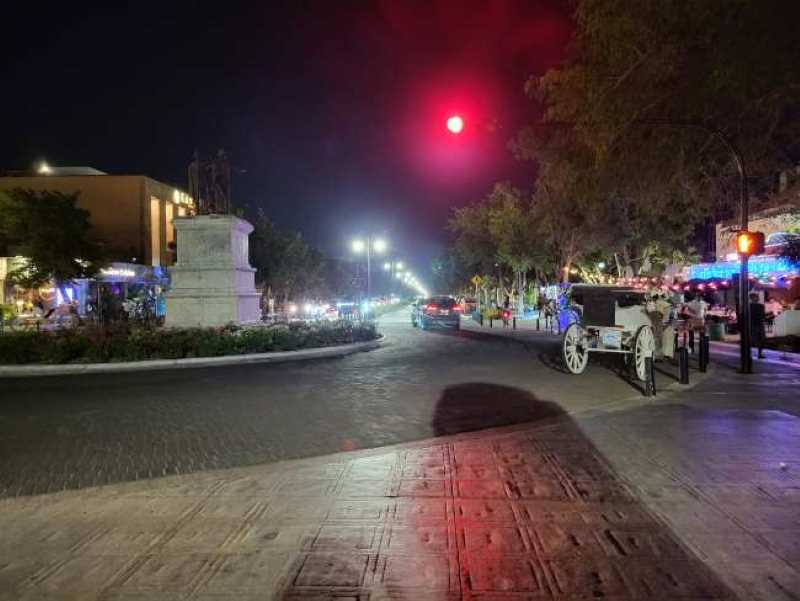
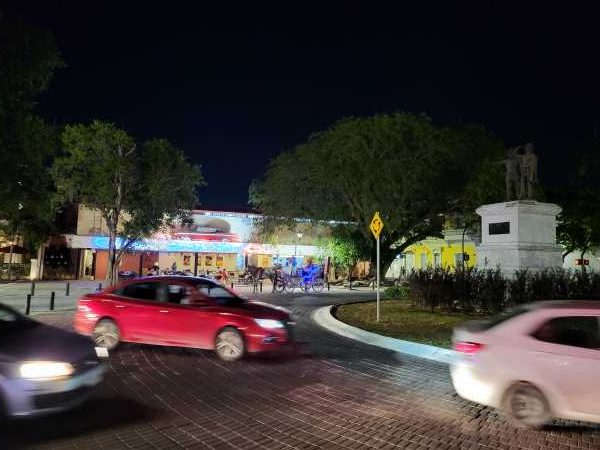
So a mugging didn’t seem possible, never mind likely, when we went out into the (relative) cool of the evening and headed the half a block to the Paseo Montejo, the big boulevard that runs north from the center of the city. That’s where we got grabbed.

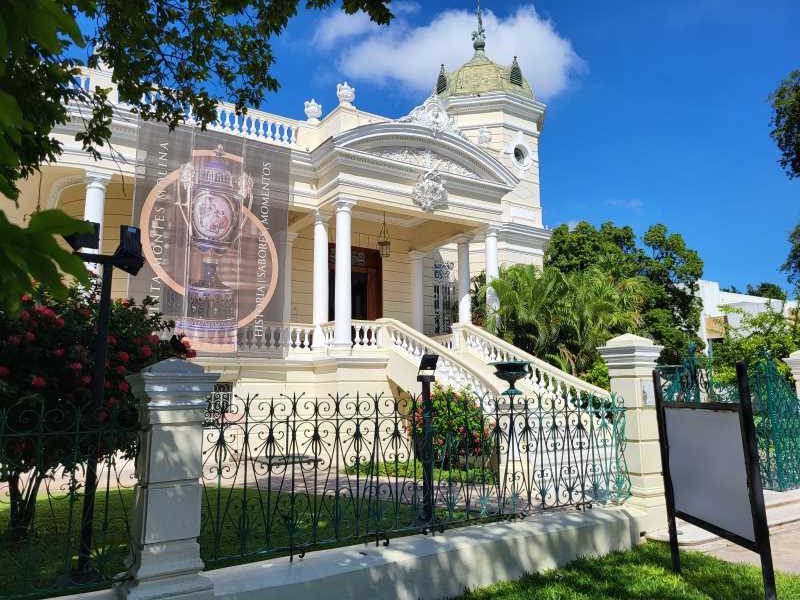
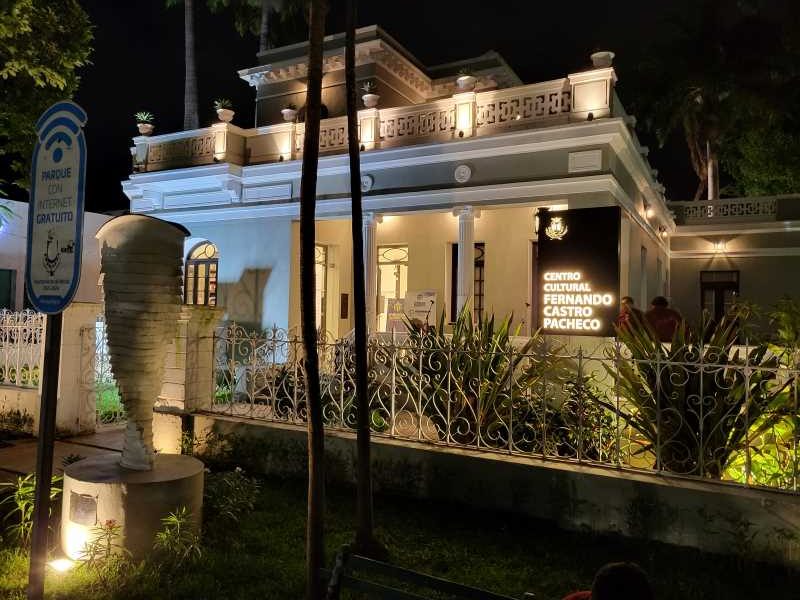
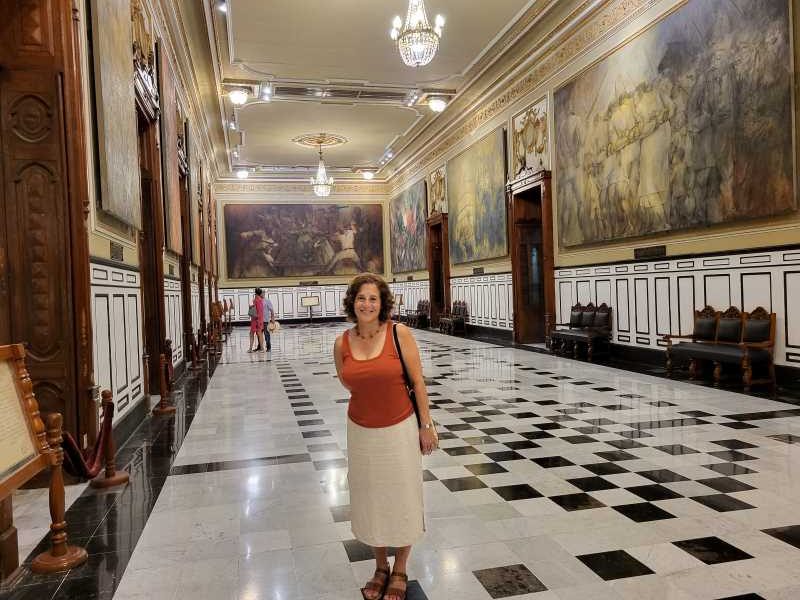
The Centro Cultural Fernando Castro Pacheco was on the corner. It’s a handsome colonial building, perfectly maintained. It was always shut up tight when we walked by. Not that night. It was lit up like a drunkard’s nose, a superb two-man band was playing on the veranda, and three women were scouring the sidewalk out front to waylay strangers. And no one is stranger than me, so they took me in hand. The slipstream of their Spanish befuddled me, of course. After a three or four thousand word assault, they paused to take a breath, and I begged them, “Mas despacio, for favor.” So they said the same thing to us with the record player set on 33 instead of 78, and we got the gist. It’s wonderful inside. An art exhibit. Music. Of course, like nearly everything else in town, it was free. Why not go in? 

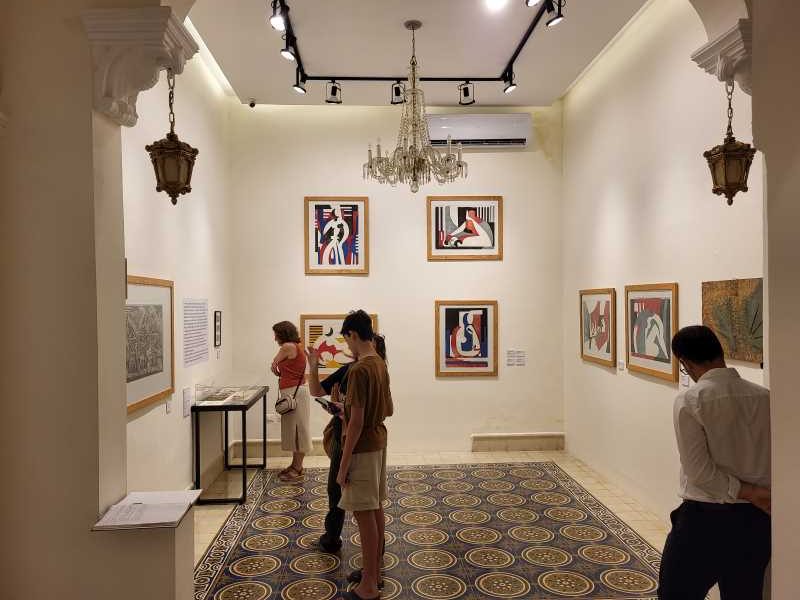
So we did. The rooms were beautiful. The abstract art wasn’t bad, either, even though I usually rank the style with dental cleaning and second grade art class. I spent most of my time looking at the other people, and the pasta floors.

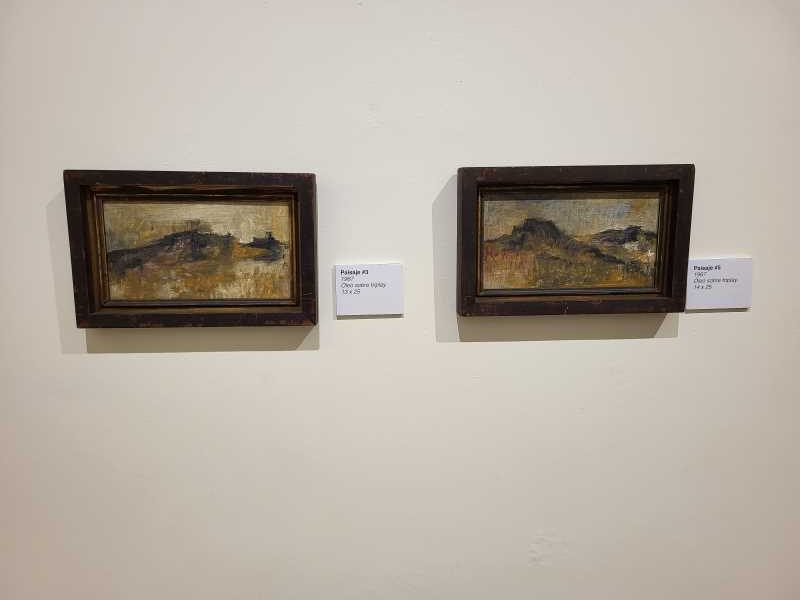
They had some landscapes I rather liked, and would have stolen if my parents hadn’t ruined me for life by sending me to Catholic School. I read the blurb on the wall about Fernando. He was a painter, engraver, illustrator, and sculptor. A Mexican Giacometti, without all the swearing. He was lumped in with Diego Rivera because he painted on a grand scale a lot, but they don’t really have a lot in common. He sounded like a nice fellow, which is a rarity in the art world.

We eventually escaped past the deluge of friendliness outside the door, and wandered downtown, feigning deafness and a Germanic bearing like pros to avoid any Jipijapa assaults. We ended up outside the governor’s palace, the home of a couple of acres of Fernando’s work. I assumed that like most Mexican painters I have known, he was getting paid by the square foot, or maybe the gallon. There were three very formidable policemen standing outside the palace, blocking the doorway and looking like they hadn’t heard a good joke in years. One of them took one look at my gringo face, and scared me a little when he started talking to me:

It’s wonderful inside. An art exhibit. Music. Of course, like nearly everything else in town, it was free. Why not go in?

Why not, indeed?  I was willing to speak to the governor if it was required, but I imagine he had some other pressing affairs, or a haircut appointment or something, that precluded getting my sage counsel. And they put those rope thingies in front of the balconies to keep me from making any speeches to dazzle the populace. I had to settle for a short walk to the Corredor Gastronomico, an elbow in the ribs, and dinner with my inamorata.

I hope they can muddle through without my advice.

The River of Souls

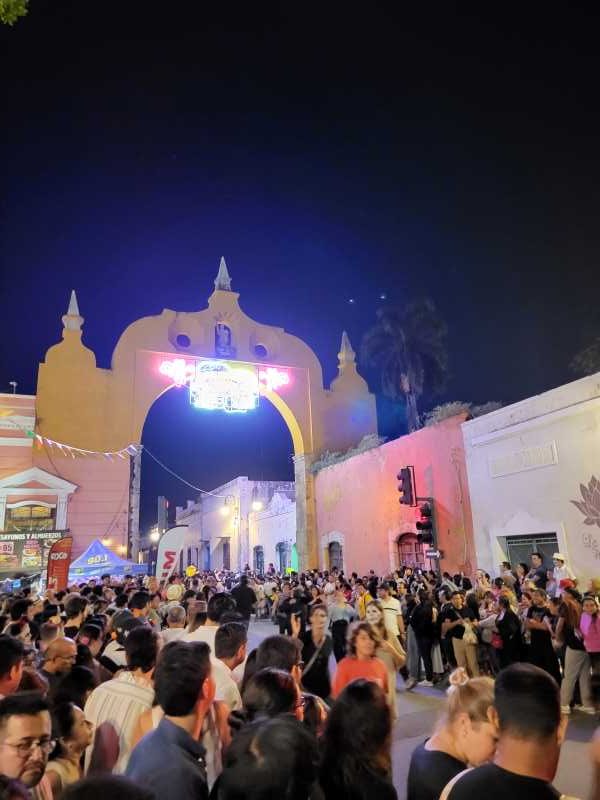
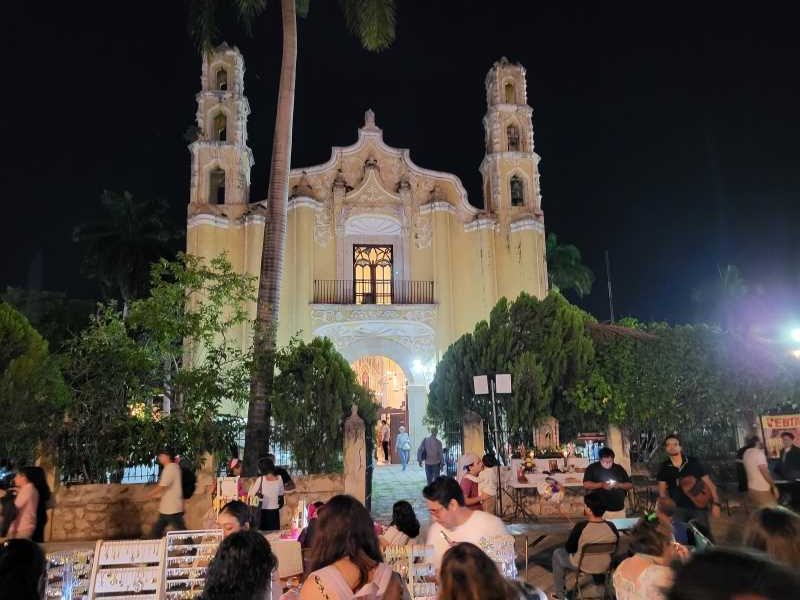
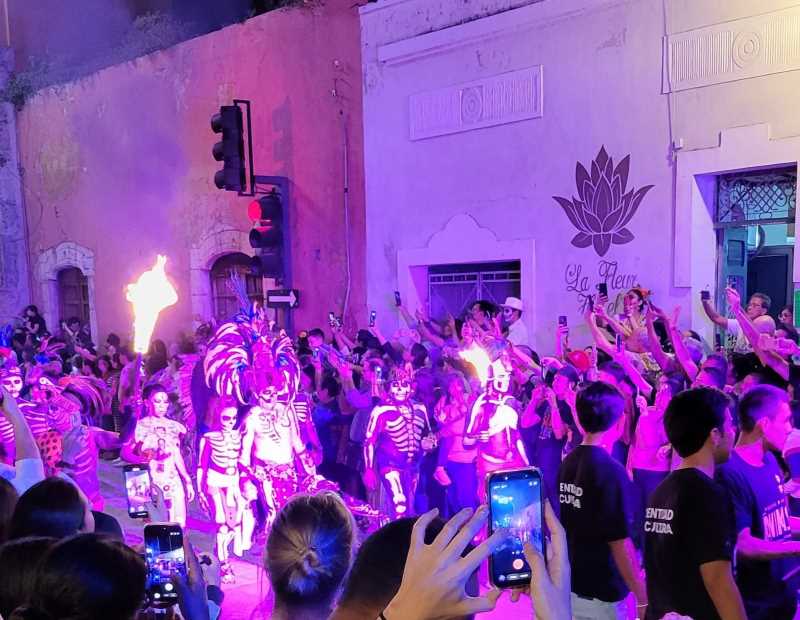
We saw a river of souls. It flowed into the Parque San Juan in Mérida, Mexico through a stone gate barely removed from the middle ages.

I’ve never been in a crowd like that. It pulsed and vibrated and bellowed in and out. Roared and whispered. It processed us, nothing short of that, from one end to the other. We lost ourselves in it. Not in the mundane way that term is used. We were each a single cell in a new creature, buoyed on a tide of remembrance, leavened with optimism for the future, but somehow still a complete surrender to the here and now. Dancing on a billion graves, and billions more to come. Hell, our own.

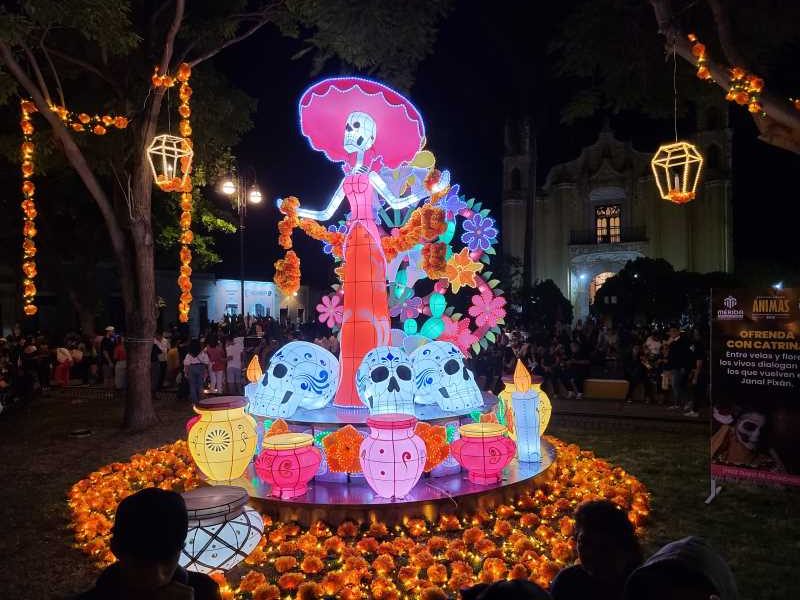
Halloween? Halloween in the United States is a joke, a sad joke. It’s nothing but Stephen King pablum regurgitated into a sugar bowl, then consumed over and over like a holiday for house flies. It’s trivial. The Day of the Dead is joyous and silly and dead serious all at the same time. It means something, but the meaning doesn’t run roughshod over the simple enjoyment of it, or vice versa. It brooks neither sanctimony nor frivolity. It stares death right in its painted skull face, real death, Mesoamerican death delivered roundhouse, over and over, muerte doled out on the scale of a scythe in a field, while dancing in looping circles around it. Unafraid, not unaware.

And so trick or treaters are transformed into a river of souls, marching in no kind of step to music made fresh coming from all points of the compass. The crowd roars and shows their fealty with iPhone fascist salutes. The marching children hold candles that flicker inside little plastic shields, mimicking the lives they represent, protected only barely from being snuffed out by the motion of passing through this world. They are the dear departed, babies snatched from their mothers before they’re ready for their first breath, children boiling with fevers, mothers struggling to produce their ration of life, fathers who put one foot wrong on a scaffold just once in their lives.

The Jesuits told the Mayans that their soul is immortal. It cannot be taken and it cannot be given away. The Maya scratched their heads and said heavenly immortality is a poor substitute for walking the earth in the shadows forever. They nodded and smiled in churches built on the rubble of their temples, because it was close enough to suit them. Still they build altars that would make a bushido blush to greet the shades of their dear departed. The river of souls rolls on.

Paradise’s Waiting Room

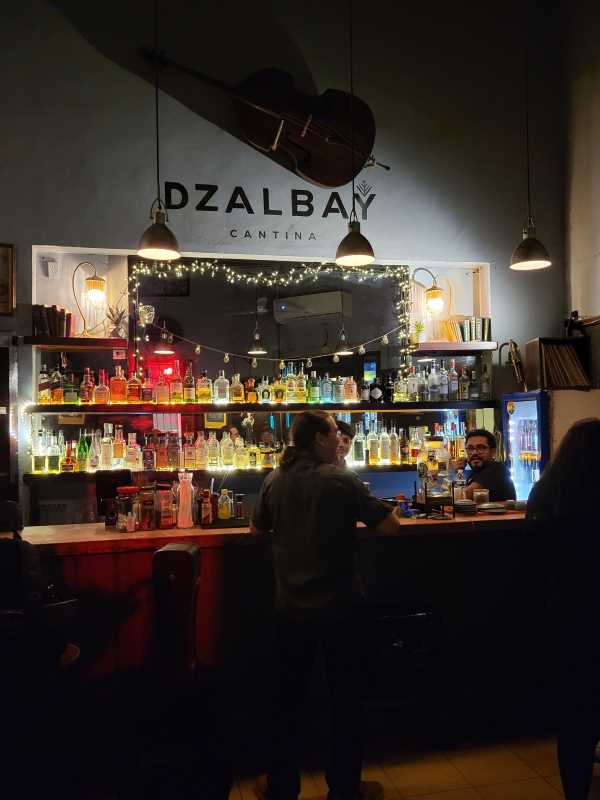
You can’t keep us out of the Dzalbay. They can try as hard as they might, but a Victoria beer is about $1.75, and there’s never a cover. I’ll run out of liver before I run out of pesos.

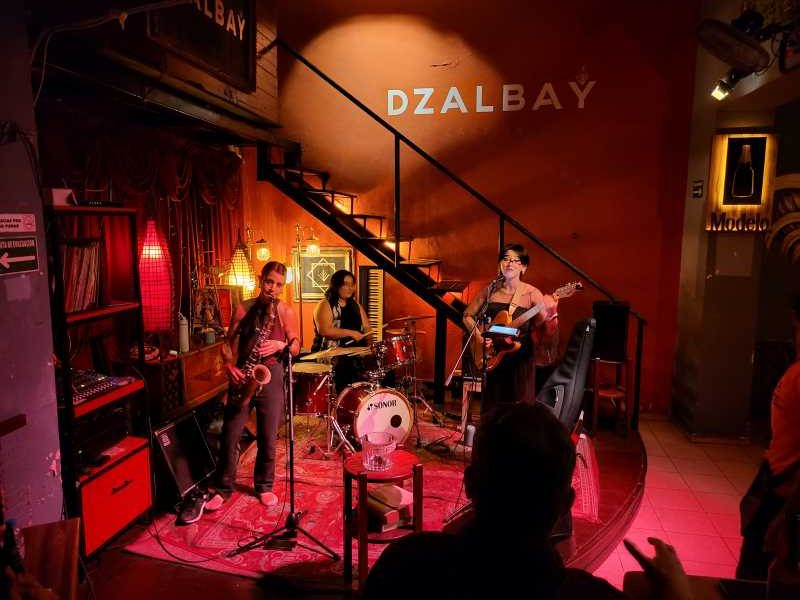
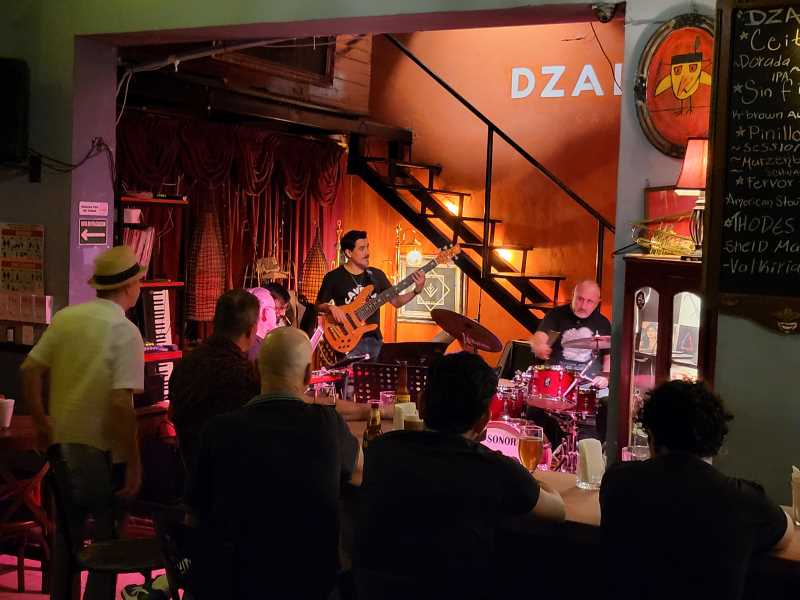
Swinga Tu Madre was playing at the Dzalbay last night. They’ve added another quite capable guitarist to the crew who’s not visible in the video. The violin player puts down his fiddle when he gets weary of trying to saw all the way through it, picks up a trumpet, and teases some more Gypsy Jazz out of that. We geeked out a bit when they played this one:

They represented enough of a lifelong pseudo-ambition for my wife and I to call it a win. We’ve always wanted to walk to the local bistro and hear Gypsy Jazz. Of course we had hifalutin’ ideas about the where and when. We had visions of Paris and haughty waiters ignoring you while anorexic girls smoke greasy unfiltered cigarettes and drink wine they didn’t buy, accompanied by the dudes who did. That’s the beauty of being unable to do much of anything: You never have to settle for second-best of anything, because you can’t even hope to sniff third best. A Rolex and a Timex cost the same if you have no money.

So this was our ultimate flight of fancy for Gypsy Jazz in a bistro:

Not gonna happen. But we were just aimlessly wandering the streets of Merida last night. It was in the low eighties, and it was clear enough to see the sickle moon for the first time in weeks. I see the moon, and the moon sees me. The streets were quieter than a weekend, although the Day of the Dead events pockmark the city with jolly and morbid goings-on. It’s perfectly safe to walk anywhere around here after dark, whether people with skulls painted on their face are abroad in the land or not. The only danger is that you can’t remember the difference between buenas tardes and buenas noches fast enough when confronted with a friendly stranger. Just when you’re screwing up the courage to give it a go, they say, “Hola,” and your house of Spanish flash cards comes tumbling down anyway.

Entirely by serendipity, the Dzalbay loomed in front of us, the light slanting out into the street to compete with the alternating red and green dazzle of the stoplight. Like almost any event of any kind in Merida, Yucatan, it cost nothing to get in. It was a happy accident that a Gypsy Jazz outfit, Swinga Tu Madre (ya, believe me, I know) was performing.

It wasn’t paradise. But it was paradise’s waiting room, surely.

Spill the Wine, Take That Girl to the Dzalbay

Dear lord, that’s a smoove groove. The smoovest, I think. Eric Burdon is fun, but borderline superfluous to the proceedings. The backup band, War, eventually thought so too, and they had eleventy hits in the seventies after they left Eric out on the curb. Audiences generally figure that the band is just the singer, with some other mostly anonymous guys standing behind him. The other guys always resent that, but then again, if they could stand out front, they would. I’ve had an arena-rock caliber singer fronting a band I was in for a short while. We all loathed him, but he delivered the mail, so we put up with it. For a while, anyway. I’m not lumping Eric in with him. Eric might be a decent human being. How would I know?

Watch the video. We’ll skip right over the guitar player’s hot pants, if you don’t mind. Let’s talk about Harold Brown on the drums. I owe him something. I’ll pay it now, in the humble scrip of my attention. I wanted to play the drums when I was a kid, but the school wouldn’t let me. They handed me a trombone instead, which everyone knows is plumbing, not music. When I got older I could do as I pleased, and I got a set of drums and set myself to learn. I learned to mimic this little drag beat from Harold, and from this song. It was already an oldie but goodie by the time I cannibalized it, but it’s a hardy perennial in the groove department.

When you hear a groove like this, you could easily miss something like the little flourish Harold is using to drive the beat along. You’d just enjoy the whole thing, and find yourself energized to hear it, maybe want to get up and dance without knowing why. We called it the drag beat. I’m not sure if it has some official name. It’s more of a knack than something you practice, like rolling your R’s when you speak Spanish. With your left hand (if you’re right-handed), you loosen your grip, and sort of skim or drag the tip of the stick across the snare drum head. It bounces twice, quietly, like a trill, and then you strike the snare fully on the 2nd and 4th beats that follow the drag. The soft drag is the equivalent of two grace notes, if you know what that is.

Anyway, if you see it done, you have a “light dawns over marble head” moment, and get it going pretty easily. If you’re simply listening to a record to learn it, it’s hard to figure out what’s going on. I haven’t played the the drums in twenty years, but I bet I could do it right now, and play the little turnaround that Harold plays, too. You’d think I really know what I was doing, even though I didn’t then, and certainly don’t now. It’s like greeting someone in a foreign language with the correct accent. They start blabbing at you, and you have to hold up your palm and tell them you’re fresh out of ammo after shooting “Hello, how are you?” at them.

So what’s this all have to do with anything? Don’t worry, my disordered mind will sew it all together like Frankenstein’s monster, put my abbie normal brain in it, and put the electrodes on the neck bolts to animate the essay, I promise.

The video is a live performance from a German television show, I’m pretty sure. They’re all really playing their regular instruments and singing. If you doubt that, watch at 1:45 as the bass player reaches over with his right hand to turn his tuning peg a little. There were no electronic tuners back then, so you had to tune up your instrument, and match the other instruments, solely by ear. I’m sure I still have an A 440 tuning fork hanging around someplace to commemorate the process. I’ll bet the majority of the currently most famous musicians in the world couldn’t do it.

The point is, that teevee show was a stand-in for seeing people make music right in front of you. No gimmicks, no lipsynching, no auto tune, no recorded backing tracks. Even seeing bands like War live couldn’t compete with the teevee production, because they were popular and you’d look at them from row Double Z in an arena, a flea circus on a distant stage with more equipment than NASA needed to reach low Earth orbit. Performing live, up close, in a small setting like the video, is like tightrope walking. It’s immensely interesting to see people perform live like that. It lends an additional air of excitement to the musical enjoyment, because they might fail. Arena performances and recordings can never come close to it anymore. Milli Vanilli was probably less canned than Taylor Swift is.

So here it comes: My wife and I went to the Dzalbay Cantina here in Merida Centro last night. Went there with our friends last week, too.

It’s a really cool place. It’s been a cantina on the same corner for 80 years or so. A cantina in Mexico is like The Local in Ireland. There’s always one on the esquina and it serves as a convivial meeting spot for the neighborhood. Over the years, the Dzalbay morphed from a straight-up saloon-door bucket of blood into a live music venue. Mostly jazz and blues. I loved it, and got curious about it. Dzalbay?

It’s the Spanish approximation of two words in Mayan. Ts’al and bay.

“Dzalbay” roughly translates to “what is poured/spilled”, “the poured one”, or sometimes poetically, “something that flows or is spilled.”

So I went to the Spill the Wine cantina, and I took that girl, and we heard good musicians make wonderful music for us on the tightrope of a stage, with no electronic net. I simply held up my fingers to replenish our supply of cerveza succor when we ran low, and we paid with pesos like Monopoly money.

We zigzagged home, hand in hand in the moonlight, Venus and Mars, and I dreamed I was in a Hollywood movie. With a drag beat soundtrack.

Watcha See Is Watcha Get in Mérida

Not to get Dramatic about it, but I’ve been slacking in the information department. Here I am in Mérida , Yucatan, Mexico, sunburned, my liver seizing up and jerking like a 1971 VW Bug stick shift, my ears still ringing from a trip to the Altabrisa bowling alley, and I haven’t even gotten around to showing you fine folks where we’re camping out.

Well, some people are up to no good. But baby, I’m as real as real can get. I’m not secretly staying at the Villages in a hot tub with fourteen retirees with skin like Satchel Paige’s mitt. I’m in Mejico, and I’ll show you what it’s like where I’m at, because that’s where it’s at. Breakin’ hearts just ain’t my game.

We cadged an AirBnB casa in the Zona Paseo Montejo. It’s an unofficial barrio in Centro. Centro is where the action is. The center of Centro is the Zocalo, the big square and park surrounded by government buildings, cathedrals, and clip joints for tourists. Most tourists aren’t from the USA, though. People come from other parts of Mexico, mostly. Canadians are thicker on the ground than USians. There are some Germans, who you can immediately identify by their perfect English. You can see Mennonites wandering around here and there. One is treated very occasionally to an Oriental wearing two sneeze masks, a bucket hat, sunglasses like welding goggles, and a unitard under their other clothes that  covers every inch of their skin but their fingers. They take pictures of gas fittings and trash bins and stop signs and don’t bother anyone, and no one bothers them back. La gente are pretty mellow here, all in all.

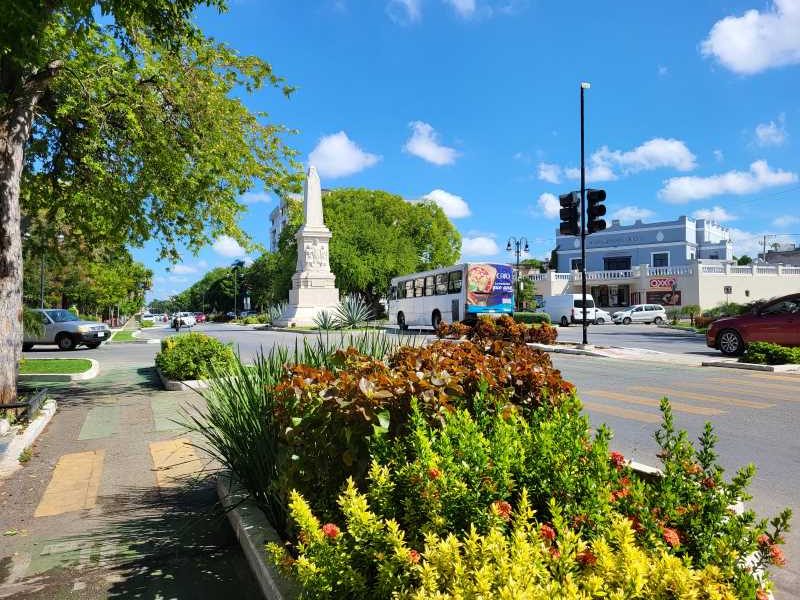
The Zona Paseo Montejo is north of the Zocalo. The Paseo Montejo is a big, fancy boulevard that starts in what I think is Santa Ana neighborhood, north of the Zocalo, and runs due north for quite a bit. We’re about half a block off the Paseo, halfway up its first leg. We can walk damn near anywhere we want to go from here, and we do.

Last minute arrangements on AirBnB can result in slim pickings. We got lucky, I guess. We ended up spending slightly above regular money to get a very above average place in a superb spot. It’s the off-season. It’s at least 90 to 100 degrees every day, winter and summer, but this time of year is the rainy season. Hurricanes are named after a Mayan god, so do the math about what kind of rain they get. The days start out perfectly clear, rain clouds form while you wait, and then drop bathtubs of water on your head whether you need a bath or not, probably because you do, as the humidity is 90, too. Sane people stay in during the late afternoon when the odds are bad, and go out early in the AM and after sundown, avoid the puddles, and wonder what the fuss is.

I’m too lazy to look up the exact numbers, but we rented this place for a month for around $2,800. Then we got to identify the only people in Mexico who pay taxes. Hint: it’s not Mexicans. Pile on various fees to the tax, and you end up paying around $3,500. Now mind you, much cheaper accommodations are available around here. There’s fairly posh (by Ramada Inn standards) hotels on the Paseo that only charge about $50 a night. On the next corner on our block, there’s a hotel that charges $30 a night. You might expect Salvation Army accommodations for that, but it looks about fourteen times better than any American Motel 6 that charges more, I’m sure. The lobby has marble floors, and the neatly dressed concierge is becoming used to us walking by, and waves. No one waves anything but a gun at you at a Motel 6.

We’re staying a while, so we need a house, not a hotel room. Here’s what you get for around $100 a night:

We’re in the blue one. Just a window and a door on the street. You might wonder what could possibly be in there. One room with a hotplate, right? There’s a two bedroom, two bath house in there, with a living room, a dining room, a full kitchen, a laundry room, a walled courtyard, a pool, and a covered patio. In Mérida, houses are skinny, and houses are deep. You may now take a moment to commit japery at the magnificent Mexican infrastructure on display. Those wires occasionally part my hair on the other side as I walk down the street. Then again, my internet is faster and more reliable than in downtown Augusta, Maine, so maybe appearances are deceiving.

Step inside, and you’re in the sala, I guess, or the living room, if you’re norteamericano.

I don’t like vertical photos, but there’s no other way to do it. I whack my head on everything outdoors in this town — telephone wires, street signs, tree limbs, doorframes in cantinas — but the ceilings in these colonial houses are 20 feet high. The owners have kept this place mostly old skool, with buttsprung fauteuils instead of sofas to wallow in, but we like it fine. Those are pasta floors. They’re similar to encaustic tile in Europe. Like baked concrete, with the patterns molded right into them, instead of just applied. They’re always cool under your feet, and exuberant to look at.

This room has urns. I have no idea who might be in them, and don’t want to find out. My wife, who could break things while straitjacketed and sleeping, won’t go within ten feet of them. I guess we’re just not urn people. The clock is a hoot. It’s a replica of sculptures I’m very familiar with. They’re someone’s rough approximation of Michelangelo’s reclining statues of Day and Night in a Medici tomb in Florence, Italy. Michelangelo got bored, like he used to, or the check didn’t clear or something, so the face of Night was never really finished. Whoever made the clock decided to take it up a notch, and finish it for him. So we have a clock that doesn’t tell time, with Day and Tom Selleck reclining on it. Which is nice.

Right off the sala is the master bedroom. If fronts the street, too, which can be a problem in some parts of the city. Here, the street is nearly silent after about 10 PM, even though we’re about a half a block from pandemonium, so it’s fine.

There’s an ensuite bathroom off to the right. Like all the interior rooms, there are skylights instead of windows, because you’d have to knock down your neighbor’s house to get a window in, and they’re somewhat unreasonable in this regard. That’s a typical shower. You step in, and the only curtain is a tempered glass partition. Both bathrooms are all sandstone, marble, and tile.

There’s another bedroom off the dining room, with two beds in it, a dressing room, and its own full bath, tricked out like that last one.

Here’s the dining room. Seats eight, easy. There are real, good paintings all over this house, including that portrait. That’s rare. Most other local AirBnBs have nasty modern art blotches and shrines to Frida Kahlo’s unibrow and girlstache.

The kitchen is Italian for some reason. There are no Italians in Merida that I’ve observed. There’s a garrafon of drinking water on the counter. The water for the house is supposedly drinkable. Then again, I’m supposedly handsome. Everyone drinks water from a bottle. The wells are OK, but no one trusts the pipes.

Right off the kitchen is a huge laundry room. You can have your laundry done for you very cheaply in Mérida, but we’re not servant people. You go through a lot of clothes, so having a laundry in-house is nearly mandatory for us. Underwear and towels, mostly. You could live here for ten years and never put on more than shorts and a tee shirt. Same kinda short money for maids and pool cleaning as laundry. Once-a-week pool cleaning is included in our tariff. A seventy pound man driving a seventy dollar car pulls up and carries seventy-five pounds of equipment in with one trip, and does a great job. Tipping is optional in Mexico, compared to the US, anyway, so workers are sometimes befuddled when you offer them a propina, but grateful nonetheless when you insist. The Uber drivers are nearly ecstatic to get a one buck tip.

Here’s the courtyard, patio and pool:

Yeah, that’s a big teevee on the wall on the right. There’s Roku teevees in both bedrooms, the kitchen, and out on the patio. I’d say they were expecting (north) Americans with a setup like that, but the screens were set up in Spanish, and French, so I guess not. The only hard evidence we found that they were expecting Americans was this drawer in the bathroom:

I take no offense about being suspected of being full of mierda. After all, if I ever go to Ireland, the Blarney Stone will kiss me, not the other way around. You know, to recharge it.

Tag: the other Mexico

Find Stuff:

Archives