That’s not a joke. That’s the Foundations. They were Britain’s somewhat overmatched answer to Motown, and they hailed from all over. The late sixties were a very fertile time in the music business. Rock and pop bands were making serious money, and producers slapped together bands to cash in on the seemingly limitless hunger for new material from an ever-growing audience. The Foundations fit right in — eventually.
Musicians often have crazy side jobs and obscure backgrounds before they get their head above water in the music biz. The Foundations are a wild bunch, even by music biz standards. Clem Curtis, who is singing (or pretending to sing for the camera) is from Trinidad. He was a boxer, a wrestler, and an interior decorator. Hmm. I don’t think I’ve ever seen those job descriptions on the same resume before. At any rate, the keyboard player, Tony Gomez, was a clerk in a government architectural office. Peter Macbeth, the bass player, was an English teacher — in Singapore. The drummer, Tim Harris, was a deckhand on a cargo ship and sailed all over the world. Mike Elliot, the sax player was 38 years old when the band formed. Tim Harris, the seagoing roustabout, was still only 18, which makes me wonder if they were still impressing cabin boys in England in the sixties. The rest of the band was from all over, too, but were mostly jazz musicians who discovered that pop music paid better.
The Foundations grew out of a profoundly unsuccessful band call the Ramong Sound. It featured Clem Curtis and a guy name Raymond Morrison singing duets like Sam and Dave. Morrison went to jail for one thing or another, so they went looking for someone to sing duets with Clem. They tried Arthur Brown.
If you can’t place Arthur’s name in the musical firmament, this should be enough to give you the general idea:
Arthur used to paint his face, wear a mask, and a don a helmet that he set on fire, but even he thought the proto-Foundations was a little too rough and tumble. He reminisced later that when he walked into an off-hours bar to audition for the band, he found Curtis holding a spear to the drummer’s throat, who was bent backwards over the bar rail. So Arthur didn’t work out. The band auditioned Rod Stewart, who turned down an offer to join. They hired his girlfriend to do clerical work, however, so it wasn’t a total loss. Eventually they just went with the lineup they had, changed their name to the Foundations, and had a Number One hit with Baby, Now That I’ve Found You.
The band started touring with lots of big name rock acts. Success of a sort went to everybody’s head. As soon as any band starts making any money, it’s considered poor form not to start fighting over it like Kilkenny cats, and the Foundations were no exception. Curtis left to try his hand at a solo career after demanding that the band be named Clem Curtis & the Foundations, and being told to pound sand into a rathole by the other members. Morrison got out of prison and sued everyone. It took a judge only three hours to decide that it was unlikely that he was responsible for the band’s success while he was in prison.
But don’t call the Foundations a one-hit wonder. They got a new lead singer from Barbados named Colin Young, and became a two-hit wonder:
That one made it to #2 or #3, depending on what version of English the chart was being compiled in. Buttercup was a hardy perennial in the cover band circuit. I freely admit to playing in a band that performed the song twenty-five years after it was recorded. Of course we changed the words to an NC-17 version to freshen it up for a new audience.
I am led to believe that some version of the Foundations is still poking around, although it’s unclear exactly how much DNA they share with any of the original members. Then again, most old pop groups never die. They simply fade away.
There are a lot of videos on YouTube about banging on your house, and making furniture, and related topics. Very, very few of them are any good. Many are downright destructive. For the most part, they’re produced by people who are fascinated with making videos, and watched by people who are interested in watching videos, not for doing anything productive in the real world.
Many young people today are hungry for information about practical things like fixing a dwelling. I salute them. Self-reliance is an important character trait, and in short supply recently. Home and Garden teevee shows are useless for this, but people watch them anyway. They showcase people who can’t do much more than host the show, but who exhort people to flip that house just like they (snicker) did. And, you know, an army of immigrants working off camera to do all the scut work. The result of people watching these shows is always highly visible in real estate listings in my neck of the woods, and probably in yours, too. The house is half torn apart, there are piles of oddly selected building materials everywhere, and there’s a foreclosed sign on the door. “All the hard work is already done,” the realtor will tell you with a straight face. Done wrong, I’ll tell you.
The genial fellow in this video is offering training wheels for your Schwinn before exhorting you to buy a Harley. He’s the rarest thing on the internet. Someone who might actually know what they’re talking about, and might actually help a few people hit their thumb with a hammer, and love every minute of it. And he seems to understand, without saying so, that the plastic bucket might be the most useful tool of the lot. After all, you can flip it over and sit on it when lunchtime rolls around.
Towards the end of the 1700s, men wised up a little. Driven by style leaders like Beau Brummell, they stopped dressing like Mardi Gras floats and snuff-guzzling fops, and started dressing like they might be good for something other than playing cards with Louis XIV. They didn’t want to look beautiful anymore. They wanted to look masculine. It was the adumbration of what we call The Suit. It was a major milepost in the history of clothing, and other things. It was called the Great Male Renunciation.
Suits are of course tumbling out of favor. Hardly anyone wears one properly, if they wear one at all anymore. People, important people even, wear remnants of one, even to important gatherings. A business suit worn without a tie is an incongruity. A business suit jacket worn over jeans is an abomination.
People claim, loudly, that it was comfort, simplicity, individualism, and egalitarianism that killed the suit for daily men’s wear, and good riddance. They’re full of merde. One of the original names for a suit of clothes was a lounge suit. A well-made suit is comfortable to wear, and motility isn’t constricted much. You’re protected from the elements in your wool carapace, and you can take the jacket on and off in private settings to regulate your temperature, too. There’s a great deal of variation in suits as well. A workman could wear a durable tweed suit jacket with a flat hat and be comfortable while doing even heavy labor.
As far as simplicity goes, modern suits have always lent simplicity to dressing yourself for brain work. You could choose your shirt from very few in the closet, your tie for a splash of color, with more subdued hues for more staid occasions. Just make sure your socks match, and you’d be done.
People think their current regimen of a dishevelish mishmash of clothes is simpler than a suit, but they’re lying to themselves, and everyone else that has to lay eyes on them. A while back, I worked in an office that required “business casual” clothes. That’s a collared, long-sleeve shirt, a tie, slacks, and shoes. Customers occasionally visited our cubicle empire, and we didn’t want to look like mendicants if they did. The management eventually bowed to Lumbergh trends in the zeitgeist, and instituted the completely misnamed casual Fridays.
Once the memo went out, everyone (else) dressed like ragamuffins on Fridays. The men dressed garden variety badly, and the women dressed like Marseilles taproom wenches. I wore the same thing I wore the other four days of the week. This elicited complaints from my peers. They wanted me to be forced to dress badly along with them. They never understood that they were spending an inordinate amount of time wondering what to wear on casual Friday. I was spending zero. And a shirt, tie, and slacks is a perfectly comfortable way to dress. And I don’t know how to break it to you, but jeans are not even supposed to be comfortable. They were made from coarse, durable cloth that could stand up to much heavier work than the friction from an Aeron chair. Eventually I was put in charge of everybody, and I made sure casual Friday went the way of powdered wigs.
The egalitarianism I mentioned is strictly of the Animal Farm variety. The modern tech CEO wanders out on to the TED Talk stage wearing moon boot sneakers, expensive ripped jeans, a T-shirt with an incongruous slogan on it, all topped off with a suit jacket. He’s got Argentine president hair, or his head is shaved like a death row inmate. All this is supposed to make him look as casual and accessible as any clerk in his javascript empire. It’s a sad joke. He might as well be sporting a justacorps and a Restoration wig. He’ll disdainfully refer to everyone who his company owes money to as “the suits,” but that’s because he wants to act like Elaine with Mr. Peterman’s gold card, but they won’t let him. And the entire audience is dressed the same way as the CEO. So much for individualism.
The force driving the Great Male Renunciation was the desire to leave irrational, emotional, and frivolous modes of dress, comportment, and social interactions to women. Toughen up, Van Buren. Lord knows who first said, “Clothes make the man,” but he may have been standing next to a guillotine, shoving some ancien regime dude in silk hose and high heels into the Jacobin Cuisinart hole. Perhaps the quote has been truncated from, “Clothes might make the man, but we can make him shorter.”
Suits aren’t fussy garments. Cary Grant, who might have worn the most famous suit, ever, didn’t really worry much about his clothes. Suits simplify things, and project the right image for a put-together man. And they work pretty well, too, whether you’re thinking about stuff at the Plaza Hotel or running away from a cropduster.
Here’s Cary on how to dress well:
No, it isn’t only money that determines how well a man dresses—it’s personal taste. Because of the demands of my work, I’ve purchased dozens of suits over the years and they all have one attribute in common: they are in the middle of fashion. By that I mean they’re not self-consciously fashionable or far out, nor are they overly conservative or dated. In other words, the lapels are neither too wide nor too narrow, the trousers neither too tight nor too loose, the coats neither too short nor too long. I’ve worn clothes of extreme style, but only in order to dress appropriately for the type of character I played in particular films. Otherwise, simplicity, to me, has always been the essence of good taste.
Suits communicate more than seriousness to people you encounter. They’re a form of good manners. In a business suit, you are what you is, to mangle a saying while getting the meaning right. Dressing like you’re sleeping behind a dumpster while pulling in seven figures is pretty close to Marie Antoinette, Hameau de la Reine mendacity.
Cary’s style of dress made it well into the 1960s without any challengers. Until about the Beatle arrivals, men’s clothing and hairstyles were heavily influenced by the military. Makes sense. A whole generation had recently been in the military. In order to attract a mate, men wanted to look overtly masculine. A suit was just a civilian version of an officer’s uniform. Men kept their hair close cropped and neat. They were clean-shaven, and shined their shoes. If you wanted to look healthy, you’d get a suntan, a hat tip to people who did robust things outdoors.
Then came the Peacock Revolution. Men started dressing like dandies again. The British Invasion told men that they could look shaggy and still pull chicks. They started dressing like rock stars, and rock stars started dressing like women. Or more to the point, like homosexual men:
Mostly based around men incorporating feminine fashion elements such as floral prints, bright colours and complex patterns, the movement also saw the embracing of elements of fashions from Africa, Asia, the late 18th century and the queer community. The movement began around the late 1950s when John Stephen began opening boutiques on Carnaby Street, London, which advertised flamboyant and queer fashions to the mod subculture.
The denouement of this movement crashed and burned into a late seventies heap of leisure suits, fondue pots, shag carpeting, and harvest gold appliances. Luckily, in the following decade, Gordon Gekko instructed everyone to buy a decent suit, and we had an interregnum of half-decent clothing for men.
Women still dressed like clowns, wearing dresses with the hanger still in the shoulders and too much rouge, but woman basically always dress like clowns. Men should leave them to it, and worry about their own appearance.
Once the last preppie was hunted to extinction, Grunge pretty much drove a stake through the twitching corpse of men’s fashion. It’s been a long, slow degradation since then. Women are driving the bus now, because they’ve totally taken over the internet. Even though they’re still sleeping with same bad boys from down the block on the sly, they’re demanding that their significant others display the most feminine version of anything that has to do with masculinity. I’m not sure how they’re managing it, but guys have feminine beards these days. Their manbuns make them look like a tween girl at a makeup mirror. Their clothes are too tight, and instead of accentuating their physique with the cut, it makes them look like oversized toddlers. Their outfits are Slovenly Chic™. Football jerseys with the names of the men who are sleeping with their girlfriends on the back, shower shoes, sweatpants too tight to sweat in, wispy beards, tattoos that make them look like a walking Go Fish deck of cards — it’s all a disaster.
So I require… Check that! I demand a Second Great Male Renunciation! Refuse to set foot in an Abercrombie and Fitch until they’re selling shotguns, canoes, and tents again, and start equipping safaris and antarctic expeditions. Start dressing like Ernest Hemingway instead of Mariel. Wear sweatclothes to hit a heavy bag, instead of on dates. And I know this last one is going to be difficult for you to understand, but you can stop shading your eyes with the palm of your hand, and turn your baseball cap around with the bill in the front.
Do it for your self-respect. Do it for your country. Do it for the children. You know, the ones you’ll never have — if you don’t.
January’s never much fun. Holiday hangover. The weather is drear. This January seems less salubrious than most. The world is coming apart at the seams a bit. We’re not supposed to notice, of course. We’ve been informed that the seams are popping open because we’re getting fat, not because we’re fishing through dumpsters for our daily bread. All is well! I am beset by doubts on that score. Luckily, in a few days, the press will flip the script, and everything will be bad again, a welcome relief.
Back in high school, Ecclesiastes used to sit behind me muttering stuff like, “A feast is made for laughter, and wine maketh merry; but money answereth all things.” But he used to eat library paste, and cheat off me in English class. I mean, come on Eccles — “answereth?” There’s lots of stuff money won’t answereth. All that more money seems to do these days is give people a larger budget for making themselves miserable. If you give a panhandler a dollar he’ll probably blow it on drugs and booze, but he’ll survive it. Give him a thousand dollars and narcan won’t save him. Let’s see if we can find some other bums who got a figurative thousand dollars, and OD’d on it:
In May 2024, Sonos launched a new app that was plagued with significant issues, with users not able to perform essential functions like accessing or searching their music libraries, setting sleep timers, or even downloading the app.
Sonos makes speakers. Soundbars to annoy your neighbors. I went to their website. They charge $250 for a little cylinder that’s stereo in name only. They had $1.5 billion in sales last year, and somehow managed to lose $38 million on it. And this fruitcake loses his job over an app update.
Workers at the QVC Studios called it “going red.” Dreimann says he looked on as janitors, accountants, and warehouse workers stopped what they were doing and grabbed the nearest phone, taking sales calls to assist the overwhelmed operators — the fervor induced entirely by the boxer’s snap decision to eat a hamburger.
A fascinating success story. Of course even cash cows get grilled. The company that sold the grill, Salton, sold 200 million dollars-worth of George Foreman grills in 1999 alone. But somehow or other, they got swallowed up by a hedge fund because they were deep in debt.
Malibu, meanwhile, is the wildfire capital of North America and, possibly, the world. Fire here has a relentless staccato rhythm, syncopated by landslides and floods. The rugged 22-mile-long coastline is scourged, on the average, by a large fire (one thousand acres plus) every two and a half years, and the entire surface area of the western Santa Monica Mountains has been burnt three times over the twentieth century. At least once a decade a blaze in the chaparral grows into a terrifying firestorm consuming hundreds of homes in an inexorable advance across the mountains to the sea. Since 1970 five such holocausts have destroyed more than one thousand luxury residences and inflicted more than $1 billion in property damage. Some unhappy homeowners have been burnt out twice in a generation, and there are individual patches of coastline or mountain, especially between Point Dume and Tuna Canyon, that have been incinerated as many as eight times since 1930.
From 2018. Be careful what you wish for. By the way, when does mudslide season start?
This proposal would expand the Business Opportunity Rule to cover money-making opportunities, such as business coaching and investment opportunities, which claim to assist consumers in building a business or otherwise earning income. Such operations proliferate, using deceptive tactics—and in particular, deceptive earnings claims—to take consumers’ money. They cause significant financial and other harm to consumers. Under the proposed amendments, sellers of these types of opportunities would be, among other things, prohibited from making material misrepresentations, including about earnings.
All internet empires are built on fake it til you make it business plans. It was always fraud. You didn’t need new rules. Enforce the old one.
The company expects to reach 10% of “non-regrettable” attrition by the end of the current performance cycle, which includes roughly 5% non-regrettable attrition from 2024, the memo shows. “This means we are aiming to exit approximately another 5% of our current employees who have been with the company long enough to receive a performance rating,” the company said.
Man, I stared at the bizarre use of “exit” in that sentence long enough to wish Bloomberg was also going to cut the lowest performers, too.
The Wall Street Journal cites internal data from the hiring platform Greenhouse that shows one in five online job postings—or between 18% and 22% of jobs advertised—are either fake or never filled. That data was culled from Greenhouse’s proprietary information, which the company can access because it sells automated software that helps employers fill out job postings.
That number is way, way low. There’s another explanation for this phenomenon that never gets any attention. The kind of girls who infest HR can’t make up their minds, and the jobs disappear in the interim.
Among the 12 engagement elements that Gallup measures, those that saw the most significant declines in 2024 (by three points or more in “strongly agree” ratings) include:
Clarity of expectations. Just 46% of employees clearly know what is expected of them at work, down 10 points from a high of 56% in March 2020.
Hint: What’s expected of you at work is all that stuff you lied about on your resume.
The sunk cost bias refers to the tendency to persist with a decision or investment based on resources already spent, even when abandoning it might be the more rational choice. For example, someone might continue watching a movie they don’t enjoy simply because they’ve already invested an hour of their time. It is often viewed as irrational because the resources already invested (the “sunk costs”) cannot be recovered, and decisions should ideally be based on future outcomes rather than past expenditures.
Women switch faster because they’re certain they’ll get to touch a boob no matter what. The man knows he has to put in the work.
1. Appropriate, and of a necessary standard, for its intended use.
“Fit for purpose” is an interesting concept. It applies mostly to buildings and stuff on the shelves at the Wallyworld, but I’d like to examine its extended definition to hoomans. What exactly, is a fit for purpose person? One size wouldn’t fit all. A kaleidoscope of different sorts of persons would be required to do various things. A veterinarian needs a different set of skills than a kindergarten teacher, for instance, although avoiding serious tissue damage from bites is important in both occupations.
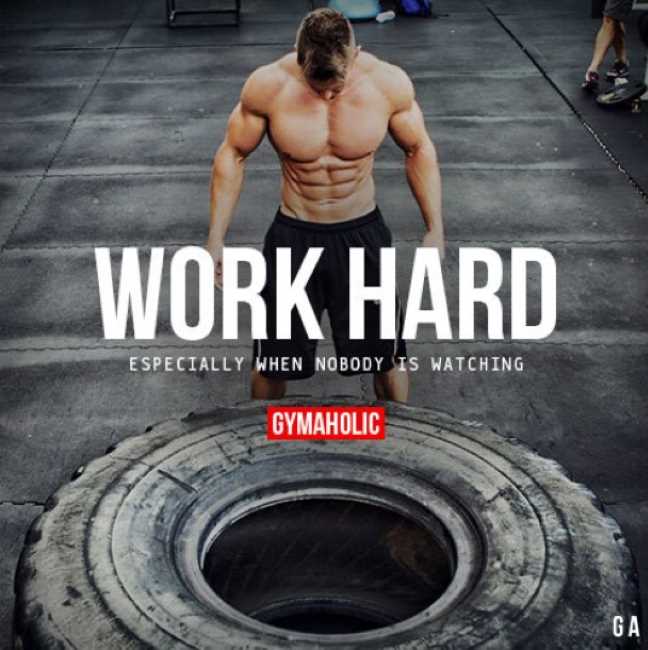
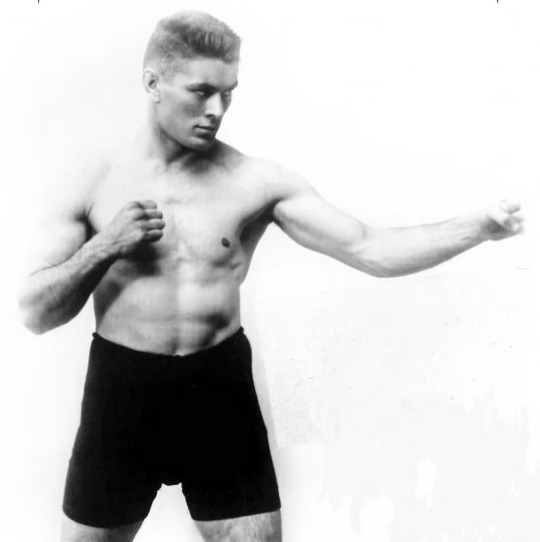
I got to musing on this topic because it seems to me that very few people are fit for purpose for their various walks of life nowadays. In most cases, they’re selected on the basis of being manifestly unfit for purpose, on purpose. It’s easy to come up with examples, so I won’t belabor the topic with a list. But I’d like to show an example of how a lack of fit for purpose for humans is becoming camouflaged in places you might not go looking for it. Look at these two pictures:
One of these men is incredibly physically fit, and fit for purpose. The other goes to the gym all the time to alter his appearance, and probably isn’t fit for any purpose.
If you wanted to give the guy the benefit of the doubt, I suppose you could really stretch the definition of fit for purpose for the Work Hard dude. He is fit for making tubby girls in office buildings sploosh a little bit if he shoots a healthcare CEO or something, but he’s not fit for any real work. He isn’t all that strong, and he’s probably not capable of performing any real physical labor, at least at a high level. I once had a gym rat working construction for me. Way bigger than this guy. Schwarzenegger-y. I made him a mason tender for my old uncle, who was on a waiting list for a heart transplant at the time. My uncle wore him out in four hours, and he refused to work with him again.
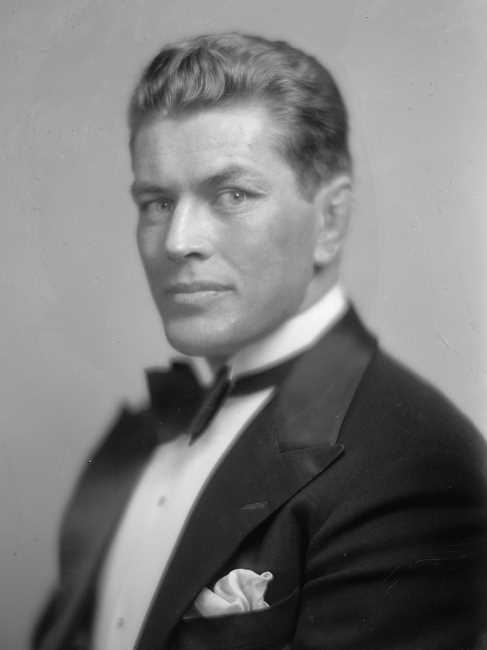
The second gent is Gene Tunney. Gene was fit for purpose, I tell you what. Gene Tunney was the heavyweight boxing champion of the world. He had 90 fights, and won 89 of them, including 2 against in-his-prime heavyweight champion Jack Dempsey.
Gymbro wants big pecs because he wants big pecs. It’s male version of a boob job using weights instead of dimethylpolysiloxane. So he suffers from sarcoplasmic hypertrophy, which means the muscle fibers expand to give him the appearance he wants, but there’s likely no meaningful increase in strength. He’s not particularly fit or strong, in the only ways that could matter.
Tunney knew about fitness, not just brawling. He was in the Marines during WWI, but never saw combat. He became the U.S. Expeditionary Forces boxing champion, however. After the war was over, he spent a year working as a lumberjack in Canada. He thought solitude and strenuous labor would help prepare him for a pro boxing career. Can you picture Mr. Work Hard as an Ontario lumberjack? Monty Python could.
When WWII rolled around, the Undersecretary of the Navy put Tunney in charge of the physical fitness for the Navy. What Tunney understood, long before creatine shakes and Nautilus equipment, was functional strength training. Functional strength is just another way to say fit for purpose.
Tunney wouldn’t have known what to call it, but he didn’t just want big boobs. They only get in the way, and increase the weight you have to carry around the ring, or the battlefield. He went for myofibrillar hypertrophy, which increases the density of muscles. That makes you stronger, leaner, and more efficient.
Tunney was more than just a great boxer. He was smart. Unlike many of his peers, he made a lot of money and kept most of it. He married a very rich socialite and had a batch of kids. He was considered an intellectual boxer, and an intellectual, too. No, really. He lectured at Yale on Shakespeare.
We need to make fit for purpose as the only qualification for any job, instead of, you know, the opposite thing. Our cars, houses, planes, trains, and automobiles should be fit for purpose, too, not just docking stations for iPhones.
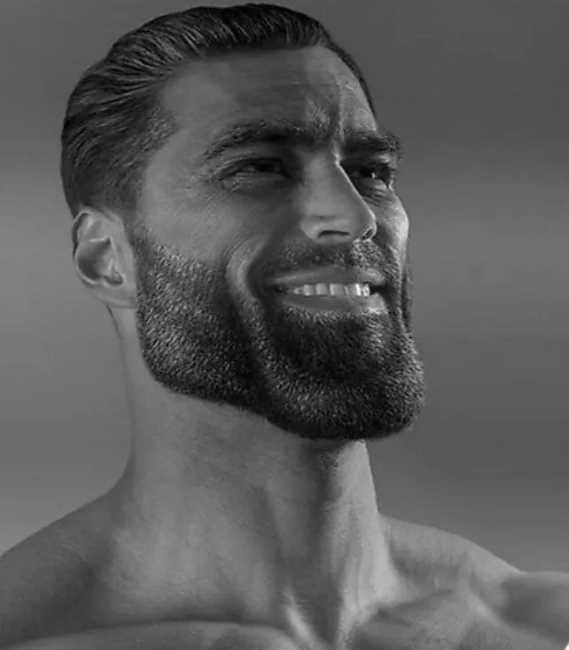
And we also have to retire the recent gigachad meme. Gene Tunney was way more fit for that purpose, too:
Month: January 2025
sippicancottage
A Man Who Has Nothing In Particular To Recommend Him Discusses All Sorts of Subjects at Random as Though He Knew Everything.



Recent Comments