Go Get The Witch’s Broomstick. Then We’ll Talk
So, if you’re following along in your playbook, we got the beast into the basement. My son thought about disowning me, but visions of heat in his bedroom took the edge off his discomfiture, if not off the ache in his arms. Of course in the basement didn’t exactly mean in place. This paperweight had to go, first:
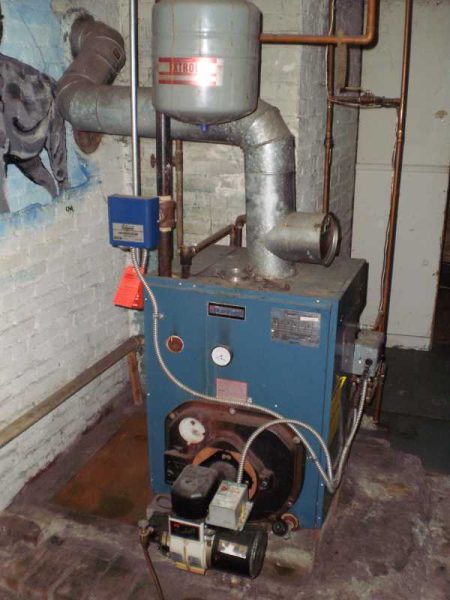
There was a tag on it from the last time it was checked and cleaned. Ronnie Raygun says hi. It was good and rusty, and the jacket inside it was cracked. It’s possible it weighed more than the new furnace. But we didn’t mind that much, because we could treat it like the government treats taxpayers. We had a jolly time cutting all the pipes and wires.
We saved the copper pipe, because we’re honorary crackheads. We don’t take drugs, but we’ll tear out copper plumbing and bring it to the scrapyard for a few bucks. I’m sure the fellow there thought we were the neatest and politest crackheads in line, but I doubt he thought we were regular folks who needed the money. We’d be a rara avis in that milieu.
My older son sorta dreaded moving the thing, until I explained that I not only didn’t mind if we broke it some, I’d prefer that we broke it some. Sooner or later it would have to go to the scrapyard, too, and smaller pieces weigh less. We walked the thing across the floor to the door, looked both ways to avoid any deer wandering by who deserved a more dignified death, and then let that beast roll down the ramp and into the snow, where it lay until spring arrived. Fun.
We shouldered the new furnace into the old spot. There’s a concrete pad there in the floor, and it’s original equipment, so I’m sure there’s been something burning something there since 1901. There is a coal pen in the next room. There used to be a pass-through gap in the brick wall so you could finagle a shovel into the coal pile and load a furnace. I imagine they switched to burning oil not long after the house was built, though. Fuel oil heat has been pretty standard in Maine for a century.
So our furnace needs stove pipe into the thimble in the chimney. We’ll use the same thimble as the old unit. It will also require ducting to transmit the warmed air up into the rooms upstairs. We used galvanized stove pipe, 8″ in diameter, and made a little box to accept the pipe up under the dining room floor, which is almost right over the furnace. That box serves what used to be a big, cast iron cold air return in the dining room floor, which you might remember:

Instead of bringing cold air down to the furnace, we were going to blow it up into the dining room, which is more or less the center of the house.
The usual idea behind this kind of furnace is to make it a backup, or supplement to your existing furnace. You’re supposed to meld your new furnace hot air ducts into your existing hot air ducts. It’s essential if you do, to put a damper in so you’re not blowing hot air from your oil burner into the stove, or vice versa. Since our existing furnace was a boiler, not a furnace, and was slumbering in the drive under a blanket of snow, this wasn’t possible, or necessary. But if you’re interested in how it’s normally done, here it is done by a normal person with a much more piquant twang in his voice than I possess:
We haunted the aisles at the local hardware store for the stove pipe and other amenities. Burning wood for heat isn’t unusual around here, thank Jeebus, so they had most everything we needed. The furnace was a floor model, and had been pawed over more than a taxi-dancer after a shore leave. Everything was wrong or broken, but honestly, even the most determined Orange Place imbecile can’t really hurt a quarter-ton lump of cast iron and welded high-temp steel. I had some head-scratching moments trying to wire the beast, what with instructions being scarce, but the only really “busted beyond repair” things were the refractory bricks that line the furnace. But once again, the local hardware store came through, because busted refractory bricks are generally the only kind anyone has around here. They had a pile of ’em, and they were cheap.
Now there was only one problem. We needed to buy firewood in March in Maine. It would have been a lot easier to get the witch’s broomstick.
[To be continued]

Recent Comments