Dolce Far Niente (2005)

We had quite a weather evening last night. It’s been warm and dry for, well, since I wrote complaining that it was cold and wet, which is a long time ago. I blame myself.

The lawn crunches underfoot like shredded wheat. The flowers bloom profusely, as long as you water them daily, but woe be to you who forget for a day. If you are a member of the local constabulary: why no, that last sentence is fiction; we only water for an hour in the morning on Tuesdays, Thursdays, and Saturdays — being on the “odd” side of the street — and never on Sunday.

Anyway, nature always solves everything, one way or the other. And last night, she “brought it,” as they say in baseball. Rolling peals of thunder announced the change in the weather, accompanied by almost continuous flashes of lightning for hours. The power winked out around eleven, and so we returned to the America of our farmer forebears, and retired because it was dark.

A delightful puff of air came in the window, cool and ionized, and then the rain came, hissing and popping on the sill. You could almost hear the earth outside sigh, and drink, and smack its lips.

The children sleep right through it, every time, and you wonder when the last time you slept like that was. Twenty years ago? They don’t owe anybody any money, so they sleep. On top of any cares they might have, unlike their parents, they’re not worried that their children might be woken by the thunder and be frightened. And so the thing that doesn’t affect them affects their parents because it might affect them.

So you are awake when you’d rather not be, you are slightly on edge from the booms, but the rain patters on the shingles, the paradiddles and flamadiddles begin to lull, the gentle sigh of your mate gulls you, you drowse and dream, and start a little when the lightning strikes a little closer, then return to your reverie when it passes for a time, and are content to be alive.

Content to be alive sounds almost mystical, and I’m sorry for that, but I don’t know how else so say it. Peace of mind? I’m not selling insurance, that’s furniture one page over. Happiness? Happiness is a memory only. You never know happiness while it’s going on, you only recognize it in hindsight. You mistake thrills for happiness, until the tilt-a-whirl makes you see your lunch a second time and you realize your error.

That little sigh of the mother of your children, still nervous when it thunders — some dim childish thought she carries forever — as she drifts off to sleep because you are with her; the whisper of your two sons snuffling and snoring down the hall, dreaming dreams of childish intensity and amusement; the languid patter of the warm summer rain on the roof that shelters you all; and the puff of cool air through the window. The house, like all real houses, ticks and creaks and hums and pops ever so slightly, as the unfamiliar moisture permeates its very bones. But the sounds are all faint and familiar, like a wordless lullaby.

You never remember falling asleep. It steals up on you, when you’re finally content to be alive.

The Intertunnel Is A Useful Thing. Now And Then

When I was a little boy my older brother used to painstakingly learn Beatles and Stones songs by dutifully dropping the needle on the lp records over and over and figuring out what was being played as best he could. For the really difficult passages he’d play the record on the wrong speed and transpose the underwater sounding notes after he figured them out. I did the same sort of thing myself later, frantically writing lyrics I needed to sing on Friday straight out of a cassette player on Thursday.

There was always sheet music around the house when I was young. You’d still go to the music store and purchase real sheet music back then. Useless for rock music. You could get Camelot, or Burt Bacharach, or Lulu music or something, but sheet music for guitar bands was always transposed for playing on a piano, and was never in the right key. The piano has never heard of the key of E.

My son is learning to play the guitar, and he just goes on the wondrous and awful Intertunnel and finds whatever he needs laying around. We found this one fellow, My TwangyGuitar, who’s a kind of wonder for his simplicity. He plays superclean, and has the good sense to just point a hi-def camera at his strings and play the songs properly. The usual guitar lesson on the Intertunnel consists of a guy who half learned to play using the execrable tablature method –that was once reserved for diagramming chord shapes, but is now used in lieu of learning anything about reading music or understanding what you’re playing — and yammering endlessly into a camera that captures fourteen pixels and has some ear wax stuck in the onboard microphone:

Now put your 3rd finger on the 14th fret and your pinky on the E string… no the skinny one… SOMEONE GET THE PHONE… and then you kind of like wiggle that one…

You have to know a little something about what you’re doing to get the benefit out of a video instruction like My TwangyGuitar offers. It just saves you a lot of time searching for things. Or you have to know nothing at all to enjoy it:

The Ten Most Effective Uses of Music In A Movie


Right up front: No musicals. I always hated them when I was a kid. What were people doing breaking out in song in the middle of a conversation?

And we’ll leave out orchestral music composed as a soundtrack. We’re talking about inserting regular music into a movie and have it work. It can be performed as part of the plot, or layed in there as a kind of wallpaper. Putting it in the plot is harder than it sounds. See: The Busboys in 48 Hours. On second thought, don’t.

It’s become common to cram all sorts of pop songs onto soundtracks, milk the cultural value they already hold, then drizzle it over second-rate entertainment vehicles to push them over the finish line. See: Tarantino; Quentin. It’s incongruous to hack off an ear while listening to Stealer’s Wheel. Naked incongruity is just a fart in church; it’s good for a chuckle, but it ain’t art. So please; no Pulp Fiction or Reservoir Dogs entreaties in the comments. The soundtracks are swell. They have nothing much to do with the movies, which are turds. A common soundtrack malady.

No 10: American Graffiti
George Lucas is the king of the pop culture vampires, but we have to give him his due: This movie almost singlehandedly popularized using music to establish a period vibe. Awkward transitions are avoided by twisting a car radio knob or popping a coin in a jukebox. And they play it live in the gym to good effect.

No 9: Zorba The Greek
Have a little fun. Laff a little. Dance. Dolce far niente, as they say a little west of there. I almost left this movie off because of the insane murder of the widow in the middle of it. What the hell was that all about? Everybody, including Zorba and his boss, the woman’s lover, just shrugs and goes back to being Cretan cretins. But if you’ve ever wondered where all that vaguely familiar music they play over the loudspeakers when your baseball team is behind by two runs, here it is.

No 8: The Deer Hunter
The fun of singing a bad song badly as a bonding ritual doesn’t get much better than this. It gets much worse. See: Top Gun. Karaoke started like this, and got awful when people tried to sing well but entered the uncanny valley between farce and seriousness. See: American Idol

No 7:The Ladykillers
The fun but generally execrable Blues Brothers movies tried to mine the church for ore they couldn’t produce themselves. Lame. The Ladykillers just went to church, and saved the middleman’s vig. A terrific all-around soundtrack.

No 6: Life Is Beautiful
I could have shoved Amadeus in here if I was lazy. But the second best integration of an operatic performance into a movie is the Barcarolle by Offenbach from Tales of Hoffman.

No 5: Moonstruck

Listen up men children: This is how the wimmins picture a date. You have to establish a sliding scale to compare your efforts to shoe shopping, wine drinking, and a trip to the opera with a man in a monkey suit. NASCAR and Bud Ice is about a 0.5 on a scale of ten, for instance.

No 4: Animal House
Hard to exaggerate the effect this had on keggers in the seventies and eighties. I weep for college kids now, with nothing but Vagina Monologues performances for entertainment and a 21-year-old drinking age hobble. Do the worm!

No 3: Goodfellas
We have to give Scorsese some sort of credit here. He has a deft touch when using pop music for audio wallpaper. And his depictions of gangsters as interesting to look at but ultimately just scary losers is the way to go in the genre.

No 2: The Bridge On The River Kwai

One of those things that becomes a cultural icon, not a trivia question. The Colonel Bogey March injected into this movie summed up the ebbing British Empire’s weird blend of borderline masochistic stoicism and manic frivolity. If you’re old and from the East Coast you remember the Getty Oil gas station army walking over a bridge whistling this in a TV commercial.

No 1: Being There

Forget the tedious 2001: A Space Odyssey, Being There is the place to go for the melding of Richard Strauss’ Also Sprach Zarathustra ( Funkified here by Eumir Deodato) with a compelling visual sequence. The movie is filled with really good and interesting music. The studio botched the last couple minutes of the movie, but if you’re wondering why I don’t want to go back to the seventies, go for a walk with Chance.

Honorable Mention: The Day of the Jackal

Good god, not the Bruce Willis one. Get a grip. A sublime use of music: there isn’t any — just a few snippets of ambient stuff to give audio cues. A terrific movie.

Update: Many cogent suggestions in the comments. But remember, you have to throw someone overboard to allow another example in our ten-person opinion lifeboat. And you have to get past Number Eleven, which I’m holding in reserve, too: (some salty language)


Who Against The Proud Gods And Commodores Of This Earth Stands Forth His Own Inexorable Self

Johnnycake Hill in New Bedford, or “New Beige” as the locals call it. We went there on a rainy Sunday in June. If you turn around and roll down the hill, you’ll go down to the sea and… get wet.


We were wet already, so we went into the Seaman’s Bethel, a sort of pilgrimage to boredom we take from time to time. Nothing to do in there but think.


The inside is really spartan, which is piquant to a man like me, born and raised a papist. These were, after all, Quakers, who were not known for extravagance, unless you count their extravagant protestations against extravagance.

God was not an abstraction to the people in these pews. Men out on the horizonless ocean, and the families that waited for them, saw a real deity with a big fist or a big palm all the time. They gathered here to try to make heads or tails of the life of a man in a little boat on a great ocean.

Herman Melville trumped reality here, as he described in Moby Dick a pulpit shaped like the prow of a boat instead of the staid lectern that used to be here. John Huston put it in the movie, and the locals in New Beige got so tired of tourists showing up and demanding to see one that they stuck one in there. Orson Welles ain’t showing up, though. Pity. I’d go every Sunday to hear that.

Sticking pins in cetaceans half-way round the world was a dangerous business. You had to survive the fevers, the sharks, the weather, and just plain gravity to live long enough for a chance to get killed by the great beasts that once lit the world’s lamps. The walls of the bethel are spangled with the cenotaphs of the men who kicked it the hard way.


I’m old enough to have drowned on that last one. And my uncle was a fisherman back then, too. Thank God I was too lazy to work for him.

John Fredrick’s Son (From 2007)

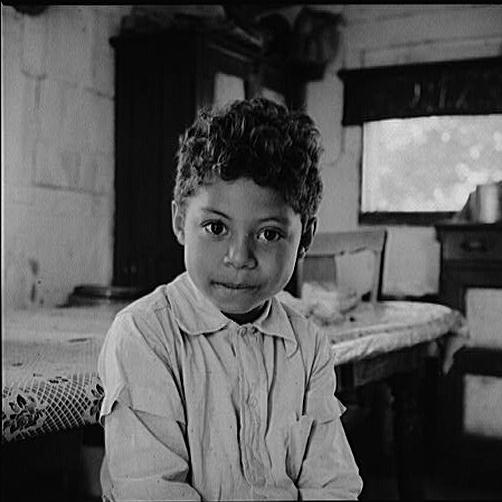
I found this picture in the Library of Congress. The caption is what caught my eye at first, although of course the picture itself is very compelling. The caption reads:

John Fredrick’s son: “Some day we’re goin’ ta have a new house too, an a car like you all.” Saint Mary’s County, Maryland

The picture was taken in 1941. That is a very moving, mundane thing to read. That boy’s father is outside the shack with people helping him to dig a new privy hole and drill a new well far enough apart so that one does not foul the other.

People used to instinctively understand that owning a house that could become a home could in turn could become a catalyst for, or a safeguard of, the only really important institution devised by man: The family.

People often assume I am consumed with nostalgia and am backward looking. I don’t think so. I see people retreating towards barbarism and calling themselves progressive. That’s all. In a very real way, I am living right at the edge of what society and technology allows. And I like it here.

I see the idea of a home that has meaning in and of itself slipping away at all price points. It’s just a rubber box to sleep in and hold the satellite dish for an increasing number of people, and I find that disturbing for cultural reasons as much as aesthetic ones. I hear of people who pay their credit cards and abandon their homes because the homes hold no equity and hence have no intrinsic value, but their credit cards are valuable. But my home, and the home of many others who share my worldview, if perhaps only subconsciously, have intrinsic value that stand alone outside of commerce. It would be a big deal for me to lose my home. It’s not just a box I live in.

That little boy in the picture understood that the way he understood the stove is hot. He did not require a white paper referencing Le Corbusier, Bruno Zevi, Christopher Alexander and Martin Luther King to figure it out.

He knew about the car, too. People used to understand viscerally what it meant, what it really represented. Even a serf knew when he was no longer tied to the land, unable to leave. You are free to go if you must, or you will– but especially if you can.

The desire and ability to stay in one place backed up with the freedom to go if you so desire, or must. The vast majority of us take all of that for granted; or worse, a very vocal minority are actively opposed to it for reasons that boil down to, in a dark unguarded moment: I’ve already got mine, to hell with the rabble.

Resist the assault on all of it, lest your children find themselves in a hellish shack, wishing they had it all back.

I hope you got them, John Fredrick’s son.

Month: August 2009

Find Stuff:

Archives