I know you like the back of my hand, dear reader. And right through these here Intarnets, I can feel the vibrations and emanations. Your chakra and your aura and your vibes come through, and as I lay my hand on the CPU, I can hear it, in my very bones:
what about the eighties?
Getting clearer now, less faint:
The seventies were dreadful; stop talking about them! You’re harshing my mellow!
Honing in on the signal now:
Please, god, I wasn’t born yet. No more Lulu!
OK, OK, what about the eighties? Was the music any fun?
Why yes, it was. But it takes more rooting around in it to find good stuff left over from the eighties. The most popular song in the eighties, ten weeks at number one, was Physical by Olivia Newton John. Or as we used to call her in our little LA combo back then: Olivia Neutron Bomb, referring to her ability to clear a room, leaving only the furniture.
Land sakes, look how bad the most popular music was in the eighties:
Lionel Ritchie
Michael Jackson, post nose
Kenny Rogers
Bonnie Tyler
Survivor
Kim Carnes
Madonna before pitch correction equipment, still looking a little doughy
Sorry. I’m not channeling Howard Dean; it’s just that I got to that last one– whom I renamed DOA Meatwagon — and I felt the urge to plunge a number two pencil into my eardrums.
The first thing I ever wrote was twenty-five years ago or so, a review of the DOA Meatwagon show at the Providence Civic Center. I’ve never met a more loathesome bunch of people than those guys and their entourage. My friend Steve LaBadessa is/was a photographer, and got a superb photo of the security guards dragging some drug-addled schlub out of the arena, none too gently, either. When the guards got done thrashing him, they turned towards us, saw the cameras, then decided perhaps the photos of the proceedings would be best if unpublished — and came after us. We fled like footpads, them in hot pursuit, our press credentials waving behind us like a Sopwith Camel pilot’s scarf.
Look, this isn’t going well. It wasn’t that bad. Let me show you the best of it, the encapsulation of the zeitgeist in pop music, and still damn good fun: XTC
The eighties were a time when the world was waking up from a kind of torpor, or stasis. New possibilities were opening up. The shooting wars had calmed down a bit. And the ideas from the technology and commerce side of the aisle were ascendant, and things got downright hopeful compared to the enuui mixed with depression the seventies encapsulated. My high school yearbook in the seventies had a two page spread that simply had the word APATHY printed in big letters across it. Hey, don’t knock it ’til you’ve tried it; when you’re taking a beating, sometimes it’s best to curl up and wait for the blows to stop raining down.
Anyway, XTC encapsulates the marvelous and clever hive of activity that eighties music was, if you scratched the chrome off the arena rock bumper and looked a little deeper under the hood. They embodied the ideal of a few talented guys writing quirky, pleasant, tuneful ditties for our –and their own — amusement. It was nice to see people look like they were having fun, and not taking themselves too seriously for a change. To paraphrase Jeff Lebowski- God, I hate the Eagles.
XTC look like dweebs, and they are. The lead singer and one of the founders, Andy Partridge, canceled a whole tour because his wife hid his valium, and he was terrified to go on stage without it. He really belonged in a cubicle somewhere, or a library or something. He wrote songs about his comic book collection. His sort of Star Wars action figure collector comic book guy ugly guitar buyer home studio recorder computer geek TV Guide obsessed Avengers wannabe persona didn’t exist yet then in pop culture. Everybody’s like him now.
We dragged poor Andy out onto the stage he feared so, to distill the intellectual and the artisitic and the pop culture wag “vibe” into those toe-tapping songs. My, they were clever.
Enjoy it. I did. You’ve worn out your Talking Heads records anyway.
I make things. I inhabit the shadow world between art and utility.
I’ve always been there. Architecture is my kinda sorta background, and it’s neither fish nor fowl in the same way. I drifted away from formal architectural education because they aren’t the slightest bit interested in the inhabitants of their buildings anymore. They are indulging their own cranky ideas, and treat the people that use, see, and pay for their misanthropic creations in the same way street urchins pull the wings off of bugs for their own amusement. They massage their egos with your submission to their sticks-and-bricks hairshirt misery and disorienting visual style. Bye bye Vitruvius, hello Doctor Caligari.
According to Oscar Wilde, no real artist pays any attention to what other people want. I don’t think he knew what he was talking about. Or more precisely, I think he knew exactly what he was talking about, but was playing hide-the-truth with that observation. We always fall for that one. It’s the reason everyone thinks if they simply act dissipated, they’re an artist of some sort.
Like all successful artists cum celebrities, Wilde was shrewd above all things. They minutely gauge the zeitgeist for possibilities, and push a little at the edges. He’s fooling when he says he doesn’t care what others think. If he didn’t care what you thought, he’d have no idea how to shock you, and get all famous doing it. The fellow on the subway that reeks of urine and the dumpster, mumbling to himself? That guy really doesn’t care what you think. There’s no money or fame in that.
There are many ways to shock. Some are plebeian, and dashed difficult to pull off, so they are rarely attempted by those who know they can go the easy route and simply make things weird and ugly to annoy the masses and cash checks from the glitterati.
People often give me parameters to work within, but they don’t bother me, as I’ve never really made anything for other people, even though I’ve spent my life making things for other people. I make it for me, and then give it away – for money sometimes.
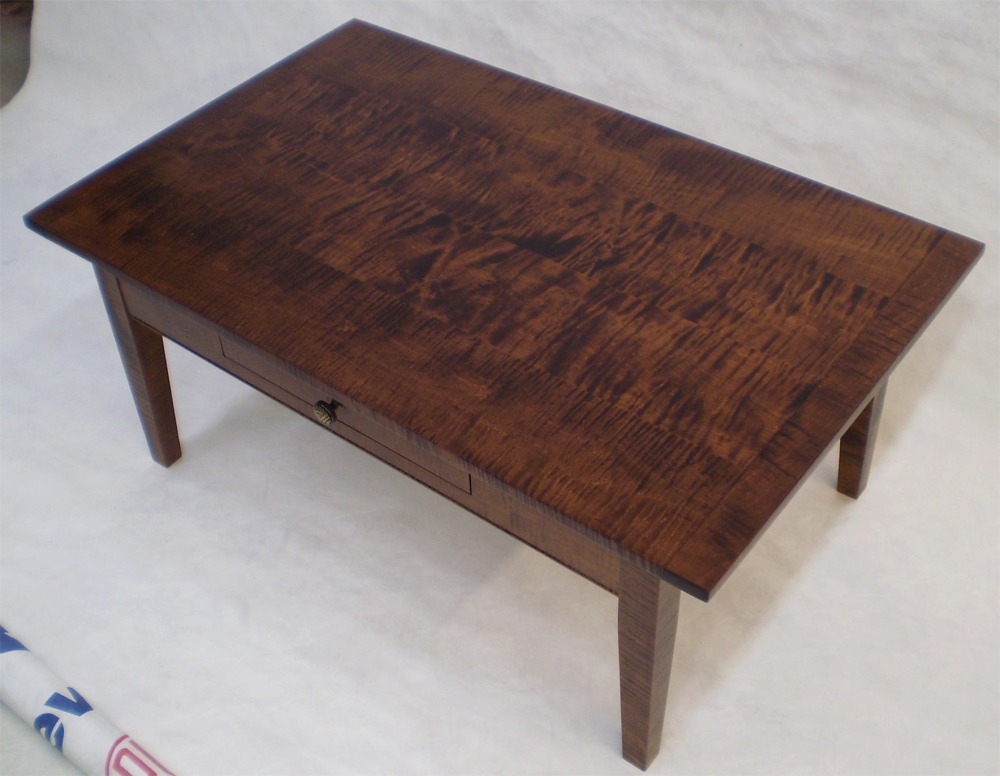
You can covet the shed we had yesterday, and you do, as I did, it seems. It shows the hand of nature has been on it. It’s infused with the hand of nature. Sunbeams are captured in leaves and water is wicked from the soil and a creature fashions the remainder into an artifact for the other creatures, and the mower.
But you need only bravery, and time, to make it instead of inherit it. It takes a sort of bravery to acknowledge that everything in this life has a trajectory, and allow that trajectory to be followed. You can tend to a building, but you can’t make it immortal. A structure that requires no maintenance allows no maintenance and so is not “green,” a term I don’t use because it signifies nothing to me. It is disposable, in the only true sense of the word –brand new, until you throw it away.
If you shoot poison in your face you are not young. Who are you fooling? Do you have the nerve to allow the wrinkles to show? Did you have the temerity to use your youth when you had it, and so not attempt to counterfeit it when it is gone, to try to one more time to recapture the reckless courage you squandered? And would squander again, no doubt?
Put that useful thing out in the landscape. You’ll go there to fetch the rake, and be presented with other, more pleasant things, unwonted. The genie is blind and deaf, so your wishes are worthless. But he is still powerful in his caprice, and conjures many wonders. It’s as if you were dragging a millstone to the Registry of Motor Vehicles, and were kidnapped partway there and given cotton candy to carry at party instead.
Pater noster, qui es in coelis: sanctificetur nomen tuum: adveniat regnum tuum: fiat voluntas tua, sicut in coelo, et in terra. Panem nostrum quotidianum da nobis hodie, et dimitte nobis debita nostra, sicut et nos dimittimus debitoribus nostris. Et ne nos inducas in tentationem.
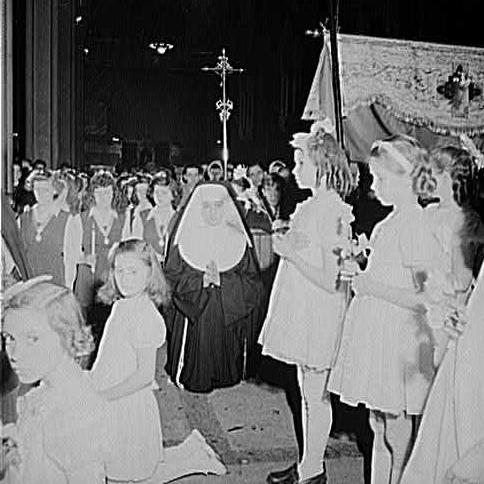
I’ve got to steal one. God forgive me. I’ve got to steal a flower from you. There are so many, God, and mother only needs one. I’ll burn forever but mother needs her Easter lily.
“Child, what are you doing?”
“I need the lily for Easter, Sister. I have no money and there are so many.”
Agnus Dei, qui tollis peccata mundi: miserere nobis.
“It is a sin to steal, child.”
” I know it is, Sister, but I can’t help it.”
Agnus Dei, qui tollis peccata mundi: miserere nobis.
“You can always help it child. Where is your mother and your father?”
“Father is nowhere, Mother says, Sister, and I don’t know where nowhere is. Mother is sick and I think she needs an Easter lily or she’ll die.”
Agnus Dei, qui tollis peccata mundi: dona nobis pacem.
“Where is your mother, child?”
“She’s in the bed with the diphtheria, Sister.”
“Is she alone?”
“Yes, as I am here, Sister.”
“When did you eat last, child?”
Panem coelestem accipiam, et nomen Domini invocabo.
“It’s another sin I know, Sister, but I ate the heel of the bread this morning while Mother was moaning. She wouldn’t eat it, and I needed it.”
“I see. And before that?”
“I don’t know. I was sick first, and Mother might know but she can’t tell you. She is hot and talks of places I don’t know and people that are dead, Sister.”
“And she sent you for the flower?”
“It is my own sin, Sister. She said “The lilies, the lilies, the Easter lilies… ” over and over until I promised I’d fetch her one. She would not have me steal, but she cannot come. Will I burn forever, Sister?”
“You will have your flower, child, and the kingdom of heaven besides, for to tend to the afflicted is the hallmark of the saint.”
“And saints can steal flowers, and God don’t mind?”
Indulgentiam, et absolutionem, et remissionem peccatorum nostrorum, tributat nobis omnipotens et misericors Dominus.
“No, God does not mind. Now take me to your mother, and we will give her the lily together.
Now when I was a kid, baseball was different. I’m not ancient, so you’ll be relieved to know there’ll be no talk of stickball in a Brooklyn street or Ty Cobb’s sharpened spikes. The players we admired on our playing cards are coaches now, not dead. And the playing cards we had were worthless, and the gum was precious, thank God, so we enjoyed them, and flipped them for Face up/Facedown on the bus seats on the way to school, or lined them up against the old brick wall in the playground and played Knockdown. And we gave shopping bags and shoe boxes filled with them to our cousins and younger brothers when we came of age, and laugh when we think of the fortune just one of those cards commands from memorabilia freaks now.
We did not have uniforms. We played with baseballs that looked much older than us, and cracked wooden bats with electrical tape holding them together, and had to mow the field before we could play on it. There were never enough of us, so we pitched to our own team members, and right field was an out. Period. And more often than not, right field went unmowed, too. We played in jeans and canvas sneakers, and a hole in the knee of your pants wasn’t yet stylish, it was a calamity when you had to face your mother, who knew what they cost. And we played until we heard our mothers yell our names for the second time, like a town crier, and hurried home to a scolding for tarrying, and dinner.
All of that is gone now, like so many things, changed by time, and prosperity, and other things. Our mothers thought nothing of turning us out of doors at daylight in the summer, though we were but small, because forty years ago, someone who would hurt a child would have more problems in this world than registering at the police station, and paying their lawyers. And we mowed the grass ourselves, with a mower that shot gravel out the unbaffled chute at our confederates, and we could barely reach up to the handle to push it, and we didn’t maim ourselves, and sue anybody, that I recall. And we settled the rules first and our disputes later among ourselves without the guiding hand of our parents, except what little sense they had managed to get into our heads, and rarely resorted to knuckles. Funny that. We had it sorted out in 1965, when we were but children, but forty years later we assault the umpires at our children’s games. Something was there, and has slipped away, I think.
I remember lots of things about that little diamond, carved out of the trees as an afterthought by the developer of our little neighborhood, long before the word “developer” became an epithet hurled at conservation committee meetings by people who live in houses made by a “builder.” The builder and the developer look identical to the unaided eye, but people who already have a house have a different perspective, and thesaurus, than those that need one.
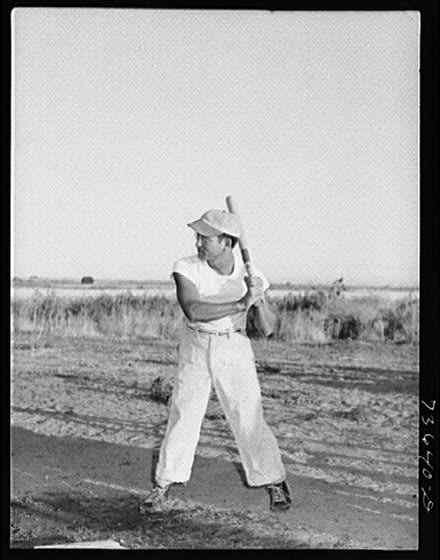
And I remember Cookie. Now, our children should be collecting Cookie’s rookie trading cards, to put them through college when they sell them on ebay, and not community college either. But it was not to be. Because Cookie, although the greatest baseball player I ever saw, didn’t want to be a professional ballplayer. He wanted to be a barber.
Now that last sentence clanged to the floor at your house, and you thought: He’s kidding, or he’s nuts. Well, I’m not kidding, anyhow. Cookie wouldn’t have it if it was offered.
Now, Cookie was a little older than us, and that brought out the Paul Bunyan side of it a little I’m sure. Remember when you thought your father could lift a car, or paint the house by having you hold the brush while he moved the house up and down? Later you found out he was just another middle aged guy that emitted an audible gasp every time he sat down. Well, I’m sure that entered into it a little, that perspective from down where the little kids are, looking at big Cookie, but that wasn’t all of it. He really was a wonder, I think.
Cookie would show up when we had been playing all day, and to this day I don’t know his last name, or where he came from, or where he went to after he was done. But every time he came, we stopped whatever we were doing, and Cookie put on a Ruthian barnstorming exhibition. The biggest kid among us would pitch to Cookie, and the rest of us would scatter into the woods beyond the field, and wait for the balls to rain down on us. Because Cookie was a machine for hitting home runs. If the pitcher would wince during his delivery, human nature being what it is, knowing the ball might be coming back those 60′ 6″ in a big hurry- he’d maybe sail the ball wide and three feet off the plate. It didn’t matter. Cookie would step on the plate, and lean over, and flick his wrists, and it would rain down into the woods, every time.
And with Cookie, right field was in play for once, after a fashion. We’d grow tired of fishing our precious baseballs out of the oaks and poison ivy in center field, and beseech Cookie for a real show, and he’d get up lefty, his switch hitting a revelation to us, and hit it out over the unmowed grass. Right field had no natural end, so the balls would roll when they hit, like cannonballs that had missed their fortress, but occasionally Cookie would clear the whole distance, and hit the pavement at the foot of the road that entered the field. And we’d ululate like madmen, and didn’t care our precious baseball was no longer round. We adored him.
Cookie even sort of looked the part, if I recall correctly. The major leagues were filled with midwestern farmboy looking lummoxes like Mantle and Killebrew back then, and Cookie had the rangy frame, reddish blond stubble head, loping strides and laconic demeanor of our icons. But with glasses. But not coke bottle glasses. Those wouldn’t have brought a billboard into focus for Cookie. Cookie had the sort of glasses that seemed like the windows on a deep sea submarine. It was disorienting just to look at him, and if the barbering trade didn’t fly, I imagine mesmerism would have been a cakewalk for him.
And perhaps Cookie knew what we, in our innocence, did not; that his eyesight would forever make him an also-ran, and it was best not to dream overmuch and better to make use of your gifts to amuse your neighbors and spice your life than to try to squeeze every drop of mammon from them. Maybe. But I really think that Cookie didn’t care if he became what was to us an exalted thing: A big league ballplayer. He wasn’t interested. He wanted to be a barber, and that was that.
I recall reading a story about Eisenhower when he was young and a cadet at West Point, and not yet the general who beat the Axis armies or the President who presided over my birth, though perhaps he did not notice it. He was no longer a “plebe” then, and was allowed to order the newcomers around, and haze them, as he had been hazed the year before. And for amusement, he picked out a goofy looking recruit, and made him stand at attention in front of his peers, and lambasted him, for no good reason, simply because it was expected of him. And he wrote in his memoirs, that he always remembered, to his shame, that as a capstone to his string of abuse, he asked the plebe what he did in his civilian life before he entered West Point, because he seemed such a numbskull that he couldn’t be more than a barber. And the man, showing no emotion, but feeling some, no doubt, answered that he was indeed a barber in his short pre-military working life.
Eisenhower wrote that he had never known real shame before that, and he remembered that moment for the rest of his life, when he had disparaged the honest toil and effort of his fellow man. And he said he owed that man a great debt, though he couldn’t remember his name, and he never again wanted to look down his nose at any man.
Cookie, if you’re listening. I’m sure you’re a terrific barber.
Month: April 2009
sippicancottage
A Man Who Has Nothing In Particular To Recommend Him Discusses All Sorts of Subjects at Random as Though He Knew Everything.





Recent Comments