Hello Denver
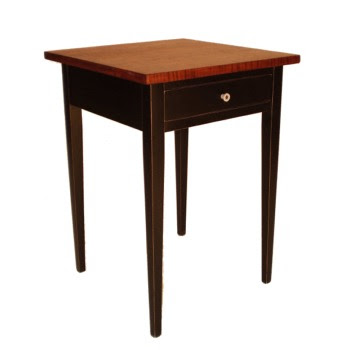
Sippican Cottage Furniture got a nice little mention in the Denver Post the other day. Victorian Holiday Splendor at DenverPost.com
I played music at some sort of civic or convention center in Denver a decade or so ago. It’s funny how you associate entire areas of the country and their populations with mundane details about your short soirees through them. A pretty girl asked me for an autograph in Denver once, and so Denver is a swell place with wonderful people and marvelous vibe and unicorn farms and the streets are paved with pound cake, forevermore. They’re just burnishing their image at this point.
On the same day as the DenverPost item, one of my neighboring states sent me an automated $25 ticket for running a $0.70 toll. Which I manifestly did not do. But they know you’ll pay it because it’s too much trouble to fight it, and so they don’t really care whether they are full of merde.
In my world, that state is now three parts clarified bowel movement, four parts perfidy, eleven parts death, taxes and the grave, and forty-five parts low-rent jackleg. Hope it was worth the twenty-five bucks. You can always spend five hundred bucks on tourist advertising later to try and woo me back inside the benighted dotted line I’ve drawn around your state. I’ll build a privy, with a hole in the shape of a certain state instead of a half-moon in the door, and use those brochures in there, I promise.
Viva Denver!
More Real Than Real
I make cottage furniture.
Except, technically I don’t. If you want to get precise about it, cottage furniture is… well, my fingers hurt from making cottage furniture that isn’t really, so I’ll stop typing and paste a picture and save us all some grief:

Cottage Furniture refers to inexpensive suites of furniture from the nineteenth century, almost always made of the plainest wood and painted, with decorations painted on them. If there was woodgrain showing, 99% of the time it was “grain-painted” in a spartan, primitive style.
I go to antique stores pretty regularly. Real cottage furniture is about the rarest style I see in there. It was mass-produced for the better part of the 19th century, but it’s all gone now. Everyone wanted it and then no one wanted it. A great deal of the “shabby chic” movement involved painting cottage furniture white and sticking it in your second house, so it’s still around here and there under a badly applied coat of house paint. The back leg is kinda hinky, the drawers are stuck from the humidity, your weird uncle had a leaky bottle of Hai Karate aftershave that gives the dresser a funny smell, but it’s there next to your buttsprung mattress on the rusty exposed spring foundation.
The king of Cottage Furniture was Andrew Jackson Downing. He didn’t make any, as far as I know; he was really a gardener at heart (Central Park in New York was his idea) He popularized the ideas behind it and basically defined what a “cottage” was in America with books like The Architecture of Country Houses.
It’s a text-heavy book by modern tastes, but it’s got some illustrations of furniture Downing offered as examples of appropriate to the country house. You don’t want any. They look too rococo to the modern eye. Various publishers have made a living repackaging the illustrations of gingerbread millwork and furniture Downing supplied with his various tomes. He championed a Gothic Revival style for country houses in order to make houses look picturesque out in the landscape. The style can easily be stripped down to simple shapes and forms that are not fussy or expensive, but have a bit of whimsy associated with them: Carpenter Gothic.
The Gothic style got associated in popular culture with the era just before the Depression, and so it gets unfairly maligned constantly as the place in the movies where Anthony Perkins keeps his mom past her fresh sale date, where Jimmy Stewart’s newel post knob comes off in his hand over and over, and where Boo Radley would live. If Orson Welles wanted to do scary, he’d put Agnes Moorehead in a black satin frock, put the camera down low in a gothic room, and show the musty side of things.
So I don’t make cottage furniture if you look at his pictures, but I do if you read what Downing was driving at:
…the highest principle in designing or building a cottage, that it should be truthful, that is, should clearly express the modesty and simplicity of cottage life. Hence, not only should the cottage aim to look like a cottage, but it should avoid all pretension to what it cannot honestly and faithfully be. And as its object is first utility, and then beauty, the useful should never be sacrificed to the ornamental, but the latter should more obviously be connected with, and grow out of the former, in a cottage than in a more elaborate dwelling.
Almost everyone’s house is a cottage nowadays. A cottage is just an informal house. Very few people live in formal houses of any kind. There’s often a kind of fight going on between reality and their idea of what they’re supposed to be doing, however. Many people have very fussy and severe looking furnishings and finishes in their informal houses. The juxtaposition of these contrary impulses makes people crazy and Home Depot rich.
I’m being interviewed by the newspaper this week, and a television station next week. They’re going to ask me, I know it in my bones–
Are you:
- Norm?
- Bob Vila?
- Wallace Nutting without the chromographs?
- Martha Stewart, only less tough?
- Pottery Barn’s idiot brother?
I’m not any of those things. I’m this generation’s Andrew Jackson Downing, saving the American House one end table at a time.
…if it so happens that one is forced to inhabit a house meagre and poor in its interior, its baldness and poverty may be, in a great degree, concealed or overcome, by furnishing the rooms in a tasteful and becoming manner…
…And here we may be allowed to prose a little, at the outset, by an allusion to the blunders committed by many persons in furnishing a house. We mean the blunder of confounding fashion with taste, of supposing that whatever the cabinetmakers and upholsterers turn out as the latest fashion must necessarily be the only things worth having; and of a total ignorance of the fact, that the most fashionable furniture may be in the worst taste, while furniture in the most correct taste is not always such as is easily obtained in the cabinet warehouses.
Tasteful furniture is, simply, furniture remarkable for agreeable and harmonious lines and forms, well adapted to the purpose in view.
Preach it, brother.

Recent Comments