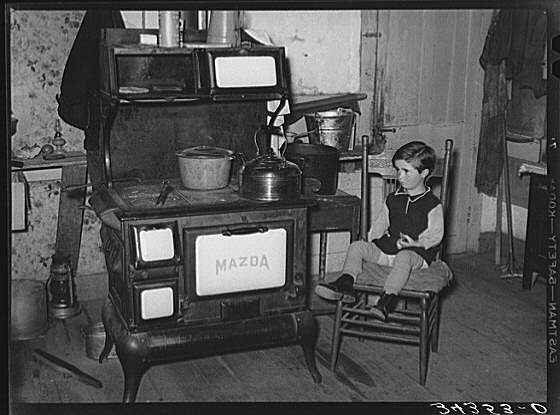
Disaster Strikes – Not

I was mildly discommoded yesterday. Twenty years ago, I would have been in a world of problems. SOL we used to call it. The reasons why I am back in the clover, more or less, instead of breaststroking through the septic, are poorly understood by the chattering classes. And by “poorly understood,” I’m being polite; I really mean: they haven’t the faintest clue about which they speak, and would destroy everything good about what I’m about to to tell you, while sumultaneously excacerbating all the problems attendant to it.

What happened? A very important tool broke, and at an inopportune time.

There really is no opportune time for this sort of thing, but when you’re working 12 hours a day or more every day trying to keep up already, calamities such as this can make a weak man look for a length of rope, an overhanging limb, and a chair. What the hell am I going to do?

The majority of all construction concerns, whether they be atelier furniture or condominiums you’re building, is logistics. You heard me. The skill part is way down the list.

How are you going to get the things you need, when you need them, and thereby make something that satisfies the logistical needs of others. The filigree is nice, but it ain’t important.

If you’re a framer for house construction, you have to know what you’re doing, cutting and nailing-wise, but it ain’t rocket science. How are you going to get a 35 pound sheet of plywood up on a half built roof using high school dropouts and non-english speaking persons is the rub. And how are you going to make sure that that sheet of cdx you need isn’t on the bottom of $40,000.00 worth of other lumber you ordered. How do you get it to the job on time, but no so early it gets stolen for the neighborhood kid’s treehouses before you even begin? Logistics, people. It’s all that matters.

As I was saying, the machine quit on me. A puff of smoke came out of it. Smoke signals in woodworking always translate the same: Don’t even plug that thing in again. The “blue screen of death” in woodworking actually involves death sometimes, so you don’t flirt with it.

I’ve been in this game a long time now. This used to happen in the field or factory, and you’d spend prodigious amounts of time, effort, and treasure trying to get another machine in place, or get the smoker fixed. You had no cellphone or computer; you’ d call from a landline, never getting the person you needed, trying to find the thing you wanted, driving around, and all the while your projects languished. You’d have to tell all your customers that the job was delayed, we’re waiting for such and such a part to come from (fill in the blank) and in the meantime we’re all sweeping the floor and sharpening our plane irons.

Someone in China wants to make this tool for me. Someone that can negotiate transnational contracts and shipping wants to broker a deal to make and ship the things. Somebody wants to drop enormous coin in advance to buy and distribute the item all over these here United States, so there will be a big stack of them everywhere. Somebody wants to go through all the hassles of finding, permitting, building, and maintaining enormous box stores all over the landscape so I the average Joe can get to the things they’re selling. Someone wants to drive a big truck all over the place day and night to deliver said items while we’re all sleeping. And some clerks want to stand there and scan the box when I finally get there. Don’t even get me started about all the information various parties wanted to supply me with on the internet, more or less free of charge, about the who, what, where, when, and how damn much it’s gonna cost.

That’s a lot of people who want to do things. I’m sure I’ve forgotten all sorts of people in there too, who are obscure but important to me. That’s understandable, because no one knows who’s important to them anymore. It’s just not knowable. And tinkering with the process whereby a willing seller hooks up with a willing buyer because you think you know better than everybody what everybody needs, is where the chattering class comes in.

They don’t think the guy in China needs that job. They don’t think the importer should be able to do that. They don’t think that truck should drive all night – or at all. They don’t think consumer goods need to be so cheap. They don’t think that warehouse should be built. They don’t think those clerks make enough money to bother working in that big box store. They don’t think… why am I bothering to list all this? They don’t think anybody needs anything they don’t need, and only if it’s offered in a format they understand and adheres to their cranky worldview.
Yes I do need it. Everybody in that endless concatenation of events and people need what we got, and what we especially don’t need is you mucking up our lives by saying we don’t know what we need.

I purchased a replacement for a tool I’ve been using –hard– for 15 years. The new one cost 1/2 of what the old one cost, and that’s not even adjusting for inflation. And it works better than the old one did, even when it was new.

I lost most of a day because of this. Twenty years ago I could have lost the better part of a week or more, and pulled out some of my hair in the bargain. And whoever sold me what I ultimately got would have performed the highway robbery pricing routine on me to boot.

Busybodies, get out of our way, we’re working here.
The Japanese Thang

Maybe it’s because it’s a pile of rocks out in the ocean. I know about those.

The Japanese are always fascinating. Their culture is likely born of the hothouse- long periods of segregation from outside influences, like in a greenhouse, promote a lush growth, but also a delicacy that does not always translate into the greater world. And a fear of The Other.

They have produced some of the most interesting things to look at. Frank Lloyd Wright, among others, was greatly enamored of the Japanese style. Through reading about him, I was steered towards Hiroshige, and Hokusai. I never tire of Mount Fuji and cranes and waves when such as they churn them out.

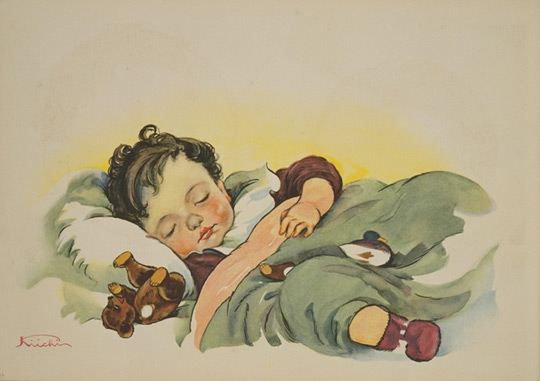
What am I to make, then, of Kodomo No Kuni? Kodomo No Kuni (Children’s Place, or Children’s Wonderland) was a children’s magazine published in Japan from 1922 through 1949. And it’s beautiful and touching. And it’s disturbing, because it’s not disturbing at all.

I’ve always found that period of the 1920s and thirties fascinating. The world was becoming modern, in the true sense of the world, and various cultures and countries were trying to make sense of it. And no one got it wronger than the Japanese.

Everybody got it wrong, really. There were just varying versions of bad, and worse, and frivolous, and stubborn obsolescence. No one really understood what the enormous changes in technology and macroeconomics meant to the human race. Do we now?

If you look at the pictures of the children in Kodomo No Kuni, and see how the artists are trying to convey a message about fitting in in a world that’s shifting rapidly. We in America still read Mike Mulligan and His Steam Shovel to our children as a nostalgia piece, but originally it was made to explain the newfangled world to a disoriented public. Time marches fast, and sometimes people rely on old thinking because they are adrift in events. The best things in culture help us to see the new things while standing on the shoulders of what has come before. Dynamism yoked to Traditionalism. Not Reactionaries and Deconstructivists, thanks.

The real problem is that old thinking is tarted up as the Next Big Thing all the time. The most antediluvian idea is presented as cutting edge by the same old busybodies. And the oldest idea in the world is “us against them” when the going gets rough or disorienting.

Even when wonderful things happen, the pace of change accelerates and makes people nervous. Nervous people are susceptible to the idea that there is a force behind everything, and that force is nefarious by its very existence, and since somebody designs everything, we might as well decide who that someone is and put him in charge. There is never a shortage of persons ready to tell you they’re up to the job.

The real problem is that human society isn’t really “run” by anybody anymore. Everything has long since become too complex for anybody to know very much about anything, never mind most things. But human beings always desire to see a face in what is formless. And to my way of thinking, people who see the hidden hand of human interactions and think: it must be a cabal, and we can run it better, are much more superstitious than any holy roller. At least the vast bulk of holy rollers ascribe to the idea that life, the universe, and everything is not knowable. It’s the fellows and ladies that say: “I can run the world better than the folks that do now” that worry me. Because “no one” is running the world now, and replacing “no one” with “someone” makes perfectly lovely people, raised in beauty and love and respect for others, like the beautiful children depicted in these amazing magazines, grow up and fly kamikaze planes into aircraft carriers when they’re done with the Rape of Nanking.

Read Kodomo No Kuni
, and weep a little, perhaps, for those weaned on it who didn’t get to live in the world they saw in it.

Mamet Management 101


I like watching David Mamet movies. He’s a screenwriter and playwright and director. I noticed him back when interesting things came out of Paul Newman’s mouth in The Verdict, and the dialog in almost every movie Mamet makes is first rate.

I’m not sure he’s a very deep thinker, really. He wrote a book about life in general, and he has a decidedly mundane view of matters great and small. But he has a knack, obviously buttressed by a lot of work and a diligence in observation, that makes the things he has people say in a movie sound believable. We were watching an enjoyable old Thin Man movie from the thirties the other evening, and we were all japing at the stilted dialog in it. One of the characters says: “Suddenly, I went back up the stairs to retrieve my handkerchief.” By gad, people don’t talk like that.

It’s the seeming that’s important. People don’t talk like they do in any movie, good or bad. The trick is to encapsulate ideas and move the story along without calling attention to the words. It’s gotta seem like something someone would say.

“What one man can do, another can do.”

That’s from Mamet’s try at an action picture: The Edge. There’s a great big bear, and it’s eating the characters, and they decide to kill it. They’re trying to buck up their courage to kill the bear while lost and defenseless in the wilderness. One character tells the other that Indian boys used to kill bears as a rite of passage. We can do it, because other people can do it. They repeat it over and over until they’re pumped with the idea.

I’m sure Mamet got that tid-bit from some zeitgeist background noise about multi-level marketing or Men’s Wilderness Bonding Retreats or Tony Robbins speeches or a ghostwritten CEO’s pap book. And he used it perfectly. Management books asking”How would Attila the Hun handle this?” were all the rage at the time, after all. The man-eating bear as a management problem. Funny.

Anyway, that slogan is interesting, because it doesn’t apply to me, really. Who can I mimic, exactly?

I don’t know of anybody that’s doing what I’m doing, business-wise. I’m making this up as I go along. So there’s a problem whenever you try to explain what you’re doing, whether it be to a customer or a bank or your wife or your kids or whoever. People want to know which mental manila folder they keep in their head for various kinds of people you fit into. And you don’t fit anywhere.

So you’re out on the edge of the map. Here Be Monsters is all it says. What do you do?

You think small, is all. No, not about big things. Strategic thinking for all business is all out there on the edge of the map. Think small for the small stuff, I say.

Break your big, hairy thing into little component parts, and surely most of those component parts are things other people have done before. You can figure out how other people do things, maybe improve on them, or better yet –find a way to make them superfluous, and soon the little things falling into place allow you to make progress on the big thing, the thing not on the shelf at the library yet.

Google was started in a garage, same as Disney, same as a lot of other big important things these days. Somewhere early along the way, someone noticed that office space in garages is cheaper than in office buildings. A small thing. Paid off big.

What one man can do, another can do; all day long. I’ll raise my hand when you’re innovative.

By The Stove


I slept in a dresser drawer until I was four. Pater would always tell me that.

Pater was always saying the same thing. His head was stuck. My head is never stuck. I wish my head would stick, and not run off like Mater says it does.

There were four flights to the basement. I don’t understand the counting. The house only has the three stories. When I’m on the piazza, though it slumps a bit with my few stone, I can see into the neighbor’s kitchen. They’re on the third floor, same as us, and leave the lights on like a millionaire, my father says, when he’s not stuck.

We go down four and I don’t understand. We stand on the dirt floor and dad peers into the furnace. Sometimes I look in the furnace too, just for the feeling on my face. Pater feeds it like an animal.

Other people’s lives are in the basement. They are stacked and boxed and moldy, other people’s lives are. They die and go away or go away and die. Their bedsteads stay forever. Where they go there is no sleeping, I guess. Pater’s stuck again and won’t tell me.

I have a clock in my head and it never stops. We have a clock in the parlor but my clock can’t keep up. Pater leaves the faucet in the kitchen open a crack. The valve is like a violin for him. He plays it. No one else plays it like Pater, Mater says. He has the touch.

He rubs his hands like Edward Robinson in front of a safe and puts his hand on the valve each night in the winter. He says things under his breath when it won’t let him start my clock. Jesus, Mary and Joseph, he says, so I know he’s praying. Pater is always stuck when he’s praying. Or maybe he prays when he’s stuck. I don’t know.

Then the drops come. Not as fast as the mantel clock; no. It’s sinful to waste it. Let it drip and it keeps the pipes from freezing in the night he says to no one in particular. I hear my clock, those drops, in my head even when I’m outside. They slow me down because they can’t catch the mantel clock. Pater snores and Mater sighs and sisters and brothers go down the hall but I don’t care because I’m warm and I can hear my clock. Pater puts the coats on me when he thinks I’m asleep.

I put the sugar and cinammon on my bread, and I spilled it. Mater was cross. She said I was disreputable. That’s what I am when Mater is cross.

I don’t understand what I am when Mater is cross.

She sits me on the chair, and tells me such as me doesn’t deserve to be abroad. My friends are skating and sliding in the Public Garden, but I can’t go, because I’m disreputable and it’s Mater’s turn to be stuck.

It’s warm by the stove when Mater is there.

How Old Are You?

How old are you? If you’re of a certain vintage– say, fortyish — you know what this is:

The rest of you? As you were. Nothing to see here. Move along.

Month: October 2006

Find Stuff:

Archives