Que Paseo
Well, I’ve been blabbing about the Paseo Montejo over and over. I suppose I should show you what it’s like. This poses problems. It’s easy to characterize it simply as a big boulevard that runs north and south in the middle of Merida, Yucatan, Mexico, because it is. It’s also all kinds of other things, because Mexico. You’re bound to see most anything while walking down the Paseo, and probably will. Something unpleasant is pretty rare, but other than that, the bets are off. Let’s see if I can demonstrate what I mean.
Here’s what it looks like in general, from a pedestrian’s point of view:
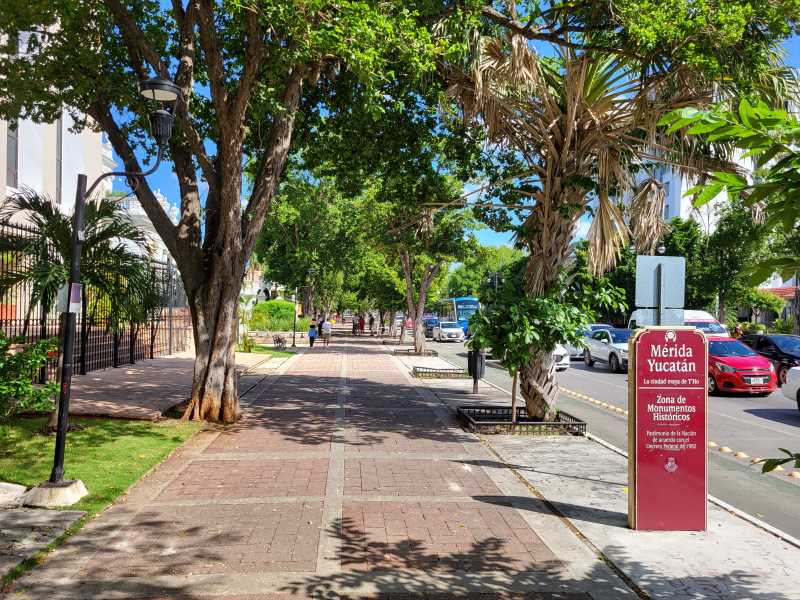
There’s another sidewalk just like this on the other side of the street. There’s a median strip in the middle, too, filled with flowers and trees and people trying to cross without becoming pavement pizza. It’s a busy street.
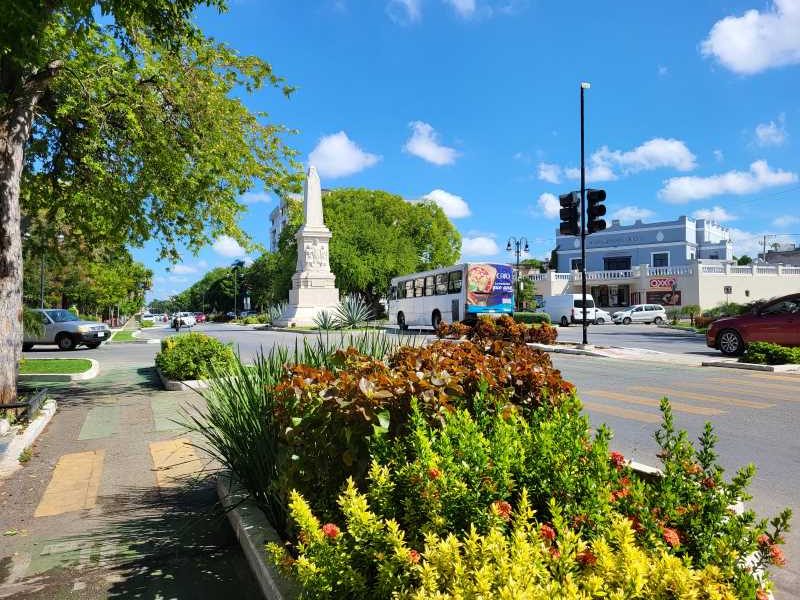
There are bike lanes on both sides of the street, too. In the US, bike lanes are an urban ornament. Everyone votes for politicians who want bike lanes, who get them installed, and then everyone votes with their ass in their Chevy Tahoes to avoid them. It’s not virtue signalling in Merida. People really do bike in these lanes, and at the drop of a hat, the city closes down half the Paseo, and lets people ride on that all day, too.
The bottom (southern) end of the Paseo is called the Remate. It’s lorded over by a statue of the Montejo boys.
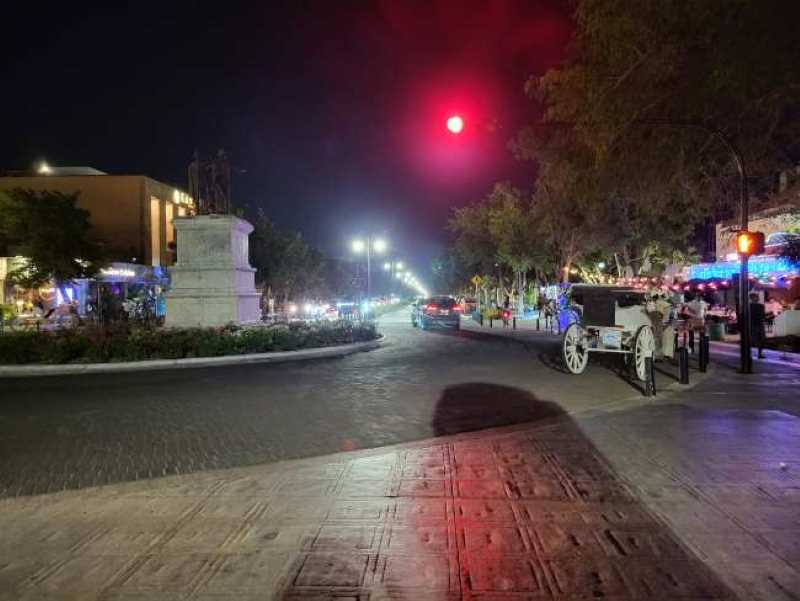
The Montejos were a father/son team. They were both named Fransisco, and there was a cousin named Fransisco hanging around confusing things further. Fransisco the younger was nicknamed el Mozo, which means “the younger.” Apparently conquistadors weren’t staying up late thinking up nicknames back then.
El Mozo is pointing north, and if you follow his directions for about forty minutes, you’ll be at the Port of Progreso on the Gulf of Mexico. That’s where his dad scurried, after the Mayans kicked his ass on the first go-round. Dad figured the Aztec-conquerin’ playbook would work in the Yucatan. He discovered that even the Aztecs thought better than to FAFO down there. El Mozo had better luck when he came back later, and he founded Merida on top of the mostly abandoned Mayan city of T’Ho’. It’s unclear why the city was abandoned. I suspect that the Maya ran out of apostrophes, and went back to the jungle to look for more.
Horse-drawn carriages, decorated with lights and flowers, are a popular thing on the Paseo. I didn’t notice all that many gringo tourists riding on them. Mostly Mexican families out for a lark. The neon sign on the right is the famous Cafe Impala. It’s been in that spot since 1958. If you’re wondering how it got its name, you won’t have to wonder long. There’s half a Chevy Impala sticking out of the wall over the awning.
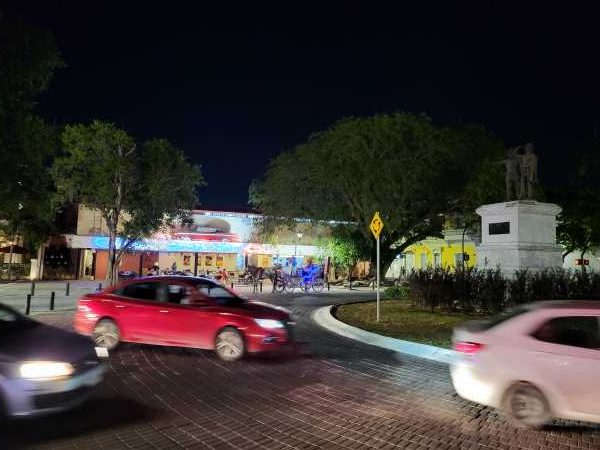
People mostly sit outside in the evening at the Impala. There’s a legion of feral but tame cats that sit under the tables and perform janitorial duties. They’re completely unafraid of the diners, but it’s nearly impossible to touch one of them. Why do cats know exactly how long your arm is, plus three inches, but the arm’s owners don’t? It’s a dark and bloody mystery.
When you’re done eating at the Impala, you can wander up the street to the Dulceria and Sorbeteria Colon. It’s been thrumming with customers since 1907:
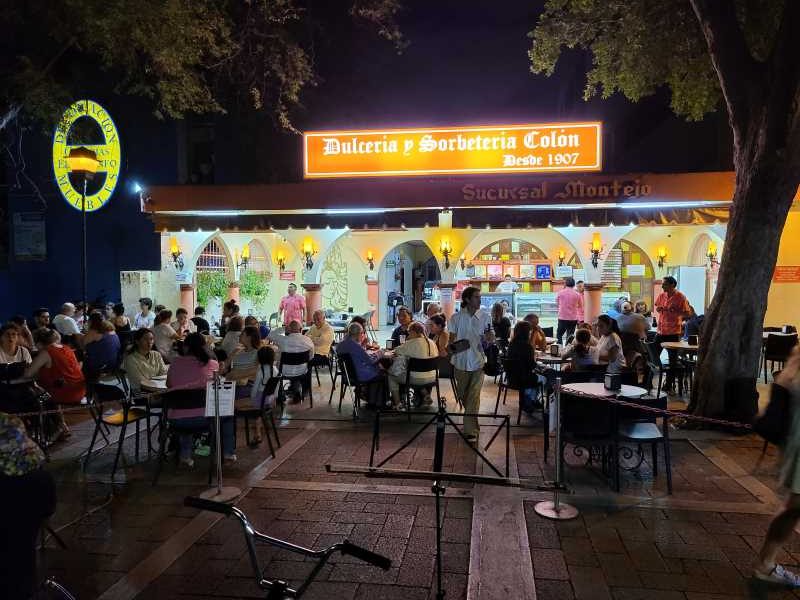
The cats either don’t like commuting this far up the Paseo, or don’t like ice cream, so you’ll have to talk to your family instead of making psss psss noises.
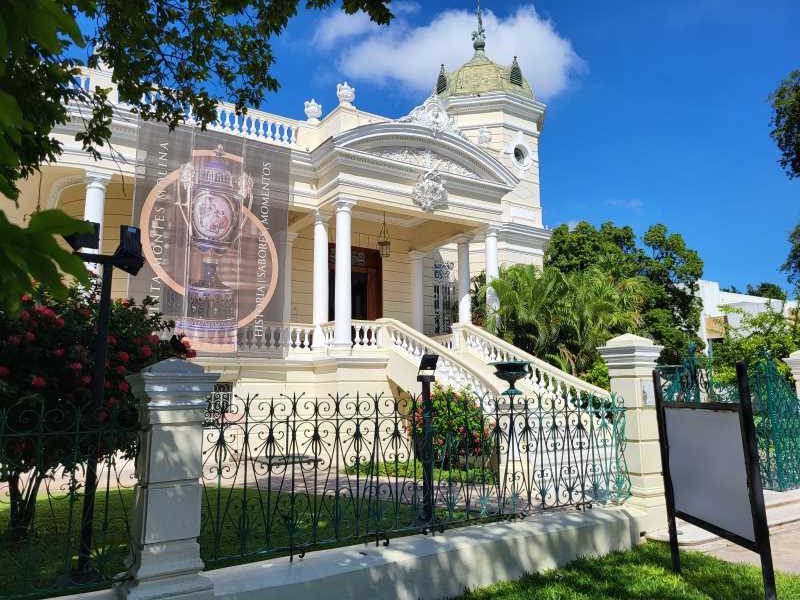
The street is lined with colonial mansions like this one. This was about the richest street in the world around the turn of the twentieth century. The Yucatan was home to henequen plantations. Henequen fibers made the best rope in the world, so the city got rich, and people lived like emperors in big mansions like this one. Then plastic rope turned the place into a ghost town. The mansions are mostly turned into banks, event halls, restaurants, upscale hotels, and…
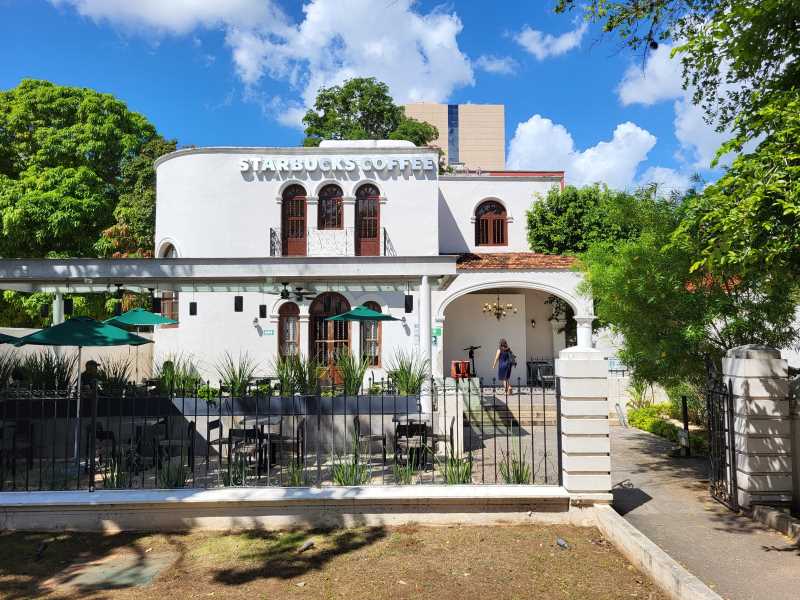
Honestly, America is an infection at this point, not a country. The last thing Anywhere Mexico needs is an Eightbucks Coffee house. We could walk to four superb little cafes and coffee shops from our house to get cold press ambrosia for less money, and we did. But it was kind of amusing to walk by this place, and the mission-style McDonald’s and other anglo franchise places. Humorous like watching a four alarm fire in a law office, I mean.
Some of the conquistadors have fallen on hard times:
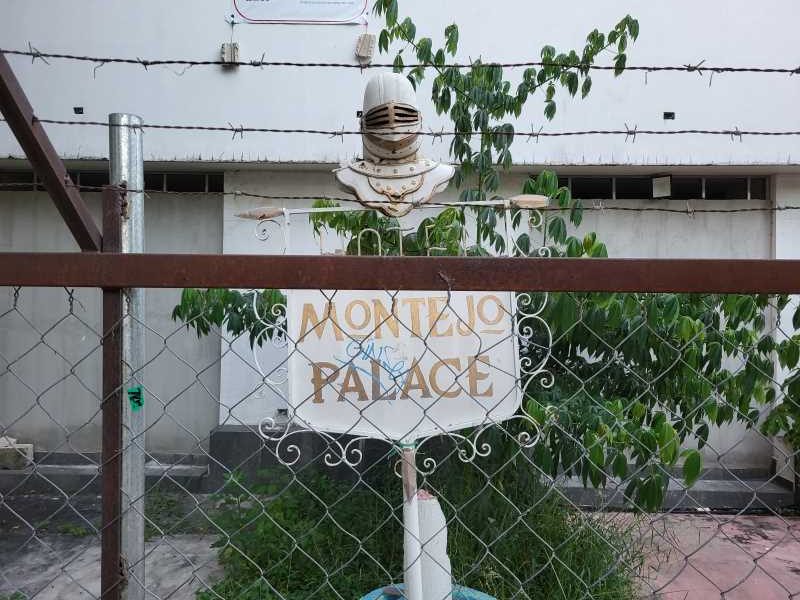
There’s still a fair bit of rubble in Merida. The city is about halfway to restoring all the old abandoned colonial buildings into fashionable homes, shops, and restaurants. The Montejo Palace Hotel wasn’t colonial. It was some sort of midcentury concrete monstrosity. The address was valuable, though, and they are building/rebuilding a ten story something on this lot. Most of the city is only one or two stories high, and it’s kind of a shame to see towers going in.
Across the street, there’s a new, swanky hotel called El Conquistador. When I said that you’re bound to see most anything while strolling the Paseo Montejo, I wasn’t kidding. Get a load of this new batch of conquistadors:
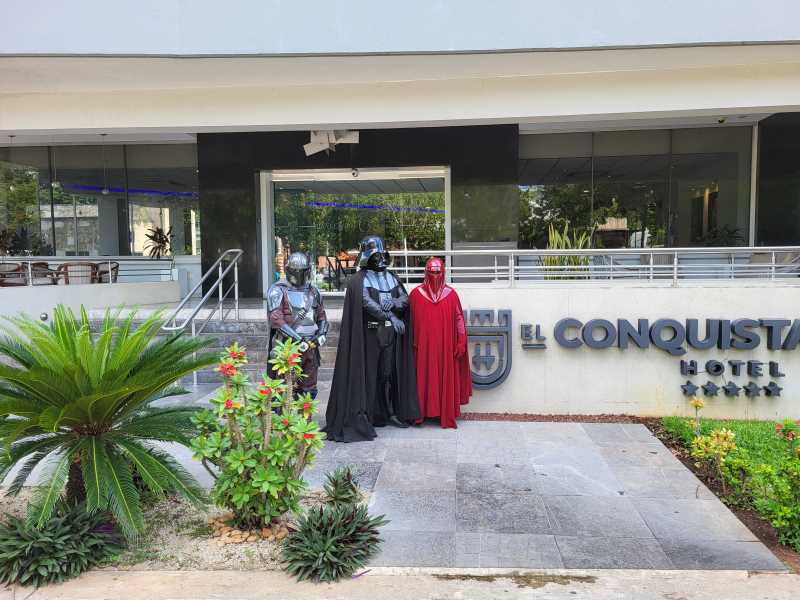
Aren’t you a little short for a storm trooper takes on a whole new meaning in Merida, where the centers on the high school basketball teams are 5′-7′, or would be, if anyone played basketball here, which they don’t. I’m pretty sure I could have bopped all three of these fellows on the top of the head and gotten away with it. My wife said she figured it was a million to one against seeing Darth Vader on the Paseo Montejo.
I told her to never tell me the odds when I’m walking down the Paseo Montejo.

Recent Comments