A Mugging in Mérida
We got mugged in Mérida. Kinda. Sorta. I guess I better explain.
Mérida is the capital of Yucatan state, in the southeastern portion of Mexico. Mérida is more or less the whole state when you get right down to it. There are outlying towns, but nearly everyone in the state lives in or just outside the capital. There’s a couple of million people in the state, and half of them live in Mérida.
There is, for all intents and purposes (or all intensive purposes if you went to public school), no crime in Mérida. I have a lot of trouble explaining that to our friends and family. I live in Maine, where there is essentially no crime compared to the rest of the US, unless you count red hot dogs. There’s even less crime in Mérida than in Maine. We walked everywhere after dark, and never even saw anyone hinky looking. Hell, in a month, I was only panhandled twice, both times by the same guy outside the church in Santa Ana. I can’t walk down the street in Augusta Maine and say the same thing. He told me in sign language (curl fingers, point thumb towards mouth) that he just wanted to get drunk, so I gave him some pesos. One has to encourage transparency wherever you find it.
However, you can get importuned in Mérida, that’s for sure. Many (most) businesses have a tout out front. Sometimes they’re just waiters suffering from empty tables, so they go fishing on the sidewalk. Other times, they’re selected solely for their importuning skills. There’s a liquor store (a rarity) on a busy corner on the Corredor Gastronomico, that hires one Miss America (Mexico is in America, people) after another to stand outside their door and treat male passersby to a sharp elbow in their ribs from their dates as you pass by. They also offer two free shots of mezcal to the unwary, to get your liver throbbing from the inside, too.
The kind of tout you get depends on where you wander. Around the main central square (zocalo), poaching tourists is handled by the big game hunters. If you look like you’re from out of town, there’s no bag limit. They buttonhole you to get you to buy a Jipijapa (Panama Hat) if you’re not careful. Until you learn how to feign total ignorance of the English language, you’re going to be treated to tales of children making these hats in caves with their nimble fingers. I think you’re supposed to be consumed with pity and overpay for a straw hat instead of asking where the cave is, so you could go rescue them.
The rest of the stores around the square are a charming but occasionally exhausting gauntlet of amiable come-ons for street food, guayabera shirts, and various Mayan tchotchkes. Everyone is friendly about it, so you don’t wish they’d go shovel brimstone or anything. No necesito, gracias, no tenemos hambre, and Ich spreche kein Englisch are the only defense you need. No one scowls at you if they fail to land you on their boat of commerce, they just move on to the next pedestrian. With the right frame of mind (three cervezas), you can convince yourself that all that attention is tantamount to being popular.
So a mugging didn’t seem possible, never mind likely, when we went out into the (relative) cool of the evening and headed the half a block to the Paseo Montejo, the big boulevard that runs north from the center of the city. That’s where we got grabbed.
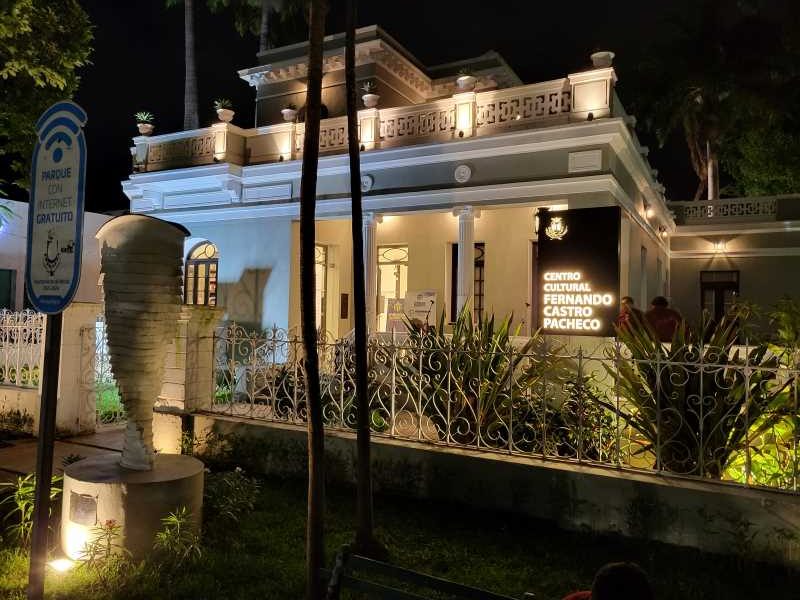
The Centro Cultural Fernando Castro Pacheco was on the corner. It’s a handsome colonial building, perfectly maintained. It was always shut up tight when we walked by. Not that night. It was lit up like a drunkard’s nose, a superb two-man band was playing on the veranda, and three women were scouring the sidewalk out front to waylay strangers. And no one is stranger than me, so they took me in hand. The slipstream of their Spanish befuddled me, of course. After a three or four thousand word assault, they paused to take a breath, and I begged them, “Mas despacio, for favor.” So they said the same thing to us with the record player set on 33 instead of 78, and we got the gist. It’s wonderful inside. An art exhibit. Music. Of course, like nearly everything else in town, it was free. Why not go in?
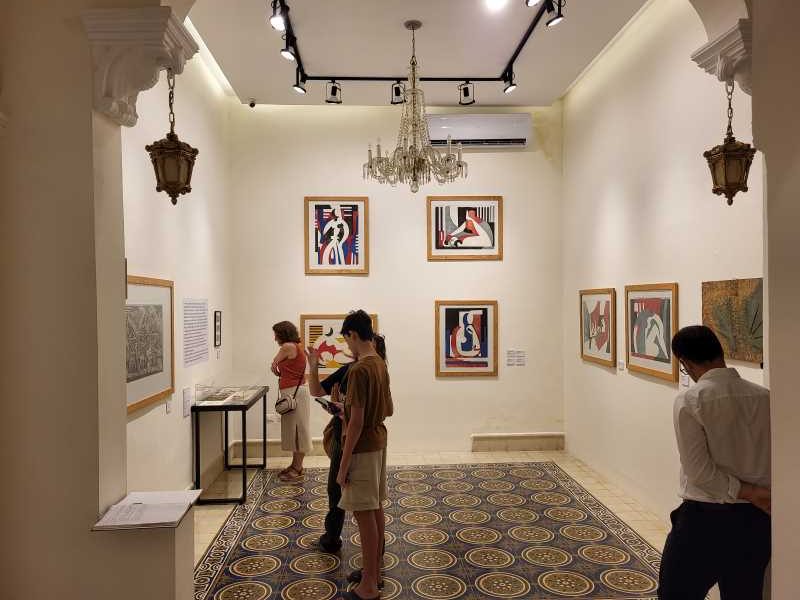
So we did. The rooms were beautiful. The abstract art wasn’t bad, either, even though I usually rank the style with dental cleaning and second grade art class. I spent most of my time looking at the other people, and the pasta floors.
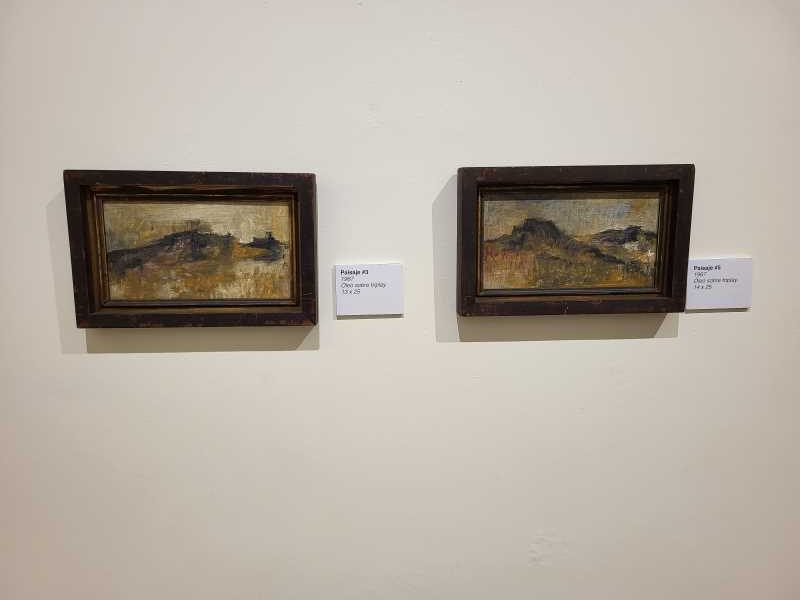
They had some landscapes I rather liked, and would have stolen if my parents hadn’t ruined me for life by sending me to Catholic School. I read the blurb on the wall about Fernando. He was a painter, engraver, illustrator, and sculptor. A Mexican Giacometti, without all the swearing. He was lumped in with Diego Rivera because he painted on a grand scale a lot, but they don’t really have a lot in common. He sounded like a nice fellow, which is a rarity in the art world.
We eventually escaped past the deluge of friendliness outside the door, and wandered downtown, feigning deafness and a Germanic bearing like pros to avoid any Jipijapa assaults. We ended up outside the governor’s palace, the home of a couple of acres of Fernando’s work. I assumed that like most Mexican painters I have known, he was getting paid by the square foot, or maybe the gallon. There were three very formidable policemen standing outside the palace, blocking the doorway and looking like they hadn’t heard a good joke in years. One of them took one look at my gringo face, and scared me a little when he started talking to me:
It’s wonderful inside. An art exhibit. Music. Of course, like nearly everything else in town, it was free. Why not go in?
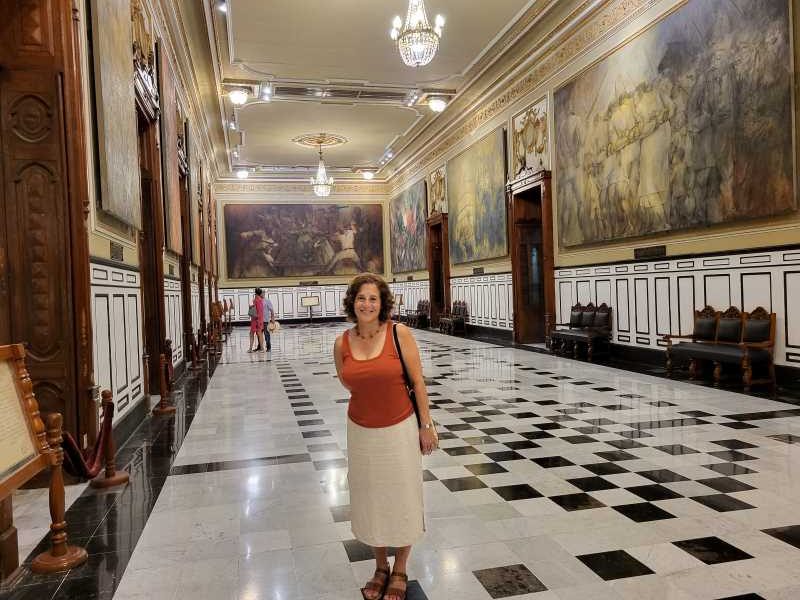
Why not, indeed? I was willing to speak to the governor if it was required, but I imagine he had some other pressing affairs, or a haircut appointment or something, that precluded getting my sage counsel. And they put those rope thingies in front of the balconies to keep me from making any speeches to dazzle the populace. I had to settle for a short walk to the Corredor Gastronomico, an elbow in the ribs, and dinner with my inamorata.
I hope they can muddle through without my advice.

Recent Comments