Hey Mister, Go Mister, Soul Mister, Go Mister

Things are different today
I hear ev’ry muvva say
The pursuit of happiness just seems a bore  -R Stones

I make things. 

I’ve pretty much always made things of one sort or another, or at least had a hand in their manufacture or maintenance. Houses, mostly, but an enormous variety of other things, too. Swung soldering irons to nailguns, peeped in microscopes and theodolites alike, got spattered with everything from mud to a-dimethylpolysiloxane. I still am pounding on things that aren’t a keyboard every single day. I’ve noticed something lately.

When I was a boy, whenever “the man” came around, to do anything whatsoever that involved anything that changed the size, shape, or general demeanor of the natural world in any way, children of all ages would congregate around them like they were deities.

In my own life, I remember being fascinated by the garbageman with the milky eye and the aureole of flies that visited once a week to fetch the pail’s worth of food scraps we’d temporarily immure in a silo with a lid outside the back door of our tiny house. The fellow with the pipe and the endless well of bonhomie that delivered our eggs. My friends and I were very interested in the excavators trying to dig a driveway and add a “garage under” to a ranch house up the street for a while; we later were supremely interested in their affairs when they hit the buried natural gas line and blew the house up entirely –almost as interested as we were in the firemen that came. That kid at that house, safe at school while his home was signed up for NASA treatment, could always produce a malformed and scorched GI Joe when we played together, and so was like a lord among us peasants.

When my uncle, a truly mighty man, showed up from time to time — he never did anything that didn’t involve feats of strength and changing the face of the world in some way back then — I’d hang over him like a curse and pester him with my fool questions about every damn thing, septic tank or roof, didn’t matter. He made the world different looking; he was a god.

I’ve been living where I am in Maine now for eighteen months or so. I make things here, lots of things, and work on all sorts of things in our old, interesting house whenever we can scrape up a few bucks and fifteen minutes. In all that time, neither my own children, nor any of the friends of my children, who are every age from toddler to adult, and include teenagers from a handful of foreign countries, has ever shown the slightest inclination to want to see what I’m doing. A couple of them were the mildest sort of awestruck that I had written a book, but that was about it.

My older son works with me without complaining, out of a commendable and tangible sense of duty to his family, but is not interested in the least in what we’re doing while we’re doing it. My little son wants to talk me in to helping him emulate YouTube dorks that “mock” Legos and cardboard and Nerf guns into rude approximations of imaginary things they saw in unentertaining entertainments, but he couldn’t give a fig for what I’m doing. He will enthusiastically sweep the floor to earn quarters to buy the Legos with, though.

The vast majority of persons in the United States, and apparently through a goodly portion of the globe, thinks that anyone that does anything productive is boring, and that’s that.

It’s Hard To Be Quiet

I exist on the Intertunnel. The Intertunnel doesn’t like “quiet.”

Not much of any form of mass media likes quiet anymore. The first sound you hear at a movie theater is the THX sound — the idiot love child of Doctor Moreau and Marconi — all the foul noises in the world compressed into one giant blast of entertainment flatulence. It’s a warning that you’re not going to be left alone for a moment from here on in.

Everything that comes out of the pop radio has been beaten on with audio spanners until it is uniformly loud at all times, lest you notice for a moment that’s it’s not very good and hie thee a button away.

On television the programs mumble loudly and the ads scream and it adds up to a sort of commerce raga.

You forget sometimes if you’re paying to watch Billy Mays sell Oxy Clean or for the entertainment.

Quiet’s dangerous. People could hear the sound of fear in your voice when it’s quiet. The average person wants a lot of spackle to cover up their cracks. We live in a world of bluster.

But then again, some people don’t have any fear, and play it half as fast and half as loud as the others. You can’t look away, when it’s quiet like that.

What Do You Know About Men?

I always liked Dick Cavett; or I find him an interesting version of the public intellectual, is more like it. He didn’t exude a dullard vibe like Mike Douglas or Joey Bishop or Merv Griffin or any of the panoply of guys back then with a camera and someone standing by with everyone’s agent in their rolodexes. But he’s a boneless fish, and when the real barracudas show up, he’s as powerless as the rest of them.

He should have stuck to talking to his fellow swirlie victims, endlessly exchanging pointed pointless barbs with Gore Vidal or Truman Capote or some other invertebrate, or phony tough guys like Norman Mailer or the Garp fellow (his name escapes me now). Maybe a sportswriter now and then. You could flip the channel back then and seen his polar opposite twin William F. Buckley worrying the dictionary and a functionary at the same time, and acting like owning a yawl and knowing how to fix dinner on a gimballing alcohol stove meant you were Francis fucking Drake. It was much the same. No one in that milieu knows what to do when confronted with a real, live man.

Look at Burton. Every pint is written in his face, every cigarette in his voice. His eyes are living in the ruins of his head like fires in a cave. His mouth is perfectly fixed in the shape of Shakespeare and the pony glass. He is a mountain, and Cavett is an ant trying to climb all over him that can’t even get off the ground. Burton does not listen to the questions, he just waits. There’s a moment in there, towards the end, where Burton dismisses even Cavett’s intellect, which is all he’s got; and he does it in such a way that only a man with a foot on a rail and a glass in his hand and dust in his lungs would understand.


THE GREAT MAN’S house. The daughters of the men who cracked his anthracite cracked oysters for him in there. The girls would come home and say they had a place in the great man’s house and would rub shoulders with quality, pa. The fathers knew him, though. A werewolf. A vampire. They would sit silent with their black faces and their watery eyes at the kitchen table and know what it meant to turn your children over to such men. They’d say nothing because there was nothing to say.

They turned their sons over to the collieries. There was honor there — and shame. A man hopes for better for his children than he got. Nothing ever gets better in a mine. You come out every day like the womb. Born again. Or not. The great man would read of the little men like insects that worked in his seams, dead of the gas or the great hand of gravity. It was a story from far away, as their very daughters cracked his oysters.

The men would see their sons fight back the plain fear that showed in their eyes as the sky passed away and the rank earth swallowed them for their labors, and feel pride, too. No man is ashamed of his son at his elbow in a mine. He is ashamed of himself, maybe.

What is a man to do? A Welshman might as well be a black ant. He’s got the instinct to go down and up in that little hole and he can’t help himself. He knows no other thing until he knows nothing forevermore. He does what he does. And the great man did what he did. He saw the man’s weakness, and his strength, and used one to get the other.

The great man had the other great men in his pocket. He could call out the guard on a whim. He could kill a man legal. He could kill him any which way. He could do as he pleased. He could live in the shadow of a boneyard in a palace and there were none dared to squeak. The men said we’ll vote and stick together, and the great man just put one more man in charge of them, the new black prince of the county with the thing with the letters behind him. It was organized, but not like you’d think. Things would go on behind a velvet curtain. If they drew it back you’d see the smirk of the hyena in there.

Then there was no work. The union and the boss alike said no coal. The big machines and the kept men kept even the culm from us. The great man couldn’t mine the coal by himself, so he mined the banks and the government and the union and got his gelt just the same.

The great man thought he knew men. But he did not know your father and his father. They knew the coal like he knew his oysters. They went into the woods where the seams lay close to the sky, and they began again. The very earth gave them what they always sought. The men sent to find them and stop them joined them instead. The trucks ran at night to the great glittering city where the coins slept in great vaults.

The housemaids knew from where it came, for they had come from there themselves. They pressed the coins into the dingy hands at the alley gate and burned it in their own great man’s house. Their little hods filled with bootleg coal made a pyre for our great man.

The great man’s house. Look on it.

(“Coal Breaker,” from The Devil’s In The Cows. Look on it.)

Sounds Like Sexist Xenophobic Bullying To Me. Better Ban It

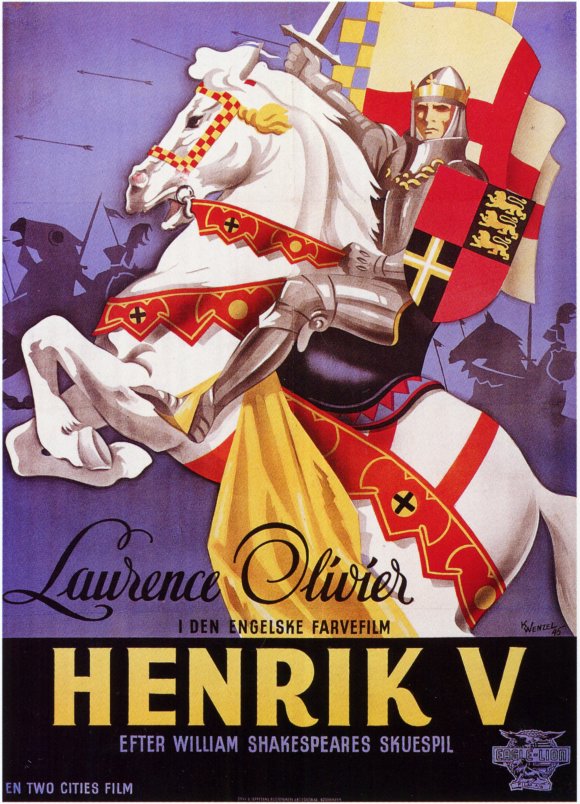
I recently saw (again) the 1944 version of The Chronicle History of King Henry the Fift with His Battell Fought at Agincourt in France.

It’s a charming piece of work. Laurence Olivier is famous enough, I guess, but not as notable for his real talent as he might be. Shakespeare drops like ripe apples from his mouth.

The movie makes a mockery of so many who have tried fantastical juxtapositions of real and cartoonish in movies since then. It’s filmed like watching a Bayeux Tapestry or a child’s storybook get up and dance around, and throws in a view from backstage, too, to show just how far down the rabbit hole they can take us.


It’s fun to imagine a British audience, worn out with years of blitzes and the terrors of telegrams, sitting rapt in the theater and seeing their island race triumph in a tight spot. There’s a great scene where Olivier is backstage, and looks a little round-shouldered and wan, and coughs a bit in an offhand way, and then strides out onto the stage in front of the Globe Theatre crowd, and is immediately transformed by the words and the moment into the majesty of Henry Vth. Olivier knew that the play’s the thing that makes a man great, not the other way around.

Old Bill knew how to put words in women’s mouths, too; another art long since lost to the playwright. Catherine is made more charming than any sovereign could hope to resist in the blink of a French eye in her garden. Do you need to know French to get it? I don’t think so. Flummoxing up “bilbo,” a flexible sword, for “elbow” is a nice touch. I can’t remember if it’s written into the text or a happy accident.


The women are feminine but decide all in their sphere and the men kill one another over insults and geopolitics alike, and your countrymen are your brothers that you’d defend to the death against all comers. In hours, roughly, how long until Shakespeare is banned in public school?

Month: September 2011

Find Stuff:

Archives