Explaining Sippican –A Little
(Editor’s Note: I’ve caught a few of the readers performing amateur psychoanalysis on the your humble narrator recently. I guess that’s part of the charm of writing it down and spraying it out into the ether. Well, I’m a conundrum wrapped in an enigma rolled up in a quesadilla buried in a sweatsock in the back yard, as they say. Kinda. But this thing I wrote a year ago explains a lot. Or a little. Or nothing much.)

(Author’s Note: There is no editor.)

Hola amigos.

I’m rereading a book about houses in 18th Century Williamsburg. Strangely enough, it’s called “The Eighteenth-Century Houses of Williamsburg.” by Marcus Whiffen. If it was published today, it would have a cover that said something like:

“Torn From Yesterday’s Headlines-The Exciting True Story of the Heat and Passion of our Passionate Hot Forefathers and Mothers:””The Desperate Bodice Stitchers of Williamsburg!”

Or something.

It was published in 1960, so they just told it like it was. I’d rather read one book like this than a metric tonne of fiction anyday. The only bodices that get ripped are because they caught them on a stray nail while burning quicklime in a brick kiln, but I can do without the “excitement.” It’s interesting enough as it is.

Colonial Williamsburg seems like an interesting place, one that I might like to visit. I’ve been to Washington DC’s monuments, and Mount Vernon and so forth, but never Williamsburg. We’ll have to wait until the Wee One is a little older, I think, as he will no doubt try to single-handedly re-enact the sack of Washington by the British during the War of 1812, and discommode the passersby, but we’ll get around to it eventually.

John D. Rockefeller Junior bankrolled the collection and restoration of the houses there, if I recall correctly, and good for him. I always insist that the history that truly matters is not military history, but the march of events in the life of the great mass of citizens of a great nation that defines its progress. The clashing armies are important in that they define the ability and willingness of a society to defend itself, and its will to do so. What they are defending is just as interesting to me.

How did people live? Dress? Labor? Raise children? Learn? What did they sit on, and what kind of dwelling did they live in? Places like Williamsburg catalog just these quotidian details, and bless them for it.

Really dry books like “Houses of Williamsburg” have the scholarly details that lend perspective to our own lives, when we see how far we have come, but also how much we still retain. I found one particularly telling detail in it. It’s a contract for Indenture between an orphaned boy and a bricklayer. Here it is:

This Indenture Witnesseth that John Webb an Orphan hath put himself, and by these Presents doth voluntarily and of his own free Will and Accord. put himself apprentice to William Phillips of Williamsburg Bricklayer to learn his Art, Trade, and Mystery: and after the Manner of and Apprentice to serve the said William Phillips from the day of the date hereof for and during and unto the full end and Term of five Years next ensuing during all which Term, the said Apprentice, his said Master faithfully shall serve, and his Secrets keep, who’s lawful commands at all Times readily obey; He shall do no damage to his said Master, nor see it to be done by others, without giving Notice thereof to his said master. He shall not waste his said Master’s Goods nor lend them unlawfully to any…

To the modern eye, this looks like two paces from slavery. But not to the modern tradesman’s eye. Because what you just read was essentially the same as the situation my peers and I entered into when we entered the building trades in the seventies. It wasn’t written down, but it was spoken, or understood. I’ll serve you faithfully if you teach me a trade is the bargain we all struck with someone older, wiser, and more experienced, but didn’t mind having a seventeen year old around to pick up the 90 pound sacks of cement for him. And the only two questions asked of the prospective applicant were: Will you work hard? and: Will you stick around long enough to make my investment in your learning pay off? Answer yes, and you’d be pointed to a stack of something heavy that very minute.

In a very real way you were adopted like this fellow was. You were talking to the tradesman in the first place because you were his child, or nephew, or neighbor, or the son of a fellow churchgoer or lodge member. Somebody had vouched for you before you ever got to stand nervously in front of the guy, while he wondered if those little arms of yours could lift what he needed lifted.

“Art, Trade, and Mystery” is wonderful. I’ve never heard it described better. Good construction work is an art, and so many poor souls flounder around these days because they learn the “art” in a desultory fashion, get stars in their eyes, and go out on their own without learning the “Trade” which refers to the business end of the deal. “Mystery” is the magnificent capstone to the trio of benefits. Specialized skills and knowledge are the heart of any trade, and customers know better than anyone that hiring a tradesmen to do anything for you is a descent into mystery. The plumber knows the mystery of making the contents of the toilet bowl disappear, and for that mystery you’re glad to pay him.

There’s sound advice for the young man later in the deed, (it is a deed we’re reading from, just like title to a piece of property) although it’s more than just advice in a contract like this:

He shall not committ Fornication, nor contract Matrimony within the said term. At Cards, Dice, or any other unlawful Game he shall not play whereby his said master may have damage…He shall not absent himself day or night from his said Master’s Service, without his leave, nor haunt Alehouses, Taverns, or Play Houses, but in all Things behave himself as a faithful Apprentice ought to do…

If I had a nickel for every fellow tradesman I knew, whether working alongside me or employed by me, that had ignored exactly this kind of advice and ruined their lives, I’d be rich as Croesus. Tweak it a bit, and make it the first week of instruction in Vocational High School, and you’d have my support.

What’s in it for the Apprentice?

…said Master shall you the utmost of his endeavors to teach, or cause to be taught or instructed the said Apprentice in the trade or Mystery of a Bricklayer and procure or provide for him sufficient Meat Drink Cloaths, Washing and Lodging fitting for an Apprentice during the said term of Five Years…

So at the end of five years, the young man would know everything he needed to know to be his own man, and be able to go out in the world and make his living. It’s interesting to note that he’s promised what is essentially a living wage for single young person and an education, nothing more, but nothing less either. He’s not promised the 1700’s version of and I-pod, or bachelor pad, or a bitchin’ truck, or a sports car, or Nike shoes, or restaurant meals, thrice a day.

The employer has some serious obligations as well, alike in kind and importance to the contract. And I doubt the interdiction against gambling, booze and monkeyshines with girls is prudery, it’s probably rooted in the knowledge that your clumsy efforts won’t support that kind of easy living for a long time yet, or egads, not a wife and family yet, so knock it off.

Anyway, there were no snout houses at Williamsburg, and no public welfare housing for people on the dole. Both the plans for the houses and the contracts for the workmen were drawn up by amateurs, not professionals, and they’re ten times better than what we have for the same things now, drawn up by legions of professionals and lawyers.

There’s a lesson in that somewhere. I’m not exactly sure where. I’m an amateur philosopher, not a professional. But I assure you, in 1975, I would have signed that document, and been the better for it.

Languor; Then, Who Knows?

Every night I hear the coyotes ranging around the swamp. They make a dreadful sound. There’s nothing of the quaint forlorn Hollywood howl to it. They sound like landgoing sharks ripping things to pieces and exulting in the spray of foam on their muzzle. And every night Momo the cat looks at me, and begs to be let out.

Momo was feral. he came out of those same woods, years ago, and it took my wife a year of patient coaxing to get him to set foot in the house. He is as gentle as any kitten despite his wildness, and has allowed two children to tug on his tail without protest now. He has that rarest of attributes for a cat- gratitude.

But he goes out. The other cat sleeps on the cushions all night, and Momo goes into the night. Every night I figure he won’t come back. Every morning he’s at the door.

We smoke. We ride motorcycles without helmets. We skydive. We drive and eat sandwiches simutaneously. We swim in oceans filled with sharks. We climb mountains. We minister to the dreadfully ill and infectious. We climb trees. We ingest things we bought on a streetcorner. We drink from a still. We join armies, sometimes out of patriotism, sometimes on a lark, and kill and risk being killed in turn. We put on helmets and collide for amusement. We reach under the mower. We pump gasoline into our car with the bald tires with a cigarette dangling lit from the corner of our mouths. We pick fights with strangers in bars. We fight with strangers when they pick fights with us. The gutters need cleaning. We travel to the moon.

Momo goes out.

What I Learned Over The Weekend

  • Small children like bubbles.
  • Large children like bubbles but are loathe to admit it.
  • I like bubbles.
  • Cobwebs turn to a piquant glaze when they reach just the right temperature on the grill.
  • A grill that is not a fire hazard makes bland food.
  • If there’s a nastier creature on the planet than a horsefly, I haven’t seen it.
  • Crabgrass is green too.
  • You can buy white phlox all you want, but half their children turn out magenta and that’s that.
  • They tried machine guns, razor wire, high voltage, concrete, and enormous heaps of glass shards to keep those poor people from escaping from East Germany back in the day. I could have mailed them one poison ivy plant. They could have eaten twice a day instead of once with the money they saved.
  • I can still beat my 11 year old in a foot race. Barely.
  • I like football. It’s the only thing I watch on television. So I get a fresh perspective on things when I tune in. I have only two questions: Doesn’t anyone already have a car? Can’t anyone get an erection?
  • A cicada buzzes exactly like the doorbell transformer in the utility room. I like the cicada sound better. This points to some failing in my constitution, I imagine.
  • St Francis is surely a patient and loving man, to let all the birds crap on him like that.
  • A rose, like a marriage, is a demanding thing to cultivate. The thorny part always grows great, but it takes a lot of effort to coax the bloom out. You must immediately cut the bloom and give it to your beloved, if you want another to grow.

I’m Not Aesop, Lapsed Catholics Don’t Know About Golems, So I’ll Just Tell It

If a bee or wasp stings me, I’ll die almost immediately. I don’t care about that.

My neighbor, who likes cutting things down on a good day, counseled, unwonted, that I should razor all the shrubs down to the ground outside my door, so as not to attract such insects, just as he had done. They’ll come right in the house when you open the door, he said.

I told him I was unaware that he was also allergic to the venom of stinging insects; it seems like such rarified air I breathe. He said he was not.

The flowers stayed.

Some fears are worse than the perils they stem from. I decided not to pay much attention to it, and get on with my life. I am not reckless about it; I no longer cut down trees until the frosts have come, and other gentle nods to reality. But it does not define me. That would be worse than death.

Many persons find it odd and disquieting to see me ambivalent about this danger. They spot any flying insect and want to evacuate me like some gradeschooler during the blitz. There is an odd possibility that I’m about as cautious about being stung as I was before it became a lethal happenstance. It still hurt back then, after all; I’m not impervious to the logic of avoiding pain.

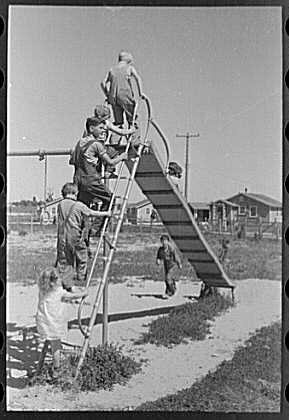
Six Flags Over Marion, we call the jumble of plastic and wood and sand and accoutrement we’ve assembled in a corner of the yard for the tot to play in. He contents himself merrily on the little slide and the ladder, and buries his troubles and his army men in the sandbox it leads into. My wife can see him from the house there, and he can play there alone or with his big brother. But it is on the edge of the wood, and the woods are not an urban abstraction here. We see things come out of those woods from time to time, and some are not suitable for children to encounter. And so we do watch. Who does not watch over their children? I don’t know them.

My wife was stung by a wasp or bee while sitting with the small child in the yard. She wept and was confused a bit; unsure where it came from. It left a formidable welt on her arm which is still clearly visible some two weeks later. I am an old hand at these sorts of things and put a paste of baking soda on the welt, and then some ice. We forgot all about it, except the itching.

A few days later, the small one was discomfited in some way. He seemed confused and hurt, though he did not cry. He is stoic that one, and rarely speaks anyway. We looked him all over and found a welt on his leg. We couldn’t tell what it was. Horsefly? Bee? Hornet? He sat quietly while we applied a poultice and he seemed hurt in multiple ways. I think it was the first time that the yard had ever betrayed him. We forgot about it.

Should I have forgotten about it? Does inuring yourself to some little creeping dread to the point of ambivalence taint your judgement? Is it worse or better than you treat it? I don’t know.

We were in the yard yesterday, and the little one came running and wailing from Six Flags Over Marion.

I’ve heard genius is a kind of intuition. Lots of people know lots of things, but they never assemble them into the whole required to see around the corner. It is said that people like Mozart look at a piano, and it makes perfect sense to them right away.

We all have moments of clarity I suppose, we regular people. You know many things, some barely impressions, and they coalesce occasionally into hard, fast, ideas. And I saw that child and saw what I should have seen before it happened this last time. There was a frame for the picture, and everything in it.

His little ear was the size of a saucer. Stoicism only gets you so far when you’re barely three, and he wept the tears of the disappointed and hurt. And I tended to him as I had been taught, imperfectly, by my ancestors. Draw it out with baking soda and bleach, and then the ice. Sit still and be calm. He sat and watched Clifford with his mother.

And then I went outside and I tore that plaything apart and found those wretched things I knew were there and poisoned them and crushed them and crushed their lairs like an archangel and a devil combined, and afraid only that I would not get a chance to kill every one.

Saturday Melange

Here’s a picture of the United First Parish Church of Quincy, the “Church of the Presidents,” taken from the sidewalk in front of the Old Burial Ground. It doesn’t have the delicacy of churches in Europe made from marble or sandstone. It looks like the granite it’s made from.

In the comments, tjl mentions the long tradition of quarrying granite in Quincy. It’s over now, the quarrying, but every once in a while my firefighter cousin has to fish dead swimmer’s bodies or abandoned cars out of the defunct and flooded granite quarries.

There are other notable things about Quincy, too. One of the first, if not the first railway in the country was built to take Quincy granite to Boston. The first Dunkin’ Donuts is there, too, which is much more essential to my worldview than any stone quarry. My father recalls that Dunkin’ Donuts was a fellow with a canteen cart selling coffee to workers at the Quincy shipyard. He decided to make donuts and sell them too.

The shipyard is a parking lot now. Dunkin’ Donuts is a multinational corporation. Such is life.

The statue of Abigail Adams is dappled by the big shade tree you see on the left in the picture. It a busy corner. If you look right instead, this is what you see:

Quincy has just the right amount of bustle for an urbanish place. The critical mass required to host ne’er do wells isn’t there, and everyone looks like they have something legal to do and somewhere to go when they pass you by. I didn’t lock the car when I got out to snap the pictures. Quincy was a Yankee place, and then a sort of Irish place, and now has a decided Southeast Asian vibe present as well. When you call the local hospital, you can press one for Mandarin Chinese, for instance. There are a fairly large population of Vietnamese here now. There’s a substantial middle class African-American contingent here too.

In short, it’s what everybody’s always jawing about, and never quite getting around to trying: a safe, salubrious, interesting –but not too interesting– place for the average person to live and work.

I bet Abigail would like that.

In the comments, where I find all sorts of unwarranted praise, I’ve discovered two other people talking about this topic. Here’s Stubborn Facts riffing on our little corner of Quincy. All the words are spelled correctly, and they do not appear to be agitating for the repeal of universal suffrage, and I suspect they are kind to children and dogs and listen politely while their mothers speak to them, so why not give them a look? What could be the harm?

Also, commenter Jack seems to be enamored of this little corner of Quincy as much as I am. I clicked on his name and followed it back, and look: he’s writing about it over here. Jack claims to be the same age as me in his bio, but I know it’s not possible to get that smart that fast, so be on the lookout for any tall stories over there.

We wrote about the effects of anti-sprawl legislation, and the cognitive dissonance between trying to micromanage growth joined to the hip with a distaste for uniformity, and how it shakes out in those sprawly suburbs. Our friends over the formidable Ann Althouse’s blog visited and opined in the comments here, and there. Well, we not only know everything, here at the Sippican Cottage, we predict it in advance.

Here’s what Sippican said:

Because the thing they are trying to achieve isn’t allowed, and you can’t plan that which must arise spontaneously.My neighbor builds dock platforms in a barn and in his yard. I hear him banging away over there occasionally, or the sizzle of a welder. At night, I hear the coyotes ranging through the woods; but I also hear the pumps in the not-too-distant cranberry bogs. My neighbor grows herbs for sale to restaurants and a small local clientele. We’re too spread out to comprise any sort of village, but the mixed use part is there, if imperfectly.Someday, somemone will complain about all that stuff, and zoning laws will be enforced, and the NIMBYs will triumph; and this place, where people say 24/7 they don’t want sprawl, will have nothing but.Because they won’t allow anything else to happen.

And here’s the news story from today, from a few hours west of here in the Hartford Courant:

Town Gives Teen’s Worm Business The Hook

It’s useful when the world proves you right, in just the right measure, right away, so you can put down the burden of walking around with unrequited correctness and get on with your life immediately.

Month: August 2006

Find Stuff:

Archives