
I have an older brother. He was a musician before I was a person, I think. He can play all kinds of things on all kinds of things. He could play the Stones or Segovia and everything in between, or so it seemed to me. I could never keep up with him. I wanted to, but the calendar always made him disappear. When I finally went to school, he disappeared into high school. When I got to junior high, he was long gone to college. He left a bass behind, and an ancient amplifier that said HOT COTTAGE in M*A*S*H letters on the back. I tried to play it without knowing how. Musical prodigies can do that. I’m not one of those.
I had a piano bench in my room. We had no piano, just the bench. Most everyone used to have a piano in their house, but that was ancient history to me. My mother could play one. My brother can play one. My older son once stunned me by playing The Turkish March by Mozart at breakneck speed, even though he’d never had a piano lesson. He did have a crummy plastic keyboard in his room, though, and kids get up to things. My younger son can play piano music on the computer keyboard, because of course he can. But when I was a kid all I had was the bench in my room in the basement, living my little horizontal life between the sleepers and the drop ceiling and the pegboard walls. The piano bench seat was a lid. When I lifted it up, it was filled with sheet music. Walk On By was in there.
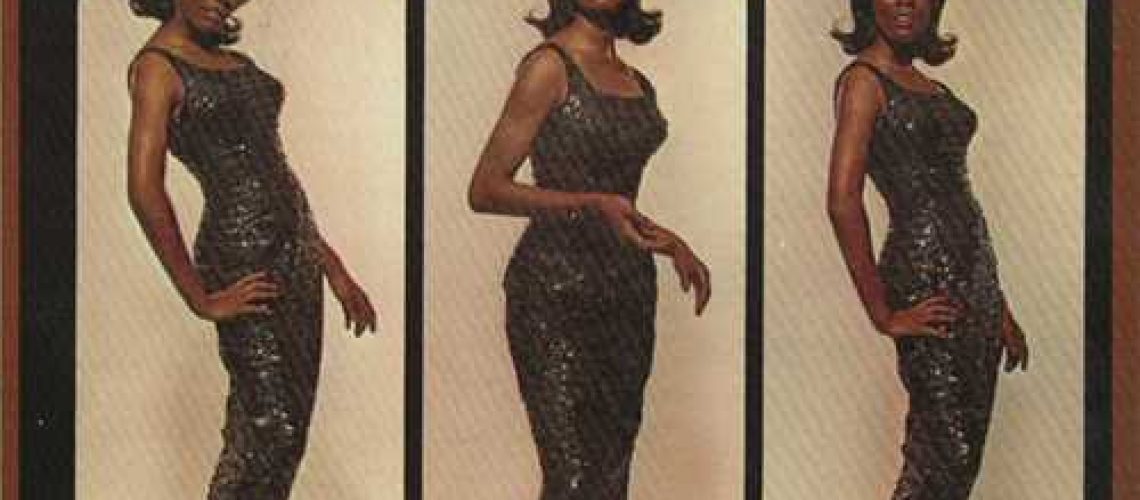
Musical notation is scary when you first see it. It’s runes on a stele. Cuneiform. Later you learn it’s just another language, like Spanish or COBOL or Pig Latin. It’s a bland set of instructions. Burt Bacharach and Hal David wrote the instructions to perform Walk on By in 1963. Dionne Warwick, 24 years old in that video, recorded in the ’27 Club’ in Knokke, Belgium, on New Year’s Eve in 1964, got the same instructions as everybody else, I guess.
Sheet music is usually piano music, with lyrics under the bars. There are two staffs, one for each hand. The treble is the G clef on the top, and the F clef is the left hand (bass) on the bottom. After a while, the publishers started putting the chord shapes for guitar accompaniment over the piano music, because Beatles.
So all alone in that drop ceiling dungeon, I dutifully worked out the damn dots on the bass line, and tried to play Walk On By, even though it was a decade or more since it had stopped showing up on the radio, humming the tune in my head for company. Because, like Everest, it was there.
I realized right then that those notations on the page are always missing something important. Dionne Warwick, for instance. Without her, the same damn dots end up like this:
10 Responses
I’ve known a few people who could literally pick up any musical instrument, and after a few minutes of experimenting and trials, could play it almost perfectly.
I’ve always held a large amount of admiration for that, as well as (I’ll admit) a touch of envy. Give me a bucket, any tune will leak out of it. And yet I love music. Can’t make it, but love listening to it.
Hi Blackwing- I don’t really have any natural talent for music. I figured out how to do it because I wanted to, but I’m probably more like you than like my brother. I’ve met lots of guys like you described. They always sort of infuriated me. It’s like you strike out looking three out of four times, and they can hit 90 MPH curve balls out of the park, and don’t even practice.
I almost failed college because I could NOT learn to play piano. I could sometimes pick out a tune with one hand but ask my hands to do different things at the same time and I (and sometimes the teacher) would end up in tears.
Hi Jean- I’ve always found playing the piano difficult for the same reason, so I never really tried. A related problem is singing while you’re playing. Some people do it effortlessly, but it was a chore for me. Playing the bass and singing was particularly difficult, and took me a long time to even do it badly. On guitar, strumming is usually robotic, which makes it easier. I eventually learned to play the drums, and even though I stunk at it, and stunk at singing, I found it really easy to do both at the same time. I’ve explained it to people as being like juggling. If you look at any particular ball, they all fall to the floor. You have to learn to look off into the distance and let the balls pass in front of your eyes and trust your limbs to do the work. You can’t really pay attention to playing, or to singing. If you pay attention to one, the other goes haywire. It’s a knack, not a talent.
This is the “Walk on By” that I remember. Leroy Van Dyke – Walk On By.
I had two years of piano lessons, but was more comfortable playing by ear. Sit down and bang it out.
Hi Gringo- I’d never heard of Leroy Van Dyke. That record’s sure got twang.
Thanks gringo that’s one of those songs that always takes me back to a certain time and place. I can’t hear that song without thinking of Juke boxes and pabst blue ribbon neon signs and dark smoky bars with sticky floors and peanut shells and a beat up air conditioner
I was not aware of The Stranglers. That bass sounded like something the Navy would use to help them find submarines It was wonderful.
Hi Robert- Most bass players since the early sixties are just surplus guitar players. Paul McCartney, for instance, was a much better guitar player than George, and probably John, too. But someone had to play the bass, so he did it. I can always tell converted guitar players. They almost universally play with a plectrum (pick), and have a tendency to turn the treble all the way up. They like to noodle around way up the neck, and play melodies even though it’s not their job. They’re really just playing the guitar on the wrong instrument. Before rock music really got going, guys played the upright bass, and switched over, and they played bass parts on the bass.
Thanks!