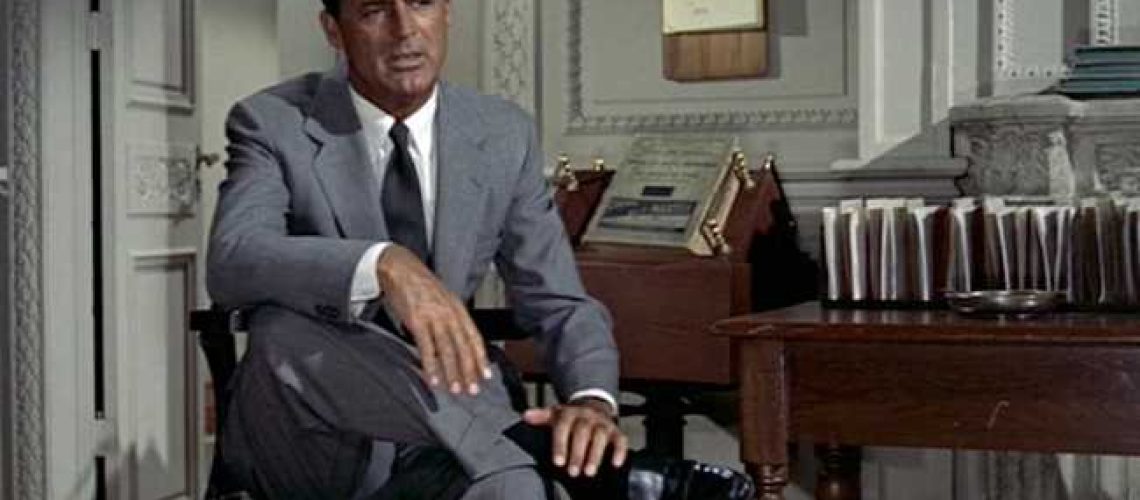


Towards the end of the 1700s, men wised up a little. Driven by style leaders like Beau Brummell, they stopped dressing like Mardi Gras floats and snuff-guzzling fops, and started dressing like they might be good for something other than playing cards with Louis XIV. They didn’t want to look beautiful anymore. They wanted to look masculine. It was the adumbration of what we call The Suit. It was a major milepost in the history of clothing, and other things. It was called the Great Male Renunciation.
Suits are of course tumbling out of favor. Hardly anyone wears one properly, if they wear one at all anymore. People, important people even, wear remnants of one, even to important gatherings. A business suit worn without a tie is an incongruity. A business suit jacket worn over jeans is an abomination.
People claim, loudly, that it was comfort, simplicity, individualism, and egalitarianism that killed the suit for daily men’s wear, and good riddance. They’re full of merde. One of the original names for a suit of clothes was a lounge suit. A well-made suit is comfortable to wear, and motility isn’t constricted much. You’re protected from the elements in your wool carapace, and you can take the jacket on and off in private settings to regulate your temperature, too. There’s a great deal of variation in suits as well. A workman could wear a durable tweed suit jacket with a flat hat and be comfortable while doing even heavy labor.
As far as simplicity goes, modern suits have always lent simplicity to dressing yourself for brain work. You could choose your shirt from very few in the closet, your tie for a splash of color, with more subdued hues for more staid occasions. Just make sure your socks match, and you’d be done.
People think their current regimen of a dishevelish mishmash of clothes is simpler than a suit, but they’re lying to themselves, and everyone else that has to lay eyes on them. A while back, I worked in an office that required “business casual” clothes. That’s a collared, long-sleeve shirt, a tie, slacks, and shoes. Customers occasionally visited our cubicle empire, and we didn’t want to look like mendicants if they did. The management eventually bowed to Lumbergh trends in the zeitgeist, and instituted the completely misnamed casual Fridays.
Once the memo went out, everyone (else) dressed like ragamuffins on Fridays. The men dressed garden variety badly, and the women dressed like Marseilles taproom wenches. I wore the same thing I wore the other four days of the week. This elicited complaints from my peers. They wanted me to be forced to dress badly along with them. They never understood that they were spending an inordinate amount of time wondering what to wear on casual Friday. I was spending zero. And a shirt, tie, and slacks is a perfectly comfortable way to dress. And I don’t know how to break it to you, but jeans are not even supposed to be comfortable. They were made from coarse, durable cloth that could stand up to much heavier work than the friction from an Aeron chair. Eventually I was put in charge of everybody, and I made sure casual Friday went the way of powdered wigs.
The egalitarianism I mentioned is strictly of the Animal Farm variety. The modern tech CEO wanders out on to the TED Talk stage wearing moon boot sneakers, expensive ripped jeans, a T-shirt with an incongruous slogan on it, all topped off with a suit jacket. He’s got Argentine president hair, or his head is shaved like a death row inmate. All this is supposed to make him look as casual and accessible as any clerk in his javascript empire. It’s a sad joke. He might as well be sporting a justacorps and a Restoration wig. He’ll disdainfully refer to everyone who his company owes money to as “the suits,” but that’s because he wants to act like Elaine with Mr. Peterman’s gold card, but they won’t let him. And the entire audience is dressed the same way as the CEO. So much for individualism.
The force driving the Great Male Renunciation was the desire to leave irrational, emotional, and frivolous modes of dress, comportment, and social interactions to women. Toughen up, Van Buren. Lord knows who first said, “Clothes make the man,” but he may have been standing next to a guillotine, shoving some ancien regime dude in silk hose and high heels into the Jacobin Cuisinart hole. Perhaps the quote has been truncated from, “Clothes might make the man, but we can make him shorter.”
Suits aren’t fussy garments. Cary Grant, who might have worn the most famous suit, ever, didn’t really worry much about his clothes. Suits simplify things, and project the right image for a put-together man. And they work pretty well, too, whether you’re thinking about stuff at the Plaza Hotel or running away from a cropduster.

Here’s Cary on how to dress well:
No, it isn’t only money that determines how well a man dresses—it’s personal taste. Because of the demands of my work, I’ve purchased dozens of suits over the years and they all have one attribute in common: they are in the middle of fashion. By that I mean they’re not self-consciously fashionable or far out, nor are they overly conservative or dated. In other words, the lapels are neither too wide nor too narrow, the trousers neither too tight nor too loose, the coats neither too short nor too long. I’ve worn clothes of extreme style, but only in order to dress appropriately for the type of character I played in particular films. Otherwise, simplicity, to me, has always been the essence of good taste.
Suits communicate more than seriousness to people you encounter. They’re a form of good manners. In a business suit, you are what you is, to mangle a saying while getting the meaning right. Dressing like you’re sleeping behind a dumpster while pulling in seven figures is pretty close to Marie Antoinette, Hameau de la Reine mendacity.
Cary’s style of dress made it well into the 1960s without any challengers. Until about the Beatle arrivals, men’s clothing and hairstyles were heavily influenced by the military. Makes sense. A whole generation had recently been in the military. In order to attract a mate, men wanted to look overtly masculine. A suit was just a civilian version of an officer’s uniform. Men kept their hair close cropped and neat. They were clean-shaven, and shined their shoes. If you wanted to look healthy, you’d get a suntan, a hat tip to people who did robust things outdoors.
Then came the Peacock Revolution. Men started dressing like dandies again. The British Invasion told men that they could look shaggy and still pull chicks. They started dressing like rock stars, and rock stars started dressing like women. Or more to the point, like homosexual men:
Mostly based around men incorporating feminine fashion elements such as floral prints, bright colours and complex patterns, the movement also saw the embracing of elements of fashions from Africa, Asia, the late 18th century and the queer community. The movement began around the late 1950s when John Stephen began opening boutiques on Carnaby Street, London, which advertised flamboyant and queer fashions to the mod subculture.
The denouement of this movement crashed and burned into a late seventies heap of leisure suits, fondue pots, shag carpeting, and harvest gold appliances. Luckily, in the following decade, Gordon Gekko instructed everyone to buy a decent suit, and we had an interregnum of half-decent clothing for men.
Women still dressed like clowns, wearing dresses with the hanger still in the shoulders and too much rouge, but woman basically always dress like clowns. Men should leave them to it, and worry about their own appearance.
Once the last preppie was hunted to extinction, Grunge pretty much drove a stake through the twitching corpse of men’s fashion. It’s been a long, slow degradation since then. Women are driving the bus now, because they’ve totally taken over the internet. Even though they’re still sleeping with same bad boys from down the block on the sly, they’re demanding that their significant others display the most feminine version of anything that has to do with masculinity. I’m not sure how they’re managing it, but guys have feminine beards these days. Their manbuns make them look like a tween girl at a makeup mirror. Their clothes are too tight, and instead of accentuating their physique with the cut, it makes them look like oversized toddlers. Their outfits are Slovenly Chic™. Football jerseys with the names of the men who are sleeping with their girlfriends on the back, shower shoes, sweatpants too tight to sweat in, wispy beards, tattoos that make them look like a walking Go Fish deck of cards — it’s all a disaster.
So I require… Check that! I demand a Second Great Male Renunciation! Refuse to set foot in an Abercrombie and Fitch until they’re selling shotguns, canoes, and tents again, and start equipping safaris and antarctic expeditions. Start dressing like Ernest Hemingway instead of Mariel. Wear sweatclothes to hit a heavy bag, instead of on dates. And I know this last one is going to be difficult for you to understand, but you can stop shading your eyes with the palm of your hand, and turn your baseball cap around with the bill in the front.
Do it for your self-respect. Do it for your country. Do it for the children. You know, the ones you’ll never have — if you don’t.
5 Responses
I’ve never been able to find a good-fitting suit coat or shirt off the rack. I did rings (gymnastics) for about 17 years, and that will do something to your physical structure. In college I was 5’7″, 135 pounds, with a 17-1/2 neck, 32″ sleeves, and a 44″ chest and a 28″ waist. Just think short, squat, ugly troll with a skinny waist (well, back then) expanding in a big vee towards the shoulders. When I got out of college and started looking for my first “real” job I needed a good interview suit, but certainly couldn’t afford anything tailored. The closest I could come to a suit coat was a 44-Short, but almost nobody made button-down dress shirts in 17-1/2×32, so all of my collars were too tight if I didn’t want my sleeves hanging over my hands. A collar extender and cinching the tie up were the solution to that.
Being able in the early oughties to dump that stupid tie, a leftover vestige of 14th century Italian mercenary companies, was a huge relief. The only time I had to put on a suit-and-strangler was when visiting the customers (or customers were visiting us), the rest of the time it was slacks, dress shirts with no tie, and “dress shoes” which nobody ever noticed were all-black New Balance cross-trainers. Aah, comfortable again. And if I had to come into the office on a weekend it was Katie-bar-the-door…blue jeans, tee shirt, and comfy shoes since nobody else was usually there.
So who do you want hammering away at a keyboard and mouse for 10 hours a day designing a bridge or an airplane, a guy suffering from oxygen deprivation because of a dress code, or somebody who’s comfortable?
Hi Blackwing- Of course engineering types and architects and so forth had their own trad dress code. It was mostly based on leaning over drawing boards, so ties didn’t enter into it. The caricature of an architect in a tweed coat with patches on the elbows, worn over a turtleneck, was based on reality, and a certain amount of sense.
Your dress code of slacks and a dress shirt is just a sensible variation on business casual. But you’re missing out on the greatest non-fashionable fashion ever: Engineer geek. Short sleeve business shirt with a pocket protector, shop class glasses, high-water pants, and a clip-on tie. Hey, don’t laugh, it was good enough to put men on the moon. Now where did I put my slide rule?
Because I often had to go into the shops of our sub-contractors, I made myself a special tie just for those occasions. I took a regular tie, tied it a few times until it was just right, and then used a pair of scissors to cut it right at the back of the neck with just a little bit of slack. A couple of pieces of Velcro glued to the ends and I had a quick-release tie for going into shops. I also had my wedding ring made with a notch in it that made it simple for it to break in two, if I ever got it caught on something spinning.
Back when I was an engineering student working in the mining industry I was taught before going into underground mines to ALWAYS, always, step directly ONTO, and not OVER, cables and hoses lying on the ground. The reason being is that you never knew when the big machines at the other end of those things was going to move and whip that cable up with a couple of thousand horsepower of energy behind it. If you were straddling it, it would simply make two pieces of you right up the middle. If you were stepping on it you had a chance of surviving being flipped into the air or into the roof of the mine.
I guess I watched ‘way too many safety movies showing the gruesome results of failing to do these things.
On t’other hand, I never wear steel-toe boots when using a chainsaw…you dull up too many blades that way. (Joke from Spider Robinson.)
P.S.: I’ve still got my freshman engineering-school slide rule, the cheap plastic one. And I inherited my dad’s beautiful bamboo triple-decilog one that came in a fitted leather case. But I never got geeky enough to wear my HP’s on my belt in their pouch once I could afford one, and my old HP11C is still working and sitting on my desk here at home.
One backwards ballcap is a fashion statement. A thousand is a uniform. –Jonah Goldberg
A ponytail does not make a man look like a horse’s head. –Mike Anderson
My wearing of coat and tie has been limited to high school dances, job interviews, funerals, weddings, and getting a work visa at a consulate. I wasn’t planning to wear coat and tie to the consulate, but did so at the suggestion of our personnel manager. When I saw that I and the consul were both wearing dark pin stripe suits, I decided I got good advice.
I did wear a tie when I taught math for two years. At one school of decidedly middle-class students, one student told me I looked “ghetto.” I found out that was meant as a compliment– that my shirt and ties looked good. When I found out that one of my students–in a class of freshmen taking 11th grade math–liked Sonny Rollins’s music, I gave her a cassette tape of his music. In return, she gave me a tie for Christmas.